

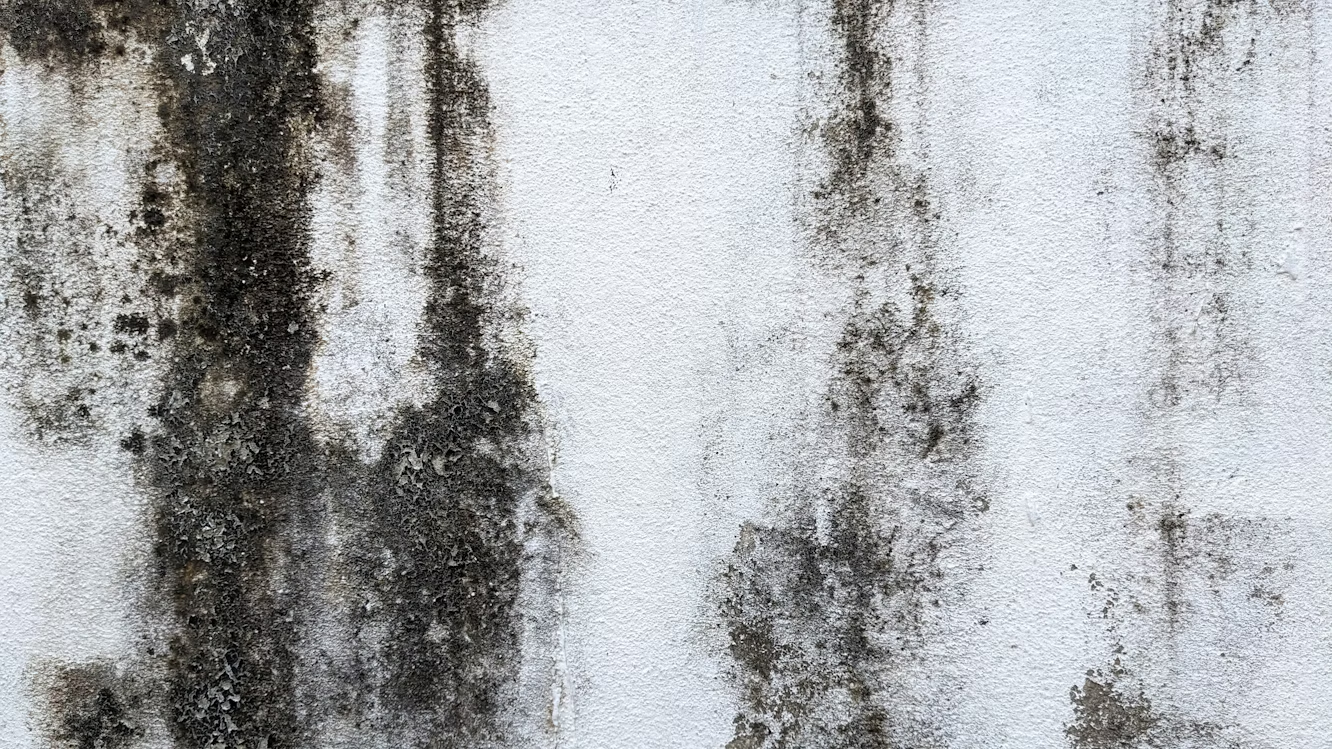
Do you want to protect your home from dangerous mold?
You might be surprised, but if you think your home doesn’t have mold, you’re probably mistaken. 47% of all residential buildings in the US are experiencing some type of mold issue as we speak.
The scariest part?
Homeowners are usually oblivious to it until it causes serious harm.
Mold is not just an eyesore–it’s a silent killer that will ruin your home’s value and your family’s health. But the good news is that with proper mold removal techniques you can eliminate this threat and create a safe environment for your loved ones.
In this guide, we’re going to take a deep dive into the world of mold.
We’ll explain:
- Why mold is more dangerous than you think
- How to detect mold in your home
- DIY mold removal vs professional services
- Prevention strategies that actually work
- Signs that you need to call the experts
Let’s jump right in!
Why Mold Is More Dangerous Than You Think
Before we start talking about mold removal techniques and how to do it, there are some important facts that you need to know.
First and foremost…
You should know that mold is the true domestic terrorist.
I know, I know, it sounds pretty dramatic. But it’s actually a serious health issue.
Listen to this…
According to some studies, 21% to be exact of asthma cases in the US might be a direct result of mold and dampness in our homes. We are talking about more than 4.6 million people who have asthma caused by mold.
Now, let me get to the next point.
As it turns out, 93% to be exact of chronic sinus infections are related to mold exposure, according to The Mayo Clinic. In other words, if you or anyone in your family is constantly dealing with sinus issues, it might be because of mold.
Now here is the part that you should definitely pay attention to.
What’s the most dangerous thing about mold?
- It releases spores into the air you breathe
- It causes respiratory problems, particularly in kids
- Triggers severe allergic reactions
- Serious infections in people with weak immune systems
- Structural damage in your house
The truth is that mold doesn’t just make you sick, it can make your entire family very sick.
Children who are exposed to mold before they turn 1 have almost 3 times the risk of developing asthma.
Can you believe that?
Your home is supposed to be a safe place for your children to grow and thrive. But if there’s mold in areas you can’t see, you might actually be killing them slowly day by day.
Essential Mold Detection Methods
So, what is the best mold removal technique? How can we fight something we can’t even see?
This is how most people try to deal with it.
They wait for visible mold growth to appear. By that time, the situation is almost never good.
Professional mold remediation services use advanced detection techniques to find mold in hidden places where the average homeowner would never look. These pros are in the business for many years, and they are aware of all the tricks.
On the other hand, there are some techniques you can use to detect mold yourself.
- Musty odors
- Water stains
- Condensation
- Peeling paint
- Unexplained health symptoms
Here are the areas in your house where mold is most likely to form:
- Bathrooms and shower rooms
- Basements and crawl spaces
- Kitchens, especially under sinks
- Attics with poor ventilation
- Places with previous water damage
Pro tip:
Don’t rely on your eyes, use your nose.
As a matter of fact, mold can be easily detected by its musty smell. If you can smell it, there’s a big chance you’ve got a mold problem. Start inspecting that part of your house immediately.
DIY Mold Removal vs Professional Services
And now we are at the point where most homeowners make a fatal mistake.
They find a small mold patch on the wall and decide to take care of it by themselves using bleach and a sponge. But here is the thing…
Bleach can only kill visible mold on non-porous surfaces.
On porous materials, like drywall or wood, it can actually spread the problem further by feeding the roots of the mold.
Let me tell you, when.
DIY mold removal can work for small-scale problems (smaller than 10 square feet) under specific circumstances.
If the mold is on hard, non-porous surfaces.
If you have the proper protective gear.
If you know how to find and repair the moisture problem.
If no one in your family has respiratory issues.
In most cases, though, it’s best to call the professionals, especially if:
- The area affected by mold is larger than 10 square feet
- The HVAC system is involved
- You have sewage backup or contaminated water
- You or your family have asthma or a weak immune system
- The mold keeps coming back after cleaning
On average, professional mold removal cost starts at $1,373 and ends at $3,325.
But here’s the catch…
DIY mold removal is not cheap, either. First, most people underestimate the cost by $500.
Secondly, if you do a bad job, the mold can spread through your entire house, which will cost you way more.
In addition, you’re at a serious risk of spreading toxic mold spores throughout your house.
Professional mold removal services, on the other hand, cost anywhere between $1,373 to $3,325 on average.
But did you know that?
Most homeowners spend way more money in the long run by trying to remove mold by themselves.
The longer you wait, the more expensive it’s going to be to fix.
Prevention Strategies That Actually Work
The truth is, prevention is always better than cure.
No one likes to deal with mold, and there are some pretty simple ways to prevent it from forming in the first place.
In fact, there is one most effective mold prevention technique, and that is moisture control.
If you can control moisture, you will be able to protect your house against mold.
The majority of mold growth is caused by excess water or humidity in the air.
- Maintain a humidity level below 50%
- Use dehumidifiers
- Fix leaks immediately
- Improve ventilation in problem areas
- Clean and dry wet areas within 24-48 hours
- Clean gutters
- Inspect roof
- Check basement walls for cracks
- Service HVAC system
- Mold-resistant products during renovations
Don’t wait for the mold to come – be proactive and avoid it.
When to Call the Experts
This might come as a shock to you, but most medical doctors are not trained to recognize mold illness.
They are going to treat the symptoms, but not the underlying cause of your problem.
When it comes to mold removal, you should turn to experts.
- Proper containment
- Advanced detection equipment
- Proper disposal of moldy materials
- Source identification to avoid recurrence
Another thing to keep in mind is that mold doesn’t get better by itself.
It gets worse, and it’s going to cost you much more to get rid of.
Did you know that mold problems in your home can drop its value by 20-37%? To be precise, 20-37%, but still, a considerable amount of money for an average household.
What’s more, you’re playing with your family’s health.
Every day you procrastinate, you are slowly killing your children.
Time to Take Action
Removing mold is not something you can put off to “tomorrow.”
Mold will never get better by itself.
The longer you procrastinate, the more you will have to spend.
Here are the steps you should take:
- Inspect your house for mold signs
- Fix moisture problems
- Call professionals to test the house if necessary
- Don’t ignore health symptoms
Call the professionals. Mold removal services have the tools and experience to deal with your mold problem safely.
They can protect your family and restore your home to a safe environment.
Your family’s health is not worth the cost of mold removal.
Choose to take action now to protect your family, or suffer the consequences later.
If you want to know more about How to Keep Your Portable Building in Top Shape, then visit our Home Improvement category.