

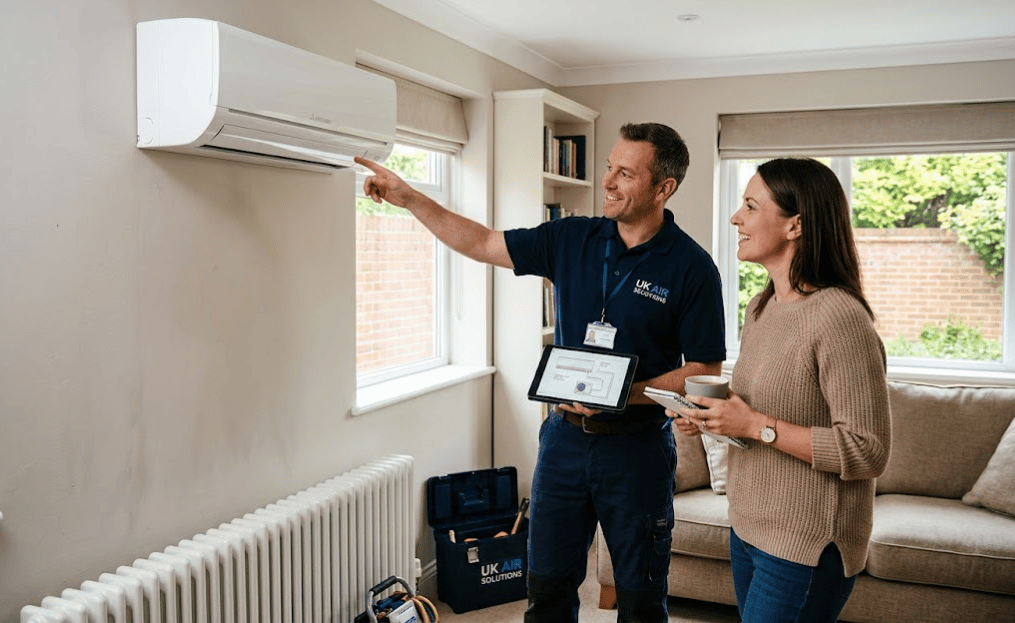
Domestic air conditioning is becoming a practical option for UK households facing hotter rooms, warm bedrooms, and uncomfortable summer nights. Modern fixed systems can cool individual rooms or several spaces, while many models also provide efficient heating. Choose carefully by comparing system type, installation cost, noise, planning rules, and expected use.
Direct answer: Domestic air conditioning can provide reliable cooling where fans cannot lower the room temperature. Most UK homeowners choose single-split or multi-split systems for permanent cooling. A suitable system should be sized for the property, installed professionally, and selected with running costs, outdoor-unit positioning, and planning requirements in mind.
Domestic Cooling Options at a Glance
| System | Best suited to | Typical 2026 cost | Main advantage | Main drawback |
|---|---|---|---|---|
| Portable air conditioner | Occasional single-room cooling | £200–£550 | Low upfront cost | Noisy and requires an exhaust hose |
| Single-split system | Bedroom, office, lounge | £1,500–£3,000 installed | Quiet and efficient | Requires an outdoor unit |
| Multi-split system | Two or more rooms | £3,000–£8,000+ installed | Independent room control | Higher installation cost |
| Ducted system | Whole-home projects | £6,000–£15,000+ | Discreet appearance | More building work required |
These figures are broad UK planning ranges rather than quotations. Property layout, brand, unit capacity, pipework, electrical work, and access can change the final price. Recent UK cost guides place straightforward single-split installations around £1,500 to £3,000.
What Is Domestic Air Conditioning?
Domestic air conditioning uses refrigeration technology to remove heat from indoor air and release it outside. Unlike a fan, it can actually lower the room’s temperature. Many modern split units can reverse their operation and provide heating during colder weather.
A typical fixed installation has an indoor unit and an outdoor condenser. Refrigerant pipework connects both units through a small opening in the external wall. The system also needs condensate drainage and a suitable electrical connection.
This arrangement differs from an evaporative cooler, which uses water evaporation rather than refrigeration. Wordify’s guide to evaporative air coolers explains where that lower-energy option can work. Evaporative units become less effective in high humidity.
Which Type of Domestic Air Conditioning Should You Choose?
The strongest option depends on how many rooms need cooling and how often you use them. A bedroom that overheats at night has different requirements from an entire renovated house. Start by identifying the rooms where high temperatures cause the greatest discomfort.
A portable model can suit occasional use without permanent installation. It must vent warm air outside through a hose, which can limit where you can place it. Portable units also tend to produce more indoor noise than fixed systems.
A single-split setup usually makes sense when one important room needs reliable temperature control. Common examples include bedrooms, loft conversions, living rooms, and home offices. The outdoor condenser serves one indoor unit, keeping the system relatively simple.
A multi-split setup connects several indoor units to one outdoor condenser. Each room can normally have separate temperature controls. This arrangement can reduce the number of outdoor units needed around the property.
Ducted systems hide most equipment above ceilings or inside suitable voids. Only vents or grilles remain visible inside the rooms. They are often easier to incorporate during major renovations than in finished homes.
How Much Does Home Air Conditioning Cost in the UK?
Installation prices vary because no two properties have identical requirements. Current UK market guides commonly place a straightforward single-room split system at roughly £1,500 to £3,000 installed. Two-room and larger multi-split projects often begin around £3,000 and rise with complexity.
Several factors can increase the quotation. Longer refrigerant pipe runs require more materials and labour. Difficult outdoor access, scaffolding, electrical upgrades, and complex drainage routes can also increase costs.
Whole-home ducted projects usually cost considerably more. Current industry guides often show broad ranges from roughly £6,000 to £15,000 or higher. Extensive ceiling work or premium controls can push projects beyond those figures.
Price shouldn’t be the only factor. Correct sizing, equipment quality, installer competence, warranty terms, and future servicing also matter. A cheaper oversized or poorly positioned unit can deliver worse comfort than a properly designed system.
Split Air Conditioning Versus Portable Units
| Feature | Portable unit | Fixed split system |
|---|---|---|
| Installation | Minimal | Professional installation needed |
| Cooling strength | Suitable for individual rooms | Strong, controlled room cooling |
| Indoor noise | Usually higher | Usually lower |
| Efficiency | Generally lower | Generally higher |
| Exhaust hose | Required | Not required indoors |
| Heating option | Model dependent | Common on reversible systems |
| Initial cost | Lower | Higher |
| Appearance | Floor-standing appliance | Wall-mounted indoor unit |
Portable equipment makes sense when permanent work is impossible, or cooling is rarely needed. Renters may also value the ability to move the appliance between properties. Effective operation still requires a suitable route for its exhaust hose.
Fixed split equipment suits households expecting regular summer use. It avoids a large floor-standing appliance and hot-air hose in the room. Proper installation can also provide quieter temperature control while you sleep or work.
If simple airflow is enough, you may not need refrigeration equipment. Wordify’s guide to the best fans for cooling explains the lower-energy alternatives. Fans cool people through moving air rather than reducing room temperature.
Can an Air Conditioner Heat Your Home Too?
Many fixed residential systems are reversible air-to-air heat pumps. They can move heat indoors in winter and outdoors in summer. That gives one installation both heating and cooling functions.
Air-to-air systems do not normally supply domestic hot water. A household therefore needs another solution for taps, showers, and baths. This difference matters when comparing them with a complete wet central-heating system.
Wordify’s comparison of UK home heating systems includes air-to-air heat pumps alongside other common options. The broader HVAC installation guide also explains why correct system sizing matters. Assess heating requirements alongside cooling needs if year-round operation matters.
Do You Need Planning Permission?
Planning rules depend on the system, property, location, and part of the UK. In England, permitted development rules for domestic air-source heat pumps changed on 29 May 2025. They now allow qualifying systems that provide both heating and cooling, subject to conditions.
A qualifying unit must not be used solely for cooling under those English permitted development provisions. Size, position, property type, and protected-location restrictions can also affect eligibility. Listed buildings and conservation areas need particular care.
Cooling-only equipment does not receive the same permitted development right. The UK Government confirmed this distinction in a July 2026 parliamentary answer. Homeowners should therefore check the current rules before ordering equipment.
Planning rules also differ across UK nations. Local circumstances can add restrictions even when general rights apply. Contacting the relevant planning authority can prevent expensive changes after installation.
What About VAT on Reversible Systems?
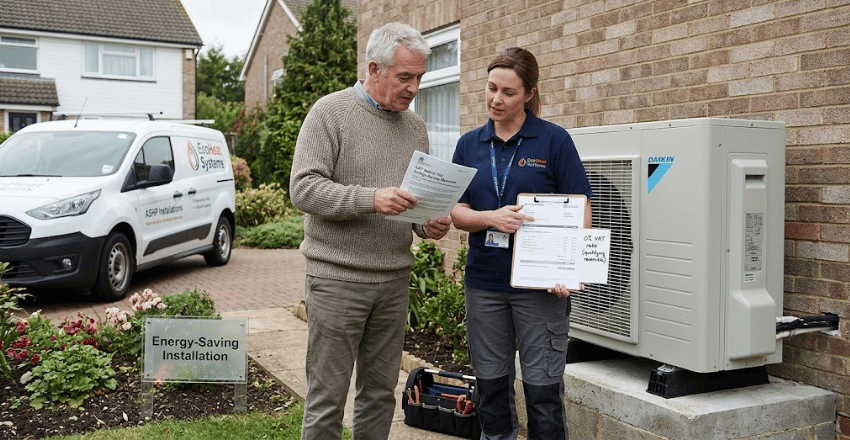
Qualifying air-source heat pump installations currently receive zero-rated VAT treatment under the UK energy-saving materials rules. The present zero-rate period runs until 31 March 2027. The rules then apply a reduced VAT rate from 1 April 2027.
This relief should not be interpreted as a blanket VAT exemption for every cooling appliance. Eligibility depends on the equipment and how it is supplied and installed. Check the current HMRC guidance on energy-saving materials before relying on the saving in a project budget.
The distinction can materially affect a quotation for a qualifying reversible system. Ask installers to explain the VAT treatment shown on their proposal. A transparent quotation should separate equipment, installation scope, and any relevant tax treatment.
What Size System Does Your Home Need?
Cooling capacity should match the heat entering and being produced inside each room. Floor area matters, but it is not the only consideration. Window size, orientation, insulation, occupancy, equipment, and ceiling height can all influence the required capacity.
A south-facing loft bedroom can need different cooling from a shaded room of similar dimensions. Large glazing areas can also increase solar heat gains. This is why room measurements alone provide only a rough starting point.
Professional installers should assess the actual cooling load before recommending equipment. Oversizing can create unnecessary expense and poor cycling behaviour. Undersizing can leave the system working hard without maintaining the required temperature.
What Should You Check Before Installation?
Start with the outdoor-unit position because it affects several other decisions. The installer needs a practical pipe route, suitable drainage, safe access, and sufficient airflow. Noise and the unit’s effect on neighbouring properties should also influence placement.
Check the indoor location at the same time. Airflow should reach the occupied part of the room without creating an uncomfortable direct draught. Furniture, curtains, doors, and room shape can influence the best position.
Before accepting a quotation, compare these points.
- Cooling capacity and how it was calculated.
- Indoor and outdoor unit locations.
- Heating capability.
- Seasonal efficiency ratings.
- Indoor and outdoor noise figures.
- Pipework and drainage routes.
- Electrical work included.
- Manufacturer warranty.
- Labour warranty.
- Servicing requirements.
- Planning responsibility.
- Total price and VAT treatment.
Avoid choosing solely by the highest quoted capacity. More power does not automatically mean better comfort or efficiency. Design quality matters more than selecting an unnecessarily large machine.
How Can You Reduce Cooling Costs?
Preventing heat from entering the property can reduce the work your cooling equipment must perform. Close blinds or curtains before strong sunlight heats south-facing and west-facing rooms. External shading can be even more effective where the property allows it.
Use temperature settings sensibly rather than selecting the lowest possible figure. A lower thermostat setting does not necessarily cool an already hot room faster. It can instead keep the compressor running longer than needed.
Cool occupied rooms rather than treating every space equally. Multi-zone systems can help because separate indoor units can be controlled individually. Regular filter cleaning and scheduled servicing also help maintain airflow and operating performance.
Is Domestic Air Conditioning Worth It in the UK?
Domestic air conditioning makes the strongest case in homes that regularly become uncomfortably hot. Loft rooms, modern flats, heavily glazed spaces, and bedrooms can be difficult to manage with airflow alone. Reliable cooling can make these rooms more usable during prolonged warm periods.
The case becomes stronger when a reversible unit can provide useful heating during colder months. That gives the equipment a purpose beyond a few hot weeks. It can be especially interesting in properties without an existing wet radiator system.
It may be unnecessary where overheating is mild and occasional. Solar shading, ventilation, or a good fan may solve the problem for much less money. Assess the building first, then spend on mechanical cooling if simpler measures do not provide enough comfort.
Frequently Asked Questions
How much does domestic air conditioning cost in the UK?
A straightforward single-split installation commonly costs around £1,500 to £3,000 based on current 2026 UK guides. Multi-room installations can range from roughly £3,000 to £8,000 or more. Ducted whole-home projects often require a larger budget because they involve extra building work.
Does an air conditioner use a lot of electricity?
Electricity consumption varies with capacity, efficiency, temperature settings, weather, and operating hours. Fixed inverter systems can reduce compressor output once the target temperature is reached. Your actual running cost therefore depends on both the appliance and how you use it.
Can one unit cool an entire house?
One indoor unit normally cools the room or connected open-plan area where it is installed. Closed doors greatly limit how effectively cooled air reaches other rooms. Multi-split or ducted designs are usually more suitable when several separate spaces need reliable control.
Is a split system better than a portable air conditioner?
A split system is generally better for regular cooling because it is quieter and avoids an exhaust hose inside the room. Portable equipment costs less upfront and needs little permanent installation. The better choice depends on whether you prioritise low initial cost or long-term comfort.
Do fixed systems need regular servicing?
Routine maintenance keeps filters, heat exchangers, drains, and other components in suitable condition. Service frequency depends on the manufacturer, system design, and amount of use. Follow the equipment instructions and installer recommendations rather than relying on one universal schedule.
Choosing the Right System for Your Home
Start with the rooms that genuinely overheat and decide whether cooling is occasional or regularly needed. Then compare portable, single-split, multi-split, and ducted solutions against the building layout. Include heating capability if you want the system to provide value throughout the year.
Get a property-specific assessment before committing to permanent equipment. Ask how the cooling load was calculated and where each unit will be positioned. A detailed proposal should also explain electrical work, drainage, warranties, servicing, planning considerations, and the final installed price.
The right system is not necessarily the largest or most expensive option. It is the one that matches your home, comfort needs, and expected usage without unnecessary capacity. That approach gives you a better basis for comparing quotations and avoiding costly changes later.