

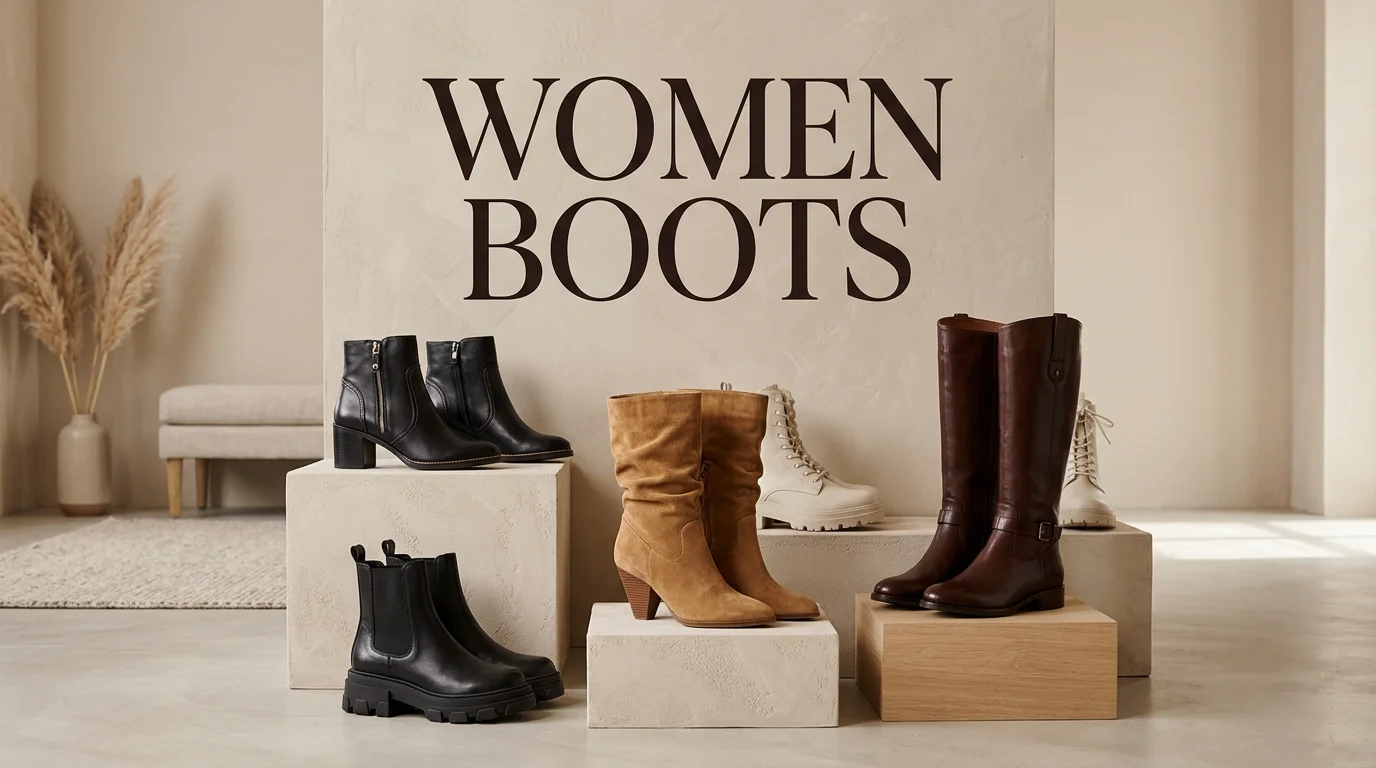
Finding the right women’s boots is less about chasing one trend and more about matching style, fit, weather, and wardrobe. UK shoppers have plenty of choices, from Chelsea and ankle designs to taller riding-inspired shapes. The best pair should feel comfortable, work with clothes you already own, and suit how often you plan to wear it. Also worth reading: Gym Sets in the UK.
A practical approach makes shopping much easier. Start with your preferred height, then compare material, heel shape, sole grip, and everyday versatility. Once those basics are right, colour and trend details become much easier to judge.
Quick answer: The best women’s footwear for most UK wardrobes combines a comfortable fit, weather-friendly material, dependable grip, and a shape that works with several outfits. Chelsea and ankle styles offer strong everyday versatility, while knee-high and riding-inspired designs suit polished autumn and winter looks.
| Style | Best for | Typical look | Key buying point |
|---|---|---|---|
| Chelsea | Everyday wear | Clean and versatile | Check elastic quality and ankle fit |
| Ankle | Jeans and dresses | Easy to style | Choose a shaft height that flatters your trousers |
| Knee-high | Autumn and winter | Polished and structured | Measure calf width before buying |
| Riding-inspired | Smart casual outfits | Classic and refined | Look for a comfortable shaft and stable sole |
| Biker | Casual outfits | Tougher, relaxed styling | Watch the weight and hardware |
| Heeled | Evenings and smarter outfits | Dressier finish | Prioritise heel stability |
| Flat | Walking and daily use | Practical and simple | Check cushioning and grip |
How to Choose Women’s Boots for Everyday UK Wear
Begin with how you expect to use the pair most often. Daily commuting calls for comfort, grip, and a heel you can walk in for longer periods. Occasion-focused footwear can prioritise shape or height because you may wear it for shorter periods.
UK weather also makes material important. Smooth leather can be easier to wipe clean after wet streets, while suede usually needs more protection and care. Synthetic options vary widely, so judge them by construction, lining, flexibility, and sole quality rather than material alone.
Think about the trousers and skirts already in your wardrobe before choosing shaft height. A narrow ankle shape often works well under wider trousers, while a taller style pairs neatly with skirts and dresses. Wordify’s guide to wide-leg jeans for women can help you balance footwear with looser denim.
7 Styles Worth Knowing Before You Buy
1. Chelsea Styles
Chelsea footwear remains useful because the simple design is easy to pair with everyday clothes. Elastic side panels usually make the pair quick to put on, while the close ankle shape works with denim, tailoring, and casual dresses. Black offers maximum flexibility, while brown can soften autumn outfits.
Check how firmly the elastic holds your foot before buying. Loose panels can reduce support, while overly tight sides may feel uncomfortable during longer days. A slightly thicker sole can also add grip without making the design look too heavy.
Pros
- Easy to wear with many outfits.
- Usually quick to put on.
- Works for casual and smarter styling.
Cons
- Fit around the ankle varies.
- Minimal designs can offer less cushioning.
2. Classic Ankle Styles
Ankle-height pairs are among the easiest options to build outfits around. They work particularly well with straight-leg jeans, cropped trousers, midi skirts, and casual dresses. A neat toe shape can make them look polished without becoming formal.
Pay attention to where the shaft finishes against your leg. Certain heights can rub the ankle or create an awkward gap with cropped trousers. Trying them with the type of socks you usually wear can give a more realistic fit.
Pros
- Broad outfit compatibility.
- Available in many heel heights.
- Suitable across several seasons.
Cons
- Shaft height can affect comfort.
- Some shapes clash with longer trouser hems.
3. Knee-High Pairs
Knee-high footwear adds structure to colder-weather outfits and works especially well with dresses, skirts, and fitted trousers. Current UK fashion coverage has also kept riding-inspired silhouettes visible, making cleaner tall shapes useful beyond one season. Neutral colours tend to last the longest in the wardrobe.
Calf fit matters as much as shoe size. Measure the widest part of your calf and compare it with the retailer’s measurements whenever possible. A little room for tights or thin trousers can make the pair easier to wear throughout winter.
Pros
- Warm and polished.
- Strong choice with dresses and skirts.
- Can make simple outfits look more finished.
Cons
- Calf fit can be difficult.
- Taller shapes require more storage space.
4. Riding-Inspired Designs
Riding-inspired footwear has a cleaner, more traditional shape than many trend-led options. Look for a low heel, simple upper, and structured shaft for a style that feels polished without looking formal. Brown, black, and deep burgundy are particularly easy to combine with autumn colours.
This shape works well when the rest of the outfit stays simple. A knit dress, long coat, or tailored skirt can all complement the structured silhouette. Avoid excessive buckles if you want the pair to remain useful beyond a single trend cycle.
Pros
- Refined appearance.
- Works with classic wardrobes.
- Often easy to dress up or down.
Cons
- Less compact than ankle options.
- Poor calf fit can spoil the silhouette.
5. Biker-Inspired Styles
Biker shapes bring more weight, hardware, and visual contrast to an outfit. They can work well with straight denim, soft knitwear, or feminine dresses because the heavier footwear creates balance. This makes them useful for people who prefer a more relaxed or slightly tougher look.
Weight is worth checking before purchase. Chunky soles and metal details can make some pairs tiring during long days. Look for cushioning and a flexible forefoot if comfort matters as much as appearance.
Pros
- Distinctive styling.
- Good grip on many chunky soles.
- Works well with casual clothing.
Cons
- Can feel heavy.
- Hardware may limit versatility.
6. Heeled Options
Heeled footwear can make evening outfits and smarter daytime looks feel more polished. A block heel usually offers greater stability than a narrow heel, especially on uneven pavements. Kitten heels can look lighter while keeping the overall height manageable.
Consider the heel position as well as its height. A heel placed directly under your own heel often feels more stable than one positioned too far back. Forefoot padding can also make a noticeable difference during longer wear.
Pros
- Dressier appearance.
- Several heel shapes available.
- Can work from office to evening.
Cons
- Less practical for long walks.
- Comfort depends heavily on heel construction.
7. Flat Everyday Options
Flat styles are a sensible choice if walking comfort is the priority. A low heel does not automatically mean good support, so look for cushioning, enough toe room, and a flexible but protective sole. Deep tread can also help during wetter months.
These pairs can still look polished when the upper remains streamlined. Try them with jeans, tailored trousers, or a simple midi dress for a balanced outfit. Neutral colours make repeat styling easier across the week.
Pros
- Practical for frequent walking.
- Easy to wear throughout the day.
- Usually simple to style.
Cons
- Thin soles may offer poor cushioning.
- Completely flat shapes may lack support.
Which Style Is Best for You?
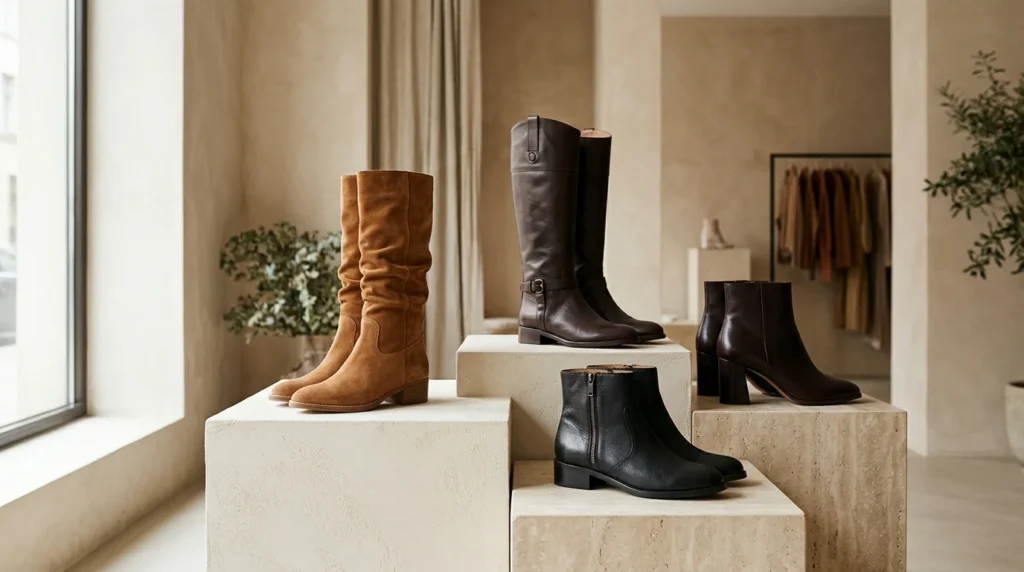
The right choice depends on your routine, not a single universal winner. For maximum versatility, a simple black or dark brown Chelsea or ankle design is often the safest starting point. It can work with denim, trousers, skirts, and many casual dresses without demanding much outfit planning.
Choose knee-high or riding-inspired footwear if your wardrobe contains plenty of skirts, dresses, long coats, and autumn layers. Choose biker styling for stronger visual contrast, while heeled options work better for smarter occasions. Comfort-focused shoppers should give sole construction and fit more weight than trend details.
How to Match Footwear With Your Wardrobe
Start with proportion. Wide or loose trousers often look balanced with a neat toe shape, while slim trousers can sit comfortably inside taller designs. Cropped hems work well when there is a small, deliberate gap above the footwear.
Colour can also change how easy a pair is to repeat. Black feels sharper and works well with monochrome outfits, while chocolate brown suits cream, denim, olive, camel, and burgundy. If you enjoy accessory-led outfits, Wordify’s baguette bag guide offers ideas for coordinating compact bags with fashion-focused looks.
For evenings, use footwear to set the level of formality. A slim ankle design or stable heel can sharpen an otherwise simple outfit without requiring many accessories. Wordify’s guide to going-out outfits can help you build the rest of the look around that choice.
What Materials Work Best in UK Weather?
Leather remains popular because it can combine structure, durability, and relatively straightforward cleaning. Water resistance still depends on treatment and construction, so don’t assume every pair of leather shoes is ready for heavy rain. Check the care instructions before applying any protective product.
Suede gives outfits a softer finish but normally requires more maintenance in wet conditions. Protective spray and careful drying can help preserve the surface, although muddy weather may still make it less convenient for daily use. Keeping a pair of suede shoes for drier days can reduce unnecessary wear.
Synthetic materials can be cheaper and come in a wide range of finishes. Quality varies widely, especially in breathability, flexibility, and how the upper ages. Focus on lining, stitching, sole attachment, and comfort instead of relying only on the material label.
How Should Women Boots Fit?
A well-fitting pair should hold the heel securely without crushing the toes. Your foot may move slightly as you walk, but repeated heel lifting usually suggests the fit is too loose. Tightness across the widest part of the foot is also unlikely to become comfortable through normal wear.
Account for the socks or tights you’ll wear most often. Winter socks take up more room than thin hosiery, so trying footwear with the wrong thickness can lead to the wrong size. For tall pairs, calf measurements deserve the same attention as foot length.
Walk on a hard surface before deciding. Check whether the heel slips, the ankle rubs, or your toes hit the front on downward steps. A few minutes of movement often reveals problems that are difficult to notice while standing still.
Common Buying Mistakes to Avoid
Choosing by appearance alone is one of the easiest mistakes to make. A fashionable pair offers little value if it pinches, slips, or feels tiring after a short walk. Prioritise fit, sole grip, and weight over decorative details.
Another mistake is buying a colour that only works with one outfit. Before purchasing, picture at least three combinations using clothes you already own. If you struggle to do that, another shade or shape may give you better value.
Do not ignore care requirements either. Suede, smooth leather, and synthetic uppers need different maintenance, and some finishes are less forgiving in frequent rain. Understanding the upkeep before buying can prevent an attractive purchase from becoming impractical.
Our Verdict: The Most Useful Choice for Most UK Wardrobes
For most shoppers, a low or mid-heeled ankle or Chelsea style offers the strongest balance of comfort and versatility. Choose a neutral colour, dependable sole, and simple upper if you want the pair to survive changing trends. Those features matter more for repeated wear than decorative details.
Taller riding-inspired options are the stronger choice if dresses and skirts form a large part of your autumn wardrobe. Biker and heeled designs make more sense as secondary pairs once your everyday needs are covered. Building from the most wearable option first usually leads to fewer unused purchases.
Frequently Asked Questions
What type of women boots are easiest to style?
Chelsea and simple ankle styles are usually among the easiest to coordinate. Their compact shape works with several trouser widths, dresses, and skirts. Neutral black or brown colours can make outfit planning even simpler.
Are knee-high styles still fashionable in the UK?
Tall silhouettes continue to appear across mainstream UK retail and fashion coverage. Riding-inspired shapes are especially useful because their clean design is less dependent on short-lived details. The strongest choice is still the one that suits your existing clothes.
Should I size up for winter footwear?
Do not automatically choose a larger size. Try the pair with the socks you expect to wear and check the brand’s sizing guidance. Extra length can cause heel movement even when thicker socks are involved.
Which colour is most versatile?
Black is often the easiest option for sharper or monochrome wardrobes. Dark brown works particularly well with denim, cream, camel, olive, and other autumn shades. Your most useful colour is the one that already matches several pieces you own.
Are expensive pairs always better?
Price alone does not guarantee comfort or durability. Construction, materials, lining, sole attachment, and fit give you more useful information. A mid-priced pair that fits well can offer better value than a costly design you rarely wear.
Build Your Wardrobe Around Wearability
The smartest purchase is a pair you’ll wear regularly, not one you choose only for a trend. Consider your daily routine, typical weather, preferred trousers, and how much you walk. Those details will narrow the options faster than browsing by appearance alone.
Once the practical requirements are covered, choose the shape and colour that best reflect your style. A versatile everyday pair can become a wardrobe anchor, while taller or more directional designs can add variety later. That approach keeps your footwear collection useful, flexible, and easier to style.