
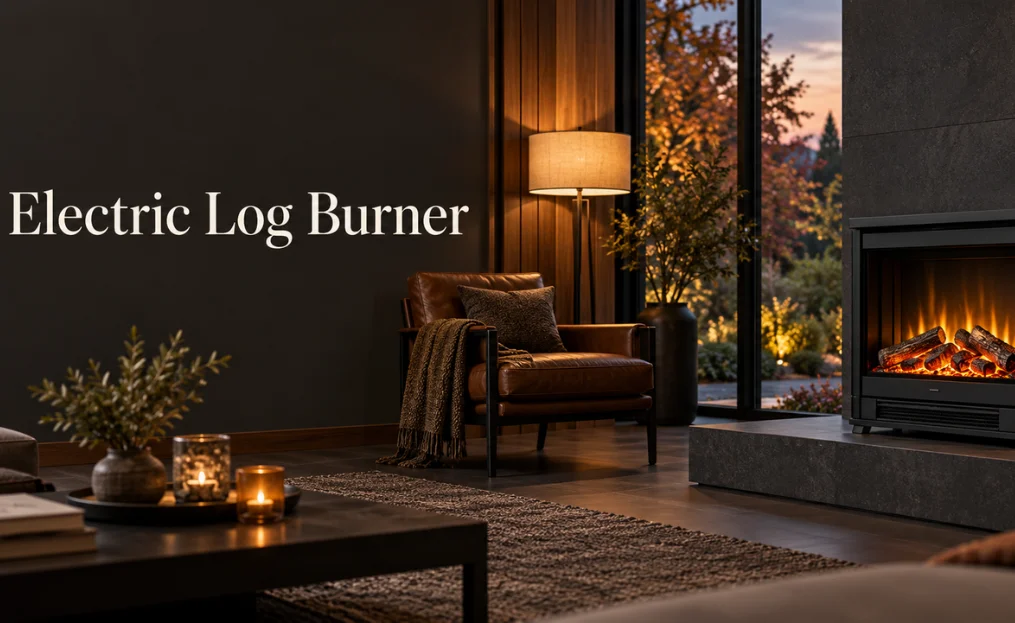
An electric log burner gives you the look of a traditional stove without burning wood or installing a flue. Most UK models combine an artificial flame effect with a built-in electric heater. They suit living rooms, flats, extensions, bedrooms, and other spaces needing occasional extra warmth.
For many households, an electric stove works best as a decorative focal point and supplementary heater. Most models produce about 1.5kW to 2kW of heat, rather than heating an entire property. You can also run many flame effects without switching the heater on.
Direct answer: An electric stove is a practical choice when you want instant local heat and a traditional fireplace appearance. It needs no wood, chimney, or functional flue. Typical 2kW heating costs are about 53p per hour at the October 2026 Ofgem average electricity rate.
Electric Stove Buying Guide at a Glance
| Factor | What UK buyers should know |
|---|---|
| Typical heat output | Around 1.5kW to 2kW |
| Chimney required | No |
| Functional flue required | No |
| Typical installation | Freestanding models often plug into a standard socket. |
| 2kW running cost | About 52.6p per hour at 26.32p/kWh |
| 1kW running cost | About 26.3p per hour at 26.32p/kWh |
| Flame-only operation | Available on many models |
| Common styles | Freestanding, inset, fireplace suite, media-wall and panoramic |
| Main advantage | Easy installation and realistic atmosphere |
| Main drawback | Direct electric heat can be costly for prolonged use. |
What Is an Electric Log Burner?
An electric log burner is an electric heater designed to resemble a wood-burning stove. Instead of burning logs, it creates artificial flames using LEDs, lighting, projections, mist, or similar visual technology. A separate heating element and fan usually provide the actual warmth.
Because nothing is burned, these appliances do not need a working chimney for combustion gases. Freestanding designs can often be positioned wherever the manufacturer permits, and a suitable socket is available. Inset and media-wall fires may need more planning because their surrounds require secure installation.
This flexibility makes them useful in homes where a traditional stove would involve major building work. They can also work in modern properties without a chimney breast. Renters should still check tenancy terms before making permanent alterations.
How Much Does an Electric Stove Cost to Run in the UK?
Running cost depends mainly on the heater’s wattage and your electricity tariff. From 1 October through 31 December 2026, Ofgem lists an average electricity rate of 26.32p per kWh. The figure applies to a typical Direct Debit customer under the price cap across England, Scotland, and Wales.
Using that average rate, a 1kW heater costs roughly 26.3p for one hour. A 1.5kW setting costs about 39.5p per hour. A 2kW setting costs approximately 52.6p per hour.
| Heat setting | Approximate cost per hour* | Two hours per day |
|---|---|---|
| 1kW | 26.3p | 52.6p |
| 1.5kW | 39.5p | 78.9p |
| 2kW | 52.6p | £1.05 |
*Calculated using 26.32p/kWh. Your tariff, region, meter, and payment method can change the actual cost.
These calculations assume the heating element runs continuously at its full stated output. A thermostat may cycle the heater after the room reaches its target temperature. Therefore, real consumption can sometimes fall below the simple maximum calculation.
Flame-only mode uses much less electricity because the main heating element remains off. That makes an electric fire useful as an evening visual feature outside the coldest months. Check the manufacturer’s wattage if flame-effect running costs matter to you.
For a wider comparison of household heating options, see Wordify’s guide to the best heating for UK homes. It compares direct electric heating with boilers, heat pumps, storage heaters, and other systems.
Do Electric Log Burners Give Off Real Heat?
Yes, most stove-effect electric fires produce genuine room heat. The heating element commonly works with a fan to move warmed air into the room. Current UK retail ranges frequently offer outputs around 1.5kW or 2kW.
That output can make a noticeable difference in a smaller lounge, bedroom, home office, or conservatory. It does not automatically make the appliance suitable as a whole-house heating system. Room size, insulation, draughts, ceiling height, and outdoor temperature all affect comfort.
A thermostat is especially useful if you plan to use the heater regularly. It lets the appliance reduce or stop heating once the chosen temperature is reached. Timers and remote controls can also prevent unnecessary running.
Which Type Should You Choose?
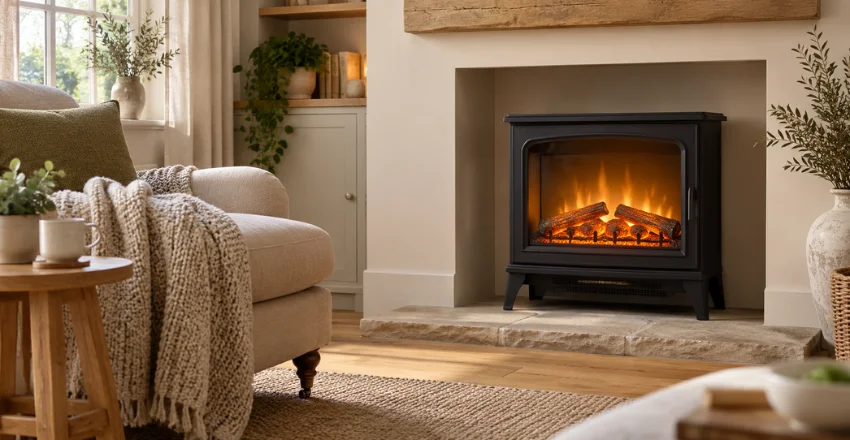
The right design depends more on your room than on one universally superior model. Freestanding stoves offer the easiest installation, while inset fires create a more permanent fireplace appearance. Media-wall models suit contemporary rooms where the fire forms part of a larger entertainment feature.
| Type | Best suited to | Main benefit | Main limitation |
|---|---|---|---|
| Freestanding stove | Easy room updates | Simple placement | Can look less integrated |
| Inset electric stove | Existing fireplace openings | Traditional built-in appearance | Measurements matter. |
| Fireplace suite | Rooms without a surround | Complete focal point | Takes more floor space |
| Media-wall fire | Modern living rooms | Wide, contemporary flame display | More installation work |
| Panoramic stove | Visible feature areas | Flames seen from several angles | Often costs more |
Freestanding models
A freestanding unit is the simplest option for most buyers. Many models only need suitable positioning and access to a wall socket. They are also easier to replace if your décor changes. Choose a model that matches the scale of your room and fireplace opening. A tiny stove can disappear inside a large chimney breast. An oversized design can dominate a compact lounge.
Inset and fireplace models
Inset models work well when you want a more permanent fireplace appearance. Measure the opening, depth, ventilation requirements, and clearances before ordering. Never assume two fires with similar screen widths need identical recess dimensions.
A complete fireplace suite removes the need to source a surround separately. This option can create a traditional focal point without rebuilding a chimney. It does require enough wall and floor space for the complete unit.
Media-wall fires
Wide electric fires are common in media walls. They combine well with televisions, shelving, concealed cables, and low-level storage. Wordify’s media wall with shelves guide covers layouts, lighting, storage, and electric fireplace integration.
Plan heat outlets carefully if a television sits above the fire. Manufacturer clearance requirements should take priority over visual preferences. You also need convenient access for maintenance and electrical connections.
Electric Stove Versus a Wood-Burning Stove
An electric fire wins on convenience because there is no fuel to carry or ash to remove. It also avoids the combustion process associated with a genuine wood-burning appliance. Installation is usually simpler because no operational flue is required.
A wood stove provides a different type of heat and a genuine flame. It needs appropriate installation, fuel storage, cleaning, and maintenance. Local smoke-control requirements may also affect how solid-fuel appliances can be used.
The electric option makes more sense when appearance, flexibility, and easy operation matter most. A genuine stove may suit buyers who specifically want solid-fuel heating and can support its installation requirements. Neither choice should be based on appearance alone.
How Realistic Do Modern Electric Fires Look?
Realism varies greatly between entry-level and premium products. Basic models may use LED lighting behind molded logs, while premium designs can add moving projections or mist-based effects. Some fires also offer adjustable flame brightness, ember colors, and different fuel-bed arrangements.
Viewing angle matters almost as much as flame technology. A convincing effect viewed straight ahead can appear flatter from the side. Three-sided models can solve that problem when the fire sits prominently within the room.
The surrounding design also affects realism. A suitable hearth, balanced lighting, and correctly scaled fireplace opening can make a modest unit appear more convincing. Wordify’s guide to living-room wall lights includes ideas for framing fireplaces and creating softer evening lighting.
What Features Are Worth Paying For?
A thermostat should rank near the top if you intend to use the heater often. Independent flame and heat controls are also valuable because they let you enjoy the fire without unnecessary heating. A timer can further reduce wasted energy.
Remote controls improve convenience, especially on inset or media-wall installations. Adjustable flame brightness can make the effect look better in changing daylight. Some premium fires provide several flame colors, but extra settings do not always make flames more realistic.
Look closely at noise before buying. Fan-assisted heaters produce some sound when the heating function operates. Customer reviews and showroom demonstrations can help reveal whether a particular model is noticeably loud.
Safety Tips for Electric Stove Heaters
Treat the appliance as a heater rather than purely decorative furniture. Electrical Safety First advises keeping portable heaters at least one meter from combustible materials. It also recommends avoiding extension leads because heaters can overload them.
Place freestanding units on a stable surface where children or pets cannot easily knock them over. Never cover the air outlet or use the heater for drying clothes. Switch it off when you leave it unattended or go to sleep.
Buy from a reputable retailer and inspect the plug and cable regularly. Stop using the appliance if you notice scorching, damaged wiring, unusual smells, or excessive heat at the socket. Manufacturer instructions should always override general placement advice.
Are Electric Stove Fires Worth It?
For buyers wanting a low-maintenance fireplace effect, the answer is often yes. They provide immediate local warmth and need no stored logs or chimney for normal operation. They can also create atmosphere without running the main heating element.
Their weakness is prolonged heating cost. Direct electric resistance heating uses relatively expensive electricity for every kilowatt-hour of heat delivered. Wordify’s broader UK heating comparison explains why heat pumps can deliver different running-cost economics for whole-home heating.
Our verdict: choose one primarily as a room feature with useful supplementary heat. A 1.5kW or 2kW thermostatic model suits many average living spaces. Prioritise realistic flames, independent heat controls, safe installation, and sensible running costs.
Frequently Asked Questions
Does an electric log burner need a chimney?
No, an electric log burner does not require a working chimney or combustion flue. It does not burn wood, gas, or another fuel. Always follow the manufacturer’s clearance and ventilation instructions for the specific appliance.
How much does a 2kW electric stove cost per hour?
At Ofgem’s October 2026 average capped rate of 26.32p per kWh, 2kW costs around 52.6p hourly. Your actual price depends on your electricity tariff and how long the element remains active. Thermostatic cycling may reduce consumption after the room warms.
Can I use the flame effect without the heat?
Many current models allow independent flame operation without the heating element. This feature lets you keep the fireplace appearance during mild weather. Check the product specification because controls and flame technology vary by model.
Can an electric stove heat a whole room?
A 1.5kW or 2kW appliance can provide useful warmth in many smaller rooms. Results depend on room dimensions, insulation, draughts, and outside conditions. It should not automatically be treated as a replacement for properly sized whole-home heating.
Is an electric fire cheaper than central heating?
Not automatically, because the comparison depends on the heating system and how much space you warm. Local electric heat can make sense if you only need to warm one occupied room. Whole-home economics are different, so compare your tariff and existing system before changing heating habits.
Choosing the Right Model for Your Home
Start with the room and intended use rather than choosing on appearance alone. Decide whether you mainly want ambience, supplementary heat, or a permanent fireplace focal point. Then compare dimensions, heat output, controls, noise, flame quality, and purchase price.
A freestanding model usually offers the simplest route for an existing room. An inset fire suits a traditional fireplace opening, while a media-wall design creates a contemporary finish. Whatever style you choose, follow the manufacturer’s installation and safety instructions.
The strongest purchase balances appearance with practical heating controls. Check the wattage against your expected usage before buying. That simple calculation can prevent an attractive fireplace from becoming an unexpectedly expensive heater.