

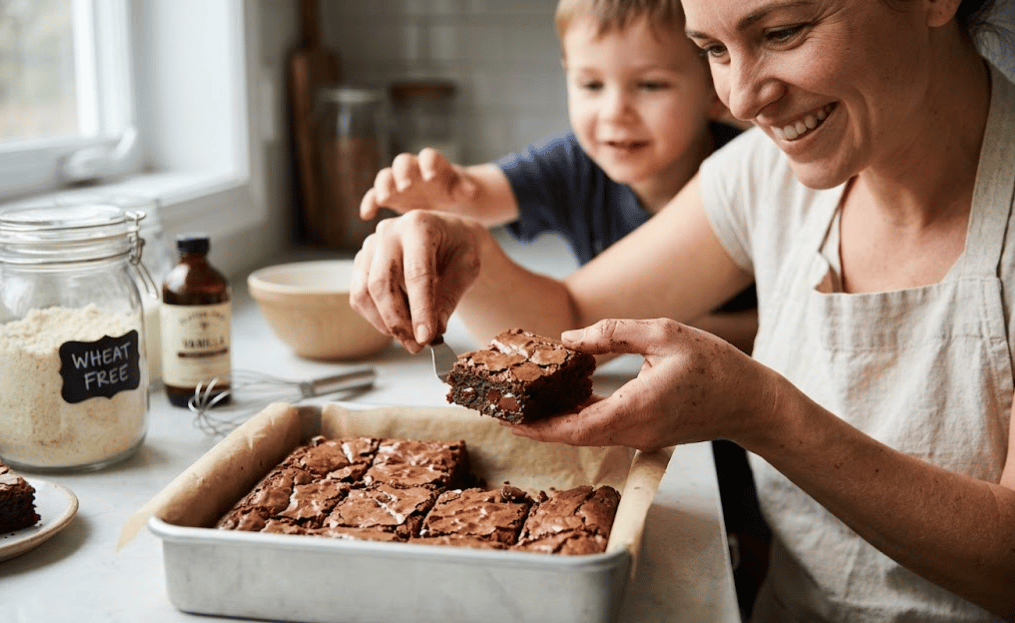
A good wheat free brownie recipe should give you dense chocolate flavour without a dry or gritty texture. This version uses wheat-free plain flour, plenty of chocolate, and a short baking time. The result is a fudgy centre with a thin, crackly top.
These brownies use simple ingredients you can find in most UK supermarkets. You can make them in one afternoon without specialist baking equipment. Careful cooling makes them easier to slice and gives the centre its rich texture.
These wheat-free brownies combine melted dark chocolate, butter, eggs, sugar, cocoa, and wheat-free flour. Bake them at 160°C fan until the edges are set, but the centre remains slightly soft. Cool them fully before cutting for dense, fudgy squares with a crisp chocolate top.
| Recipe detail | Quick answer |
|---|---|
| Prep time | About 15 minutes |
| Baking time | 25–30 minutes |
| Oven | 180°C conventional / 160°C fan / Gas 4 |
| Tin size | 20cm square tin |
| Makes | 12–16 squares |
| Texture | Fudgy centre and thin crust |
| Main flour | Wheat-free plain flour |
| Storage | Airtight container for several days |
| Freezer friendly | Yes, once fully cooled |
Why These Wheat-Free Brownies Work
Brownies need less flour than most cakes, which makes wheat-free baking easier. Chocolate, butter, eggs, and sugar provide most of their structure and richness. Flour mainly helps the mixture hold together cleanly.
Current UK recipes commonly use around 85g to 100g of gluten-free plain flour per standard batch. BBC Good Food, BBC Food, and FREEE all use quantities within that range. Keeping the flour modest also helps prevent a dry, cake-like result.
Another key factor is baking time. A centre that looks completely dry in the oven may become firm after cooling. Removing the tin while the centre remains slightly soft helps preserve the fudgy texture.
Ingredients
Use a kitchen scale for the most consistent result. Small differences matter more when a recipe contains relatively little flour. Have every ingredient measured before you start mixing.
- 180g unsalted butter, plus extra for greasing.
- 180g dark chocolate, roughly chopped.
- 250g golden caster sugar.
- 3 large eggs.
- 1 teaspoon vanilla extract.
- 90g wheat-free plain flour.
- 45g cocoa powder.
- ¼ teaspoon fine salt.
- 100g milk or dark chocolate chunks, optional.
Choose chocolate that suits the dietary needs of whoever will eat the finished bake. Product recipes can change, so check the packaging each time. The same applies to cocoa, baking ingredients, and optional chocolate pieces.
Equipment You Will Need
You do not need specialist machinery for this bake. A simple balloon whisk and spatula will work if you don’t have an electric mixer. Accurate scales and the correct tin make a bigger difference.
- 20cm square baking tin
- Baking parchment
- Two mixing bowls
- Small saucepan or microwave-safe bowl
- Whisk
- Silicone spatula or large metal spoon
- Fine sieve
- Cooling rack
A much larger tin will produce thinner pieces that bake faster. A smaller tin creates a deeper mixture that takes longer. Check the centre rather than relying only on the clock.
How to Make This Wheat-Free Brownie Recipe
The method is straightforward, but temperature control matters. Avoid adding piping-hot chocolate directly to the eggs. Gentle mixing after adding the flour also helps keep the texture tender.
1. Prepare the oven and tin. Heat the oven to 180°C conventional or 160°C fan. Grease and line a 20cm square tin with baking parchment.
2. Melt the chocolate and butter. Put both ingredients into a heatproof bowl. Melt gently over barely simmering water or use short microwave bursts.
3. Cool the chocolate mixture slightly. Leave it for five minutes after melting. It should remain fluid but should not feel fiercely hot.
4. Whisk the eggs and sugar. Beat them together until the mixture looks lighter and slightly thicker. Add the vanilla and whisk briefly again.
5. Add the melted chocolate. Pour it slowly into the egg mixture. Fold until the colour becomes even and glossy.
6. Add the dry ingredients. Sift in the wheat-free flour, cocoa, and salt. Fold gently until no obvious dry pockets remain.
7. Add extra chocolate if wanted. Fold through the chocolate chunks without overworking the mixture. Scrape everything into the prepared tin.
8. Bake until slightly under-set. Bake for about 25–30 minutes. The edges should look set while the middle still feels a little soft.
9. Cool before slicing. Leave the bake in its tin until completely cool. Lift it out using the parchment and cut it into squares.
How to Tell When the Brownies Are Ready
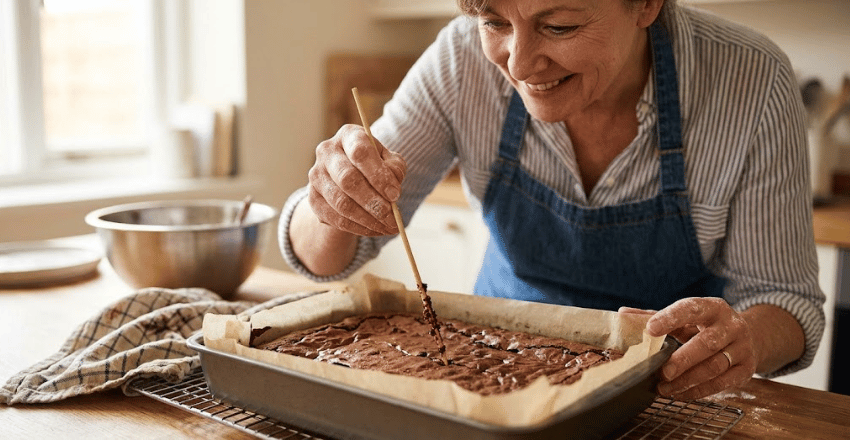
Brownies are harder to judge than an ordinary sponge cake. A completely clean skewer can mean the centre has baked too far. Look for moist crumbs, not wet batter.
The surface should develop a thin crust with small cracks. The edges usually pull slightly away from the lined tin. The centre should no longer move like liquid when the tin is gently shaken.
Cooling is part of the cooking process, so resist cutting immediately. The chocolate and butter firm up as they cool. A full cool gives you neater slices and a denser centre.
Wheat-Free and Gluten-Free Are Not Always the Same
A wheat-free diet and a gluten-free diet are not identical. Gluten occurs in wheat, barley, and rye, while a wheat allergy concerns proteins found specifically in wheat. Someone avoiding wheat may therefore have different requirements from someone with coeliac disease.
UK allergy guidance also warns that a product labelled gluten-free may still contain certain forms of wheat starch. That can matter for people with a diagnosed wheat allergy. Check that packaged ingredients meet the person’s specific requirements.
Spelt is another common source of confusion. It is a type of wheat, so it is not appropriate for a wheat-free bake. Rice, maize, buckwheat, and other suitable alternatives may be used in wheat-free flour blends.
If you are baking for a serious allergy, cross-contact matters as well. Use clean bowls, utensils, work surfaces, and baking equipment. Follow the person’s medical advice rather than assuming one free-from label covers every condition.
Choosing Wheat-Free Flour in the UK
A supermarket wheat-free plain blend is the simplest option. Many blends combine rice flour with maize, potato, tapioca, or similar starches. These mixtures provide a more balanced texture than one starch used alone.
Check the ingredients rather than relying on the front of the packet. This is particularly important when the bake is intended for someone with a diagnosed allergy. Manufacturers can also change formulations between purchases.
You do not need self-raising flour for this recipe. Brownies should remain dense rather than rise like a sponge. Plain flour gives you more control over that characteristic texture.
For more kitchen ideas, Wordify’s Food section collects its wider cooking and food-related coverage. It can be useful when planning other dishes around a baking session. Keeping related food content together also makes future recipes easier to find.
How to Avoid Dry or Crumbly Brownies
Too much flour is one of the quickest routes to a dry batch. Weigh the flour rather than scooping it into a measuring cup. UK metric scales make this easy and repeatable.
Overbaking is another common problem. Start checking near the lower end of the stated baking range. Remember that a dark metal tin can behave differently from a thick ceramic dish.
Mixing aggressively after adding flour can also affect the finished texture. Fold until the dry ingredients disappear, then stop. There is no benefit in beating the mixture until perfectly smooth.
Finally, let the squares cool before judging. Warm centres can seem loose when they are still setting. A cooled piece gives a much better indication of the final consistency.
Easy Variations
Once the base recipe works, small additions can change the flavour without changing the method. Keep extra ingredients modest so they do not overwhelm the batter. Large amounts can alter baking time and structure.
Try one of these options:
- Add 75g chopped walnuts or pecans.
- Add the finely grated zest of one orange.
- Stir in 75g white chocolate chunks.
- Add one teaspoon of instant espresso powder.
- Scatter raspberries over the top before baking.
- Add a small pinch of flaky sea salt after baking.
Check every addition for wheat when dietary safety matters. Biscuits, confectionery pieces, flavourings, and filled chocolates can contain unexpected ingredients. Packaging should take priority over assumptions.
Storing and Freezing
Keep cooled squares in an airtight container at room temperature if you plan to eat them soon. A cool kitchen helps preserve their texture. Refrigeration creates a firmer, denser centre if that is your preference.
They can also be frozen once fully cool. Wrap individual portions well before placing them in a freezer-safe container. Wordify’s freezer temperature guide explains why UK household freezers should normally operate around −18°C.
Freezing individual pieces makes it easier to remove only what you need. Let each portion thaw safely before serving. A brief warming can soften the chocolate if you prefer a gooier dessert.
Serving Ideas
These squares work well without any topping because the chocolate flavour is already strong. Serve them with tea or coffee for a simple afternoon treat. Smaller portions suit lunchboxes or party platters.
For dessert, add berries and a spoonful of cream or vanilla ice cream. Slightly warming the square gives the centre a softer texture. Avoid overheating it, as the structure can fall apart.
You can find more cooking features through the Food archive. Readers interested in chefs and food culture may also enjoy Wordify’s feature on Sophie Grigson and her ingredient-led cooking career. Those pages offer a natural route into the site’s wider food coverage.
Frequently Asked Questions
Can I make this wheat free brownie recipe gluten-free too?
Yes, provided every ingredient you use is suitable for a gluten-free diet. Check the flour, cocoa, chocolate, flavourings, and any optional additions. People with coeliac disease also need careful protection from gluten cross-contact.
Can I use spelt flour instead?
No, not when the aim is to avoid wheat. Spelt is a form of wheat, even though it sometimes appears in alternative baking recipes. Choose a genuinely wheat-free flour blend instead.
Why are my brownies dry?
You probably baked them too long, used too much flour, or used a larger tin than intended. Start checking them after about 25 minutes. Remove them when moist crumbs remain in the centre.
Do wheat-free brownies taste different?
They do not need to taste noticeably different. Brownies contain enough chocolate, cocoa, butter, and sugar to dominate the flavour. A balanced plain flour blend also keeps the texture close to a conventional version.
Can I make them without nuts?
Yes. The base ingredients in this version contain no added nuts. Check individual ingredient labels if you need the finished bake to meet a specific allergy requirement.
How long should I cool them before cutting?
Wait until the tray is completely cooled for the cleanest slices. Cooling lets the chocolate and fats firm again. Briefly chilling the slab can produce even sharper edges.
Make Your Next Batch
This recipe keeps the process simple while focusing on the two things that matter most: chocolate flavour and fudgy texture. Accurate weighing, restrained mixing, and careful baking produce a dependable result. Cooling the tray fully completes the texture.
Use ingredients that match your specific dietary needs, especially when allergies are involved. Keep the base recipe unchanged on your first attempt, then experiment with the variations. For more cooking inspiration, browse Wordify’s wider Food coverage once your batch has cooled.