

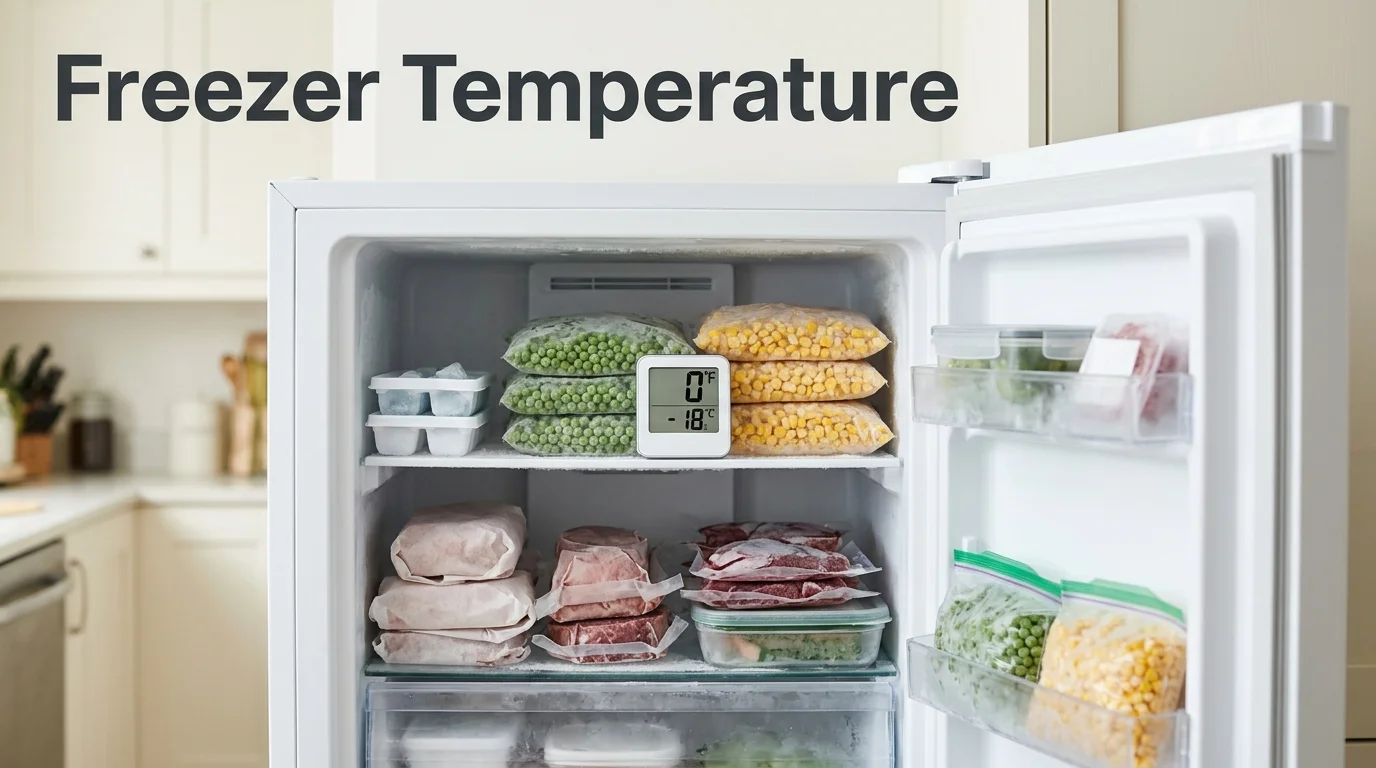
A domestic freezer in the UK should normally be kept at around −18°C. The right freezer temperature protects food quality and keeps frozen products properly stored. It also gives your appliance a sensible balance between reliable freezing and energy use.
For most UK households, −18°C is the setting to aim for. The Food Standards Agency recommends keeping a domestic unit around this level. Check the actual reading with a suitable thermometer, because the number shown on a control dial may not reflect the temperature inside.
| Question | Quick answer |
|---|---|
| Recommended setting | Around −18°C |
| Fahrenheit equivalent | About 0°F |
| Is −15°C cold enough? | It is warmer than the recommended setting |
| Is −20°C acceptable? | Yes, although it may use more energy |
| Best way to check | Use a suitable appliance thermometer |
| How often should you check? | Regularly, and after suspected problems |
| Best place for frozen food | Keep packages organised without blocking airflow |
| Main warning sign | Food softening or repeated high-temperature alerts |
Key Takeaways
- Aim for around −18°C in a domestic UK appliance.
- Use a thermometer to confirm the real internal reading.
- Brief temperature changes after opening the door can be normal.
- Persistent warming deserves investigation.
- Keep vents clear and avoid leaving the door open.
- Follow food packaging instructions when freezing and defrosting.
- Defrost food safely in the fridge when appropriate.
Why −18°C Is the Recommended Setting
Freezing slows the processes that cause food to deteriorate. At normal domestic freezing conditions, most bacteria cannot grow while food remains frozen. Freezing does not necessarily destroy those bacteria, so safe handling still matters after defrosting.
The FSA describes a domestic unit as working rather like a pause button for food. Its current guidance recommends keeping it around −18°C. That figure is also widely used by major appliance manufacturers operating in Britain.
Bosch recommends −18°C for its freezing compartments, although some models allow settings between −16°C and −24°C. Samsung UK also recommends −18°C as a general setting for the frozen section. Your appliance manual should still take priority for model-specific instructions.
How to Check Your Freezer Temperature Accurately
A digital display tells you what the appliance is trying to achieve. It does not always prove that every part of the compartment has reached that figure. A separate thermometer provides a useful independent check.
Place a thermometer designed for refrigerated appliances inside the main storage area. Leave it long enough to produce a stable reading before making adjustments. Avoid measuring immediately after loading shopping or repeatedly opening the door.
The FSA recommends using a thermometer when checking cold-storage conditions. Its household research also found units operating outside recommended ranges. Regular checking can therefore reveal problems before visibly softened food becomes the first clue.
Do not assume that a numbered dial represents degrees Celsius. A setting marked “3” may indicate cooling power rather than three degrees. Check the manufacturer’s instructions before moving controls repeatedly.
Is −15°C Cold Enough?
A reading of −15°C is colder than the freezing point of water, but it is warmer than UK guidance recommends. One short rise does not automatically mean something has failed. Persistent readings around this level suggest that the appliance needs attention.
First check whether the door was recently opened for an extended period. Also consider whether a large amount of unfrozen food was added. Both situations can temporarily raise the internal reading.
If the temperature does not return towards −18°C, inspect the door seal and ventilation. Check that packages are not preventing the door from closing completely. Consult the manual if warning lights or alarms remain active.
Is −20°C Too Cold?
A reading around −20°C is normally not a problem for frozen food. Which? advises that frozen storage commonly falls between −18°C and −20°C. Several appliances also provide controls that allow even colder settings.
Running much colder than necessary may increase electricity consumption. It can also offer little practical benefit for ordinary household storage. A stable setting near the recommended level is usually a sensible target.
Extremely low settings can also contribute to drying and quality loss over long periods. Beko advises against unnecessarily low settings for this reason. Good wrapping and airtight containers remain important regardless of the selected setting.
Why the Reading Can Rise Temporarily
Cold air escapes whenever the door opens. The appliance then needs time to remove the added heat after the door closes. Several brief openings during meal preparation can therefore produce a temporary change.
Adding unfrozen groceries creates another short-term load. The compressor must cool both the new food and the warmer air introduced during loading. Some models provide a fast-freeze function for situations involving larger quantities.
Room conditions matter as well. Appliances are designed to operate within stated ambient temperature ranges called climate classes. A unit installed in an unsuitable garage or outbuilding may struggle during seasonal temperature extremes.
Always check the appliance specifications before installing it in an unheated garage. Some models are built for colder spaces, while others are not. Location can matter as much as the control setting.
Common Reasons an Appliance Is Too Warm
Several simple problems can prevent frozen storage from staying consistently cold. Start with the easiest checks before assuming a major component has failed. Small airflow or door issues can produce surprisingly large changes.
Common causes include the following.
- A door that has not closed fully.
- Damaged, dirty or poorly sealing door gaskets.
- Frequent door opening.
- Vents blocked by tightly packed food.
- A recent large grocery load.
- Heavy frost in a manual-defrost model.
- Poor ventilation around the appliance.
- An unsuitable room temperature.
- A power interruption.
- A faulty thermostat, sensor, fan or compressor.
Keep enough space for cold air to circulate around stored packages. Avoid packing items against internal vents when your model uses fan-assisted cooling. Follow your manual because layouts differ between manufacturers.
If the unit repeatedly warms despite these checks, professional assessment may be necessary. Persistent alarms should not be ignored when their cause is unclear. Moving vulnerable food to another working appliance may be sensible while investigating.
Does a Full Freezer Stay Colder?
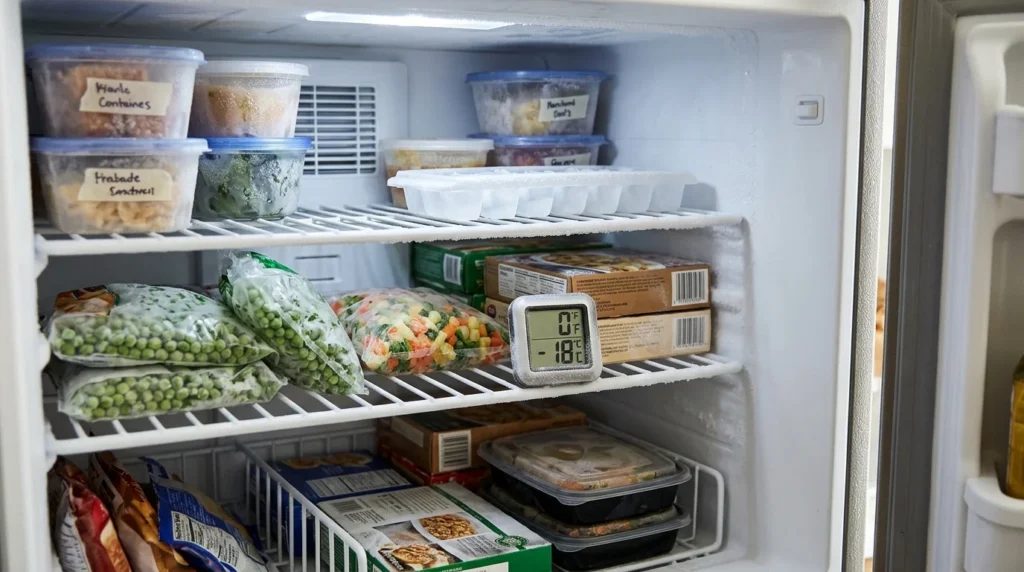
A well-stocked appliance can hold its temperature more steadily than an almost empty one. Frozen items provide thermal mass, which slows warming when the door opens. That does not mean every available space should be filled.
Air still needs room to circulate in many models. Overloading can obstruct vents and create uneven cooling. Always keep manufacturer-specified airflow areas clear.
If you batch-cook meals, divide them into practical portions before freezing. The FSA recommends cooling cooked food before placing it into frozen storage. Smaller portions also cool more quickly and make later defrosting easier.
Wordify’s guide to a low-friction food routine also discusses freezing portions of regularly prepared meals. This approach can reduce preparation demands during busy days. Clear labels help you identify older portions before adding more.
How to Store Frozen Food Properly
Correct settings cannot protect poorly packaged food from every quality problem. Cold, dry air can remove moisture from exposed surfaces over time. This creates the familiar dry patches associated with freezer burn.
Use suitable bags, containers or wrapping that limits air exposure. Remove excess air where practical and label homemade food clearly. Include the freezing date when it will help you rotate stored meals.
The FSA recommends airtight containers or appropriate wrapping to reduce freezer burn. It also advises following product-specific freezing and defrosting instructions. These instructions matter because storage periods vary between different foods.
Reducing unnecessary food disposal matters after storage too. Wordify’s food waste guide covers household food disposal in more detail. Better planning can reduce both forgotten frozen food and avoidable waste.
What Happens During a Power Cut?
Keep the door closed as much as possible during a power failure. Opening it releases cold air and accelerates warming. A well-filled compartment generally retains cold conditions longer than an empty one.
Do not judge food safety only by the clock. Consider how warm the food became and whether it remained frozen. Follow current official guidance if you are uncertain after a prolonged interruption.
Power-cut advice can differ between refrigerated and frozen foods. The FSA publishes specific consumer guidance for power interruptions and safe storage. When safety is uncertain, official advice should take priority over guesswork.
Defrost Frozen Food Safely
Freezing pauses bacterial growth rather than sterilising food. Bacteria that were present before freezing may become active again during thawing. Defrosting practices therefore matter even after perfect frozen storage.
The FSA recommends defrosting food in the fridge where practical. This helps prevent food spending extended periods at warmer temperatures where bacteria can multiply. Follow packaging directions when a product is designed for cooking directly from frozen.
Plan ahead for larger items because refrigerator thawing can take time. Keep raw meat contained so juices cannot contaminate ready-to-eat foods. Clean hands, surfaces and utensils properly after handling raw ingredients.
After defrosting ingredients, you could use them in meals suited to appliances such as an air fryer. Wordify’s Ninja Foodi Dual Zone guide offers cooking ideas for several foods. Always follow the food’s cooking instructions rather than relying on appliance timing alone.
When Should You Change the Setting?
Do not change the control because of a single momentary reading. First allow conditions to stabilise after loading food or opening the door. Then check the thermometer again.
Make small adjustments if the reading remains consistently warmer than recommended. Allow enough time for the appliance to respond before changing it again. Repeated rapid adjustments make it harder to identify the correct setting.
Contact the manufacturer or a qualified repair professional if the problem continues. Warning lights, unusual compressor behaviour or repeated thawing deserve particular attention. Your appliance manual may provide model-specific diagnostic steps.
Frequently Asked Questions
What freezer temperature should a UK household use?
Aim for around −18°C for ordinary domestic frozen storage. This matches current Food Standards Agency guidance and recommendations from several major manufacturers. Check the real internal reading with a suitable thermometer rather than relying only on a numbered dial.
Is −18°C the same as 0°F?
Yes, −18°C is approximately 0°F. Many international appliance guides therefore refer to 0°F as the standard frozen-storage setting. UK appliances normally display temperatures in Celsius.
Should I set my appliance colder in summer?
Usually, you should aim for the same stable internal setting throughout the year. Hotter room conditions may make the appliance work harder. Proper ventilation and installation within its climate-class range become especially important during warm weather.
How often should I check the thermometer?
A regular check helps identify gradual changes before they become obvious. The FSA advises checking fridge temperatures weekly and supports using thermometers for cold-storage monitoring. It is also sensible to check after power cuts or unexplained warnings.
Can food be refrozen after it has thawed?
The answer depends on the food and how it was defrosted or handled. Do not automatically refreeze products that have warmed significantly without checking official or package guidance. Safe handling matters because freezing does not kill every bacterium.
The Bottom Line
For a typical UK home, −18°C is the number worth remembering. Confirm it with a thermometer, keep airflow clear and investigate persistent warming. Those simple checks protect food quality while helping the appliance operate as intended.
Good frozen storage also starts before the door closes. Package food properly, label homemade meals and follow safe thawing instructions. For more practical kitchen and food content, browse Wordify’s Food section.