

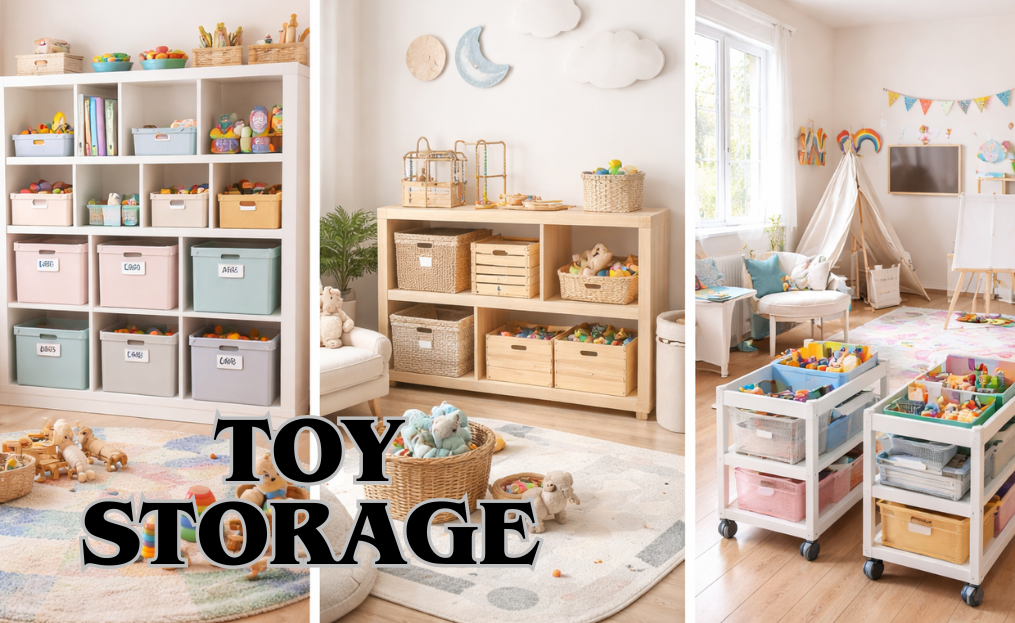
Keeping a kids’ playroom organized can often feel overwhelming, especially when toys seem to multiply overnight and clutter quickly takes over. That’s where smart toy storage solutions make a real difference. From scattered building blocks to overflowing art supplies, having an effective system in place not only keeps your home tidy but also helps children easily find and enjoy their toys.
With the right toy storage ideas, you can create a clean, functional, and engaging space that encourages responsibility, independence, and stress-free play for both kids and parents. This comprehensive guide explores practical strategies, creative ideas, and expert tips for organizing both small and large play spaces.
| Feature / Aspect | Overview |
| Function | Organizes and stores toys to keep spaces tidy and clutter-free |
| Space Efficiency | Suitable for both small and large play areas |
| Storage Types | Bins, baskets, shelves, toy chests, multi-functionalfurniture |
| Organization Method | Bins, baskets, shelves, toy chests, multifunctional furniture |
| Key Benefits | Saves time, improves safety, enhances focus, reduces stress |
| Design Flexibility | Matches home décor with various styles and materials |
| Maintenance | Daily cleanup habits and weekly organization routines |
| Safety | Child-safe materials, anchored furniture, soft-close lids |
| Child Involvement | Encourages responsibility and independence |
| Overall Goal | Create a clean, functional, and enjoyable playroom environment |
What Is Toy Storage?
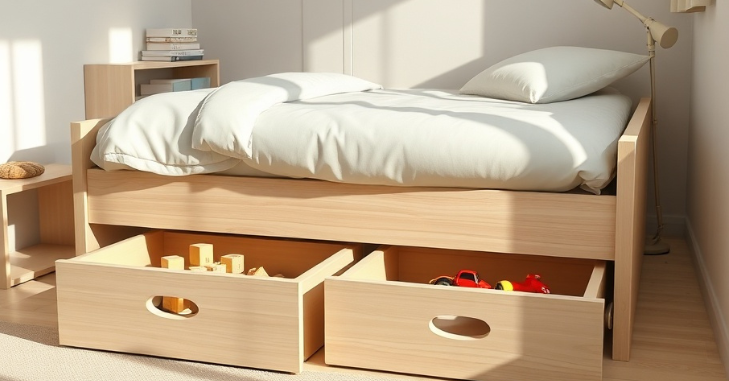
Toy storage refers to the various methods and solutions used to organize, store, and manage children’s toys in a neat and accessible way. It includes a wide range of options such as bins, baskets, shelves, cabinets, and multi-functional furniture designed to keep play areas tidy and clutter-free.
Effective toy storage not only helps maintain a clean and organized space but also makes it easier for children to find, use, and put away their toys, promoting independence and responsibility while enhancing the overall functionality of the room.
Why Toy Storage Matters
- Promotes Organization Skills: Children learn to categorize and put away items, developing valuable life skills.
- Saves Time: Less time spent searching for missing toys or cleaning up.
- Enhances Safety: Reduces tripping hazards and prevents accidents in cluttered spaces.
- Improves Focus: A tidy playroom can help children concentrate better on activities.
- Encourages Responsibility: Kids feel more ownership over their space when they help maintain it.
Assessing Your Playroom Space
Small Spaces
- Measure the room to understand available storage options.
- Consider vertical storage to maximize floor space.
- Opt for multi-functional furniture like storage benches or cubbies with seats.
Large Spaces
- Use zones for different activities: arts and crafts, building blocks, reading, and pretend play.
- Include open shelving or larger cabinets for bulkier toys.
- Incorporate playful storage elements that add decor value.
Types of Toy Storage Solutions
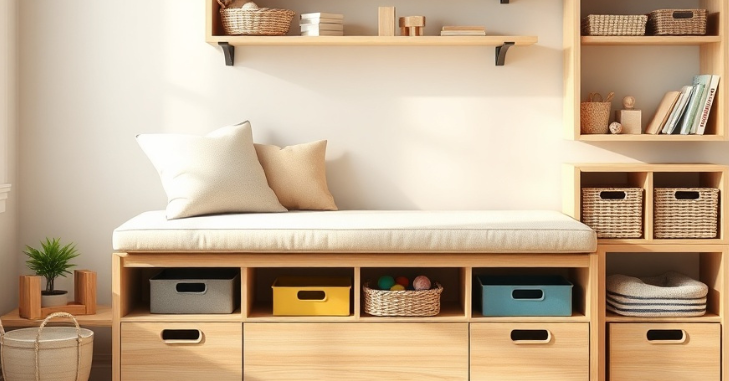
Bins and Baskets
Bins and baskets are one of the most affordable and flexible toy storage solutions. They are easy to move around and perfect for sorting toys by type or size, helping keep play areas organized. Using labels, especially picture labels for younger children, makes it easier for kids to identify where items belong and encourages independent cleanup.
These storage options come in a variety of materials such as fabric, wicker, plastic, and woven baskets, allowing you to match them with your home décor.
Shelving Units
Shelving units are ideal for keeping toys visible and easily accessible, which encourages children to return items after use. Adjustable shelves provide flexibility as your child’s toy collection grows or changes in size.
Popular designs include cube organizers, open shelves, and wall-mounted units, all of which help maximize space while maintaining a neat and tidy appearance.
Toy Chests
Toy chests offer a large storage capacity and are perfect for keeping toys out of sight, reducing visual clutter in a room. They are especially useful for storing bulky items or a large number of toys in one place. For safety, it’s important to choose chests with soft-close lids to prevent accidental injuries. Toy chests are available in various designs, including wooden, fabric-covered, and themed styles that appeal to children.
Multi-Functional Furniture
Multi-functional furniture provides both storage and usability, making it a smart choice for modern homes. These pieces combine storage compartments with everyday furniture, such as seating or sleeping areas.
Examples include storage ottomans, benches with hidden compartments, and bunk beds with built-in drawers. This type of furniture helps maximize space while maintaining a clean and organized look.
Hanging Storage
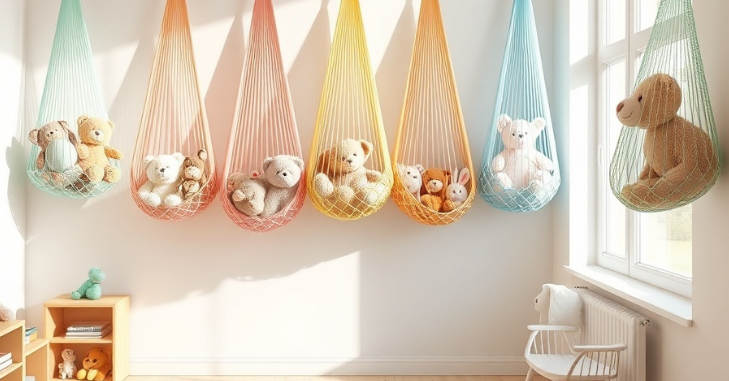
Hanging storage solutions make excellent use of vertical space, especially in smaller rooms. They are perfect for storing lightweight items such as stuffed animals, dress-up clothes, or sports gear. Options include wall hooks, netted hammocks, and over-the-door organizers. These solutions keep toys off the floor while still being easily accessible for children.
Organizing Toys by Category
Suggested Categories
- Building Toys: Blocks, LEGO, and magnetic tiles.
- Art Supplies: Crayons, paints, brushes, and paper.
- Stuffed Animals and Dolls: Keep soft toys in baskets or hanging storage.
- Board Games and Puzzles: Stack vertically or use shelves with dividers.
- Vehicles and Action Figures: Use labeled bins or drawer organizers.
Tips for Kids
- Color-code storage bins for younger children.
- Use picture labels to make identifying items easy.
- Rotate toys periodically to keep interest high and reduce clutter.
Creative Storage Ideas for Small Spaces
- Under-Bed Storage: Roll-out bins for less-used toys.
- Stackable Bins: Save floor space while keeping toys accessible.
- Wall-Mounted Cubes: Display toys neatly while freeing floor space.
- Foldable Play Mats with Storage: Converts into a mat for play and folds into storage afterward.
Innovative Ideas for Large Playrooms
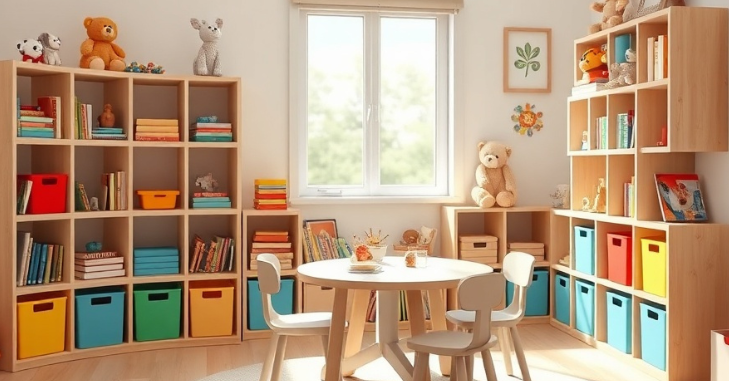
Larger playrooms provide the perfect opportunity to get creative with toy storage and organization. You can use furniture like shelves or dividers to create dedicated zones for different activities, making the space more functional and engaging. Themed storage options, such as pirate chests, castle-shaped shelves, or race car bins, add a fun element that encourages kids to clean up.
Open display shelves allow children to showcase their favorite toys, promoting easy access and interactive play, while rolling carts offer flexibility by allowing you to move toys between different areas for multi-purpose use.
Tips for Maintaining a Tidy Playroom
Daily Habits
Maintaining a tidy playroom starts with simple daily habits. Encourage children to clean up after each play session so messes don’t build up over time. Turning cleanup into a fun game or challenge can make the process more engaging and enjoyable for kids. It’s also helpful to keep frequently used toys within easy reach, which makes both playing and tidying up more convenient and consistent.
Weekly Routines
In addition to daily habits, establishing a weekly routine helps keep the playroom organized and hygienic. Rotating toys can reduce clutter and keep children interested in what they have. Take time to deep clean bins, shelves, and floors to maintain cleanliness and prevent dust buildup. It’s also a good idea to regularly assess which toys are no longer used and consider donating them to keep the space manageable and clutter-free.
Safety Considerations
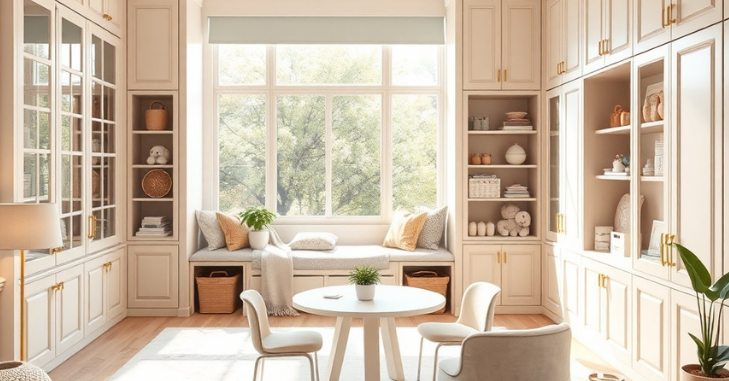
- Avoid heavy furniture that can tip over; anchor shelves and tall cabinets.
- Choose non-toxic, child-safe materials for bins and furniture.
- Ensure lids on toy chests are soft-close to prevent injuries.
- Keep small toys out of reach for toddlers to avoid choking hazards.
Encouraging Kids to Participate
- Allow them to choose where items go.
- Use color-coded or picture-labeled bins for independence.
- Praise children when they tidy up to encourage positive habits.
Benefits of a Well-Organized Playroom
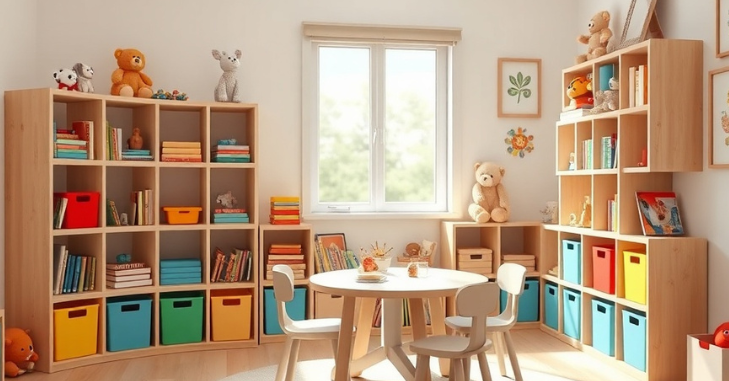
- Reduces Stress: Clutter-free spaces are calming for both kids and parents.
- Encourages Creativity: Open and organized space allows children to explore freely.
- Improves Responsibility: Kids learn to manage their belongings and take ownership of their space.
- Saves Money: Less likely to buy duplicates when toys are easy to locate.
Smart Toy Rotation and Long-Term Organization Strategy
An effective way to maintain an organized playroom over time is by using a toy rotation system, where only a selected portion of toys is kept available while the rest are stored away and swapped periodically. This approach helps reduce clutter, keeps the play environment fresh, and increases children’s interest in their toys because items feel “new” each time they are reintroduced.
It also prevents overstimulation by limiting the number of choices available at once, which can improve focus and more meaningful play. Parents can further enhance organization by periodically reviewing toy collections to remove broken or unused items, ensuring the storage system remains manageable and efficient as the child grows.
Conclusion
Effective toy storage plays a vital role in creating a clean, safe, and enjoyable environment for children. By choosing the right storage solutions and maintaining consistent organization habits, parents can reduce clutter while encouraging responsibility and independence in their kids.
Whether you are working with a small play area or a large playroom, smart toy storage strategies help maximize space, improve accessibility, and enhance overall functionality. With the right approach, toy storage transforms chaotic spaces into organized, stress-free areas that support both play and learning.
Want to know about How Do I Know If My TV Stand Will Hold My TV? Check out our Home Improvement category.
FAQs
We can organize all the toys with the aid of useful containers. Clear plastic toy containers are a great choice.
Kids are instructed to move three body parts, identify three things they see, and identify three things they hear.
A prepared environment, according to the Montessori method, is a place where a child is free to use their possessions.
Sort your child’s toys into different categories if you already have a play area. Keep any new blocks your youngster receives with the rest.