
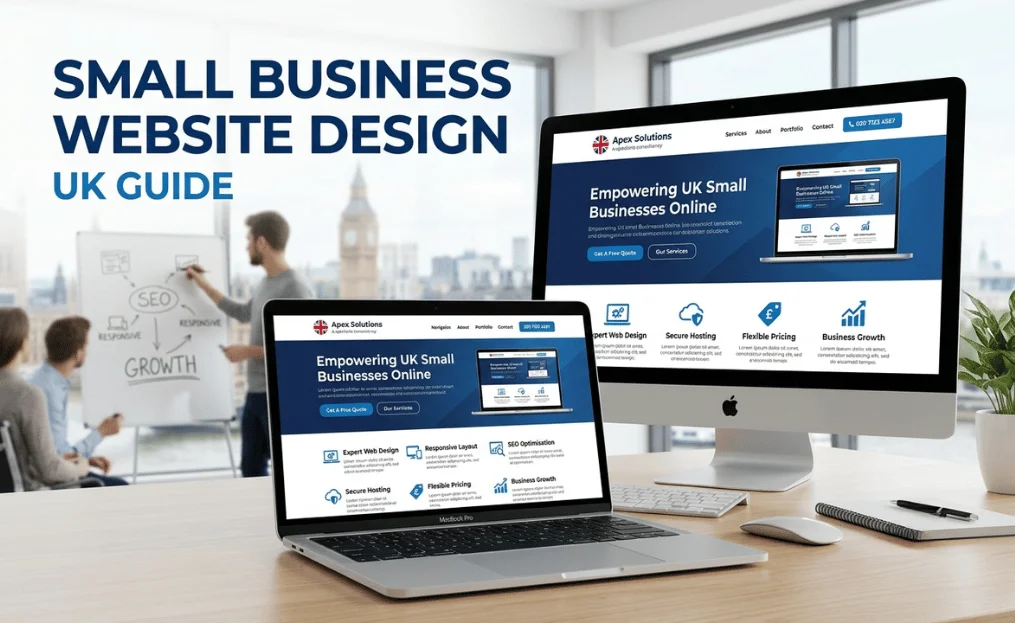
A five-page site for a UK trade business can cost £54 a year or £8,000, and the gap has little to do with how the finished pages look. Small business website design splits into four routes, and the route you pick sets the price. Everything below uses UK rates checked in August 2026.
The short version: a do-it-yourself builder runs £4.50 to £25 a month. Pay a professional to finish a template, and you are at £1,200 to £3,000. Freelance designers charge £500 to £5,000 for a project. Regional UK agencies start near £3,000 and climb to £8,000, with London firms quoting far more.
What each route costs in the UK
| Small Business Website Design Route | Build cost | Running cost | Brief to live | Suits |
| DIY website builder | £0, plus your hours | £4.50 to £25 a month | A weekend to a month | Sole traders and new ideas |
| Template build, done for you | £1,200 to £3,000 | £15 to £65 a month | 1 to 3 weeks | Local firms who want it off their desk |
| Freelance designer | £500 to £5,000 | £20 to £120 a month | 2 to 6 weeks | Buyers with a clear brief |
| UK agency | £3,000 to £8,000 regional | £65 to £300 a month | 4 to 10 weeks | Firms where the site brings the work in |
Key takeaways
- The cheapest route costs money in hours instead of pounds. Budget two to four working days of your own time.
- Your first year rarely matches the quote. Add the domain, the hosting, the photography and the copy.
- Ongoing cost is the line that gets left off nearly every quote. Plan for £15 to £300 a month.
- Most small firms in the UK land somewhere between £1,200 and £3,000 and are right to.
What Your Small Business Website Design Budget Buys

Buyers assume they are paying for the visual design. In practice, the drawing is a small slice. The bulk of any quote covers discovery, writing, building, testing on real phones, and the fiddly launch week when forms break, and emails vanish into spam.
Content is the part that stalls projects. Nobody can write your service pages for you without asking a lot of questions, and photography of your actual work beats any stock image on a plumbing or catering site. If you sell products, budget separately for a proper shoot, because planning a photoshoot for e-commerce is its own job with its own kit list.
One rule holds across every UK studio we looked at: whoever supplies the words and pictures controls the timeline. Hand over finished content and a three-week build stays three weeks. Promise to send it later and the same build drifts into month three.
Route one: build it yourself
UK prices as of August 2026 sit lower than most people expect. Webador starts at £4.50 a month, Wix runs £9 to £25, Site123 sits at £9.50, GoDaddy asks £7.99 to £14.99, and Squarespace spans £12 to £79. Selling online? Shopify’s Basic plan is £19 a month billed yearly, or £25 billed monthly.
- Good for: a sole trader, a side business, or any idea you want live this week.
- Bad for: anyone whose enquiries already come from search, because a template you have not thought about will not rank.
- Hidden cost: your weekends. Two to four days is normal for a first build.
Here is the part builder websites never print. A DIY build is the wrong choice in three situations. The site has to do a job you cannot describe. You need bookings tied to a diary. A competitor already owns your search terms. In those cases, you are not buying pages, you are buying judgement.
Route two: a template build, finished for you
This is the quiet middle of the UK market, and it fits more businesses than extreme. Here the studio takes a solid template, shapes it around your brand, writes or edits the pages, then hands you something you can update. Expect £1,200 to £3,000, and one to three weeks once your content lands.
You give up bespoke layouts. You keep the speed, and you keep the price predictable, which matters when the site is one line in a small budget rather than the whole marketing plan.
Route three: a freelance designer
UK freelance rates in 2026 run £25 to £50 an hour for junior and mid-level designers, £40 to £80 for experienced ones, and £70 to £120 for specialists. Day rates span £200 to £550, though most quotes cluster at £300 to £400.
On a project basis, a three- to five-page brochure site comes in at £500 to £1,500. Standard business sites run £1,500 to £3,000. Add a proper content management system and the range moves to £2,000 to £5,000.
Pros: you deal with the person doing the work, decisions happen in a day, and the rate carries no office overhead.
Cons: one person gets ill, takes holidays, and cannot be a designer, a copywriter, and a back-end developer at once. Booking systems, member areas and databases are a developer’s job, not a designer’s. Read up on what Django developers bring to a build, and you will know within ten minutes whether your project has crossed that line.
Route four: a UK agency

Regional agencies in Manchester, Leeds, Bristol or Glasgow quote £3,000 to £8,000 for a standard small business site. London studios start around £8,000 and run to £30,000 and beyond. Timescales stretch to four to ten weeks, partly because more people touch the work and partly because agencies insist on the research stage a freelancer often skips.
What you are buying is cover. You get a team, a project manager, a written process, and someone who answers the phone in year three when the contact form dies.
The mistake is hiring an agency for a brochure site. Five pages about a family-run business do not need a discovery workshop.
The verdict on small business website design
There is no single best route, but there is a best route for each situation, and the honest answers are narrower than most guides admit.
- Turnover under £100k, or you are testing an idea: build it yourself. Spend the £120 a year and keep the cash.
- Established local business, no time, wants it done properly: a template build at £1,200 to £3,000. This is the sweet spot for most UK small firms.
- You need something specific, and you know what it is: a freelancer at £1,500 to £5,000.
- The website is how customers find and buy from you: a regional agency at £3,000 to £8,000. Treat it as a sales channel, not a brochure.
If two routes look equally sensible, take the cheaper one. Any £2,000 site that earns its keep can be replaced in three years with a £6,000 one funded by the work it brought in.
The bill after launch
Almost no quote shows this clearly, so here it is. A .co.uk domain costs about £1 for the first year and roughly £10 a year afterwards, before VAT. UK hosting on a solid provider such as Krystal starts at around £7 a month. Cheaper shared plans work fine while traffic is light, as our AvaHost web hosting review sets out.
Then there is care. UK agencies sell maintenance plans at £65 to £245 a month covering hosting, updates, backups and small edits. Freelancers usually charge £50 to £300 a month for the same work. Skip it, and someone still has to run the updates, which means you.
Add it up for a template build. Say £2,000 for the work, £10 for the domain, roughly £84 for a year of hosting, £300 for photography and £780 for a modest care plan. Your real first year is closer to £3,174 than £2,000.
Four things UK buyers get wrong
- Missing company details. A UK limited company has to show its registered company number, its registered office address, and where it is registered on its own site. Sole traders are exempt, and plenty of new limited companies miss this entirely.
- Not owning the domain. Register it yourself, in your business name, and keep the login. If your designer registered it and later disappears, you are negotiating for your own address.
- Assuming you get the files. Ask in writing who holds the source files, the hosting account, and the admin password when the project ends. Get the answer before you pay a deposit.
- Choosing .uk over .co.uk by accident. British customers still type .co.uk. Buy both if the budget allows, and point one at the other.
How to brief a designer and get an accurate quote

Vague briefs produce padded quotes, because the designer prices the risk they cannot see. Send four things instead: the pages you need, examples of two sites you like and why, who the site is for, and what a visitor should do on it. That single page cuts most quotes and every timeline.
Then check the designer the way you would check a builder. Ask for two UK clients you can ring. Look at a site they made three years ago and see whether it still works. Then ask what happens if you want changes in month seven.
Your next step
Write down which of the four routes matches your situation, then set the budget from the table above, including the running cost. Get three quotes against the same one-page brief, and pick the one that asks the sharpest questions rather than the one that quotes the lowest number.
Frequently asked questions
Between roughly £54 a year on a DIY builder and £8,000 with a regional agency. Most UK small firms pay £1,200 to £3,000 for a professionally finished site.
Five, usually. A home page, a page for each main service, an about page with real faces, a proof page of reviews or case studies, and a contact page. Put a tappable phone number on each one.
A weekend for a simple DIY build, one to three weeks for a template, two to six weeks for a freelancer, and four to ten weeks with an agency. Content delays cause almost every overrun.
For a trade, a salon, or a consultancy, yes. It stops being good enough when you need bookings, stock, member logins, or rankings against a competitor who invested properly.