

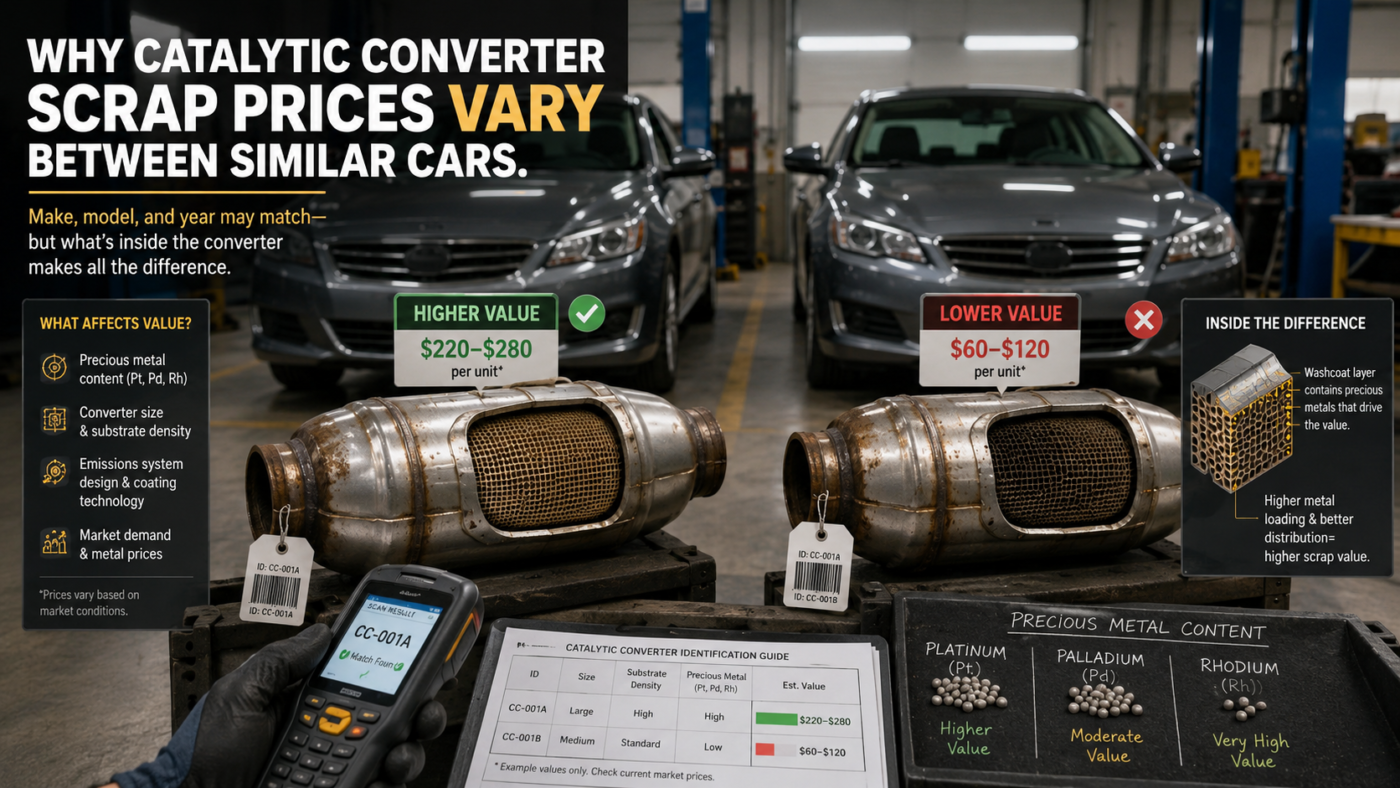
Two cars can look nearly identical, share the same badge and even have similar engine sizes, yet their used catalytic converters may receive very different valuations. For vehicle dismantlers, garages and individual sellers, that difference can be confusing. It sometimes creates the impression that scrap pricing is arbitrary, but reputable buyers base their offers on identifiable technical and market factors.
A catalytic converter is not valued simply as a used automotive component. Its worth primarily comes from the recoverable platinum-group metals inside it. Understanding how manufacturers formulate converters, how refiners assess them and how commodity markets move can help sellers compare quotations more confidently and avoid losing value.
The Vehicle Model Is Only the Starting Point
Searching by make and model is useful, but it does not always identify a converter precisely. Manufacturers may fit several converter variants to the same model during a production run. The installed unit can depend on the engine code, fuel type, transmission, emissions standard, manufacturing plant and intended sales market.
For example, two cars from the same model year may have different engines or emissions packages. One might have been built for the UK market, while another was imported from a region with different emissions requirements. Even when both cars have comparable performance, their converters may contain different substrates and quantities of precious metals.
This is why a professional buyer will normally ask for the reference code stamped on the converter rather than relying only on a registration number or vehicle description. Clear photographs of the code, casing and complete unit can also support accurate identification.
Precious Metal Content Drives Underlying Value
Catalytic converters use platinum, palladium and rhodium to transform harmful exhaust gases into less harmful emissions. These metals perform related functions, but manufacturers do not use them in identical proportions across every converter.
The formulation may vary according to several factors:
- Fuel type: Petrol, diesel and hybrid powertrains have different exhaust characteristics and after-treatment requirements.
- Engine output: Larger or higher-output engines may require a converter designed for greater exhaust flow.
- Emissions regulations: Vehicles built to different regulatory standards may use different catalyst loadings or additional after-treatment units.
- Manufacturer specifications: Carmakers and component suppliers use proprietary catalyst formulations.
- Production date: A mid-cycle engineering update can change the converter without significantly altering the car’s appearance.
Consequently, size and weight alone are unreliable indicators. A smaller original-equipment converter may contain more recoverable value than a larger unit with a lower precious-metal loading.
Original and Aftermarket Units Are Not Equivalent
One of the most common reasons for a surprising valuation is that a vehicle no longer has its factory-fitted converter. Aftermarket converters are designed to provide compliant emissions performance at a practical replacement cost, but they often contain lower quantities of platinum-group metals than original-equipment units.
A car may therefore be the same age and specification as another vehicle while carrying a replacement converter with a much lower recycling value. Repair history matters, especially on older vehicles that may have had exhaust work completed several times.
Identification codes, casing construction, welds and manufacturer markings can help an experienced recycler distinguish original equipment from replacement parts. Sellers should avoid assuming that every converter removed from a particular car will match the highest value listed for that model.
Condition and Completeness Affect the Offer
The outer shell is not the main source of value. Inside most converters is a ceramic or metallic substrate coated with the catalyst-bearing material. If this internal structure is missing, damaged or contaminated, the expected metal recovery may decrease.
Before requesting a quotation, check whether the unit is complete. A converter that has been opened, emptied or broken should be described honestly. Contamination by oil, coolant or other material can also complicate processing. Keeping units separate and preserving readable identification codes makes assessment easier.
A reputable recycler should be able to explain whether a deduction relates to identification, physical condition, missing material or another measurable issue. Transparent grading protects both parties and is especially important for businesses handling regular volumes.
Daily Metal Markets Change Scrap Values
Platinum-group metals are globally traded commodities, and their market prices fluctuate. Automotive demand, mining output, industrial consumption, currency exchange rates and geopolitical events can all affect their value. A quotation obtained several weeks ago may therefore differ from today’s offer even when the converter itself has not changed.
When checking a catalytic converter price, sellers should ask when the valuation was calculated and whether it reflects current metal markets. Comparing an outdated online figure with a live purchase offer can create a misleading impression.
Market movement is also why transparent databases are valuable. Blancomet uses converter identification information alongside current market conditions to support consistent quotations, helping suppliers understand why values can rise or fall over time.
Different Valuation Methods Produce Different Results
Not every buyer uses the same commercial model. Small or one-off batches are often purchased using an identified unit price. Larger, recurring batches may be better suited to toll refining, where converters are processed and settled according to sampled and analysed material.
Professional processing may include:
- Decanning the converter to recover the internal substrate.
- Milling the material into a uniform powder.
- Homogenising the batch to create a representative mixture.
- Taking controlled samples for laboratory analysis.
- Using assay results and market prices to calculate settlement.
For high-volume suppliers, this approach can provide a more precise picture of recoverable metal content than estimates based solely on visual grading. Blancomet supports both straightforward spot purchasing and analysis-led arrangements, allowing dismantlers and commercial suppliers to select a model suited to their volume and operating needs.
How to Get a More Reliable Quotation
Sellers can reduce uncertainty by providing complete, accurate information from the beginning. Before approaching a recycler, record the full reference code and take well-lit photographs from several angles. Include the vehicle make, model, year, engine and fuel type when known, but treat those details as supporting information rather than a substitute for the converter code.
It is also sensible to ask the buyer several practical questions:
- Is the quote based on the exact reference or only a general vehicle description?
- Does the figure reflect current platinum-group-metal markets?
- Are any processing, collection or assay charges deducted?
- How will damaged or unidentified units be assessed?
- What paperwork will be supplied?
- When and how will payment be made?
The highest headline figure is not necessarily the best overall transaction. Clear terms, prompt payment, compliant documentation and consistent grading can be more valuable than an offer that changes after collection.
Compliance and Traceability Matter Too
Catalytic converters form part of a regulated waste stream once they reach end of life. Businesses should work with recyclers that handle materials responsibly and provide appropriate records, including Waste Consignment Notes where required. Good documentation supports environmental compliance, creates a traceable audit trail and helps legitimate operators demonstrate responsible sourcing.
Blancomet has worked with individuals, garages, dismantlers and industrial suppliers since 2009. Its service combines converter identification, current-market valuation and compliant processing, with laboratory-supported settlement available for suitable larger batches.
Look Beyond the Vehicle Badge
The value difference between converters from similar cars usually has a logical explanation. The exact part number, precious-metal formulation, original or aftermarket status, physical condition and current commodity market all influence the final figure. Collection costs, batch size and the chosen settlement method can add further variation.
Rather than relying on a generic model-based estimate, sellers should identify each unit carefully and request a transparent, current quotation. If you have one converter or a regular commercial batch, ask Blancomet to review the references and explain the applicable catalytic converter scrap price. A well-supported valuation provides more than a number: it gives you the confidence that recoverable materials are being priced fairly and returned responsibly to the circular economy.