

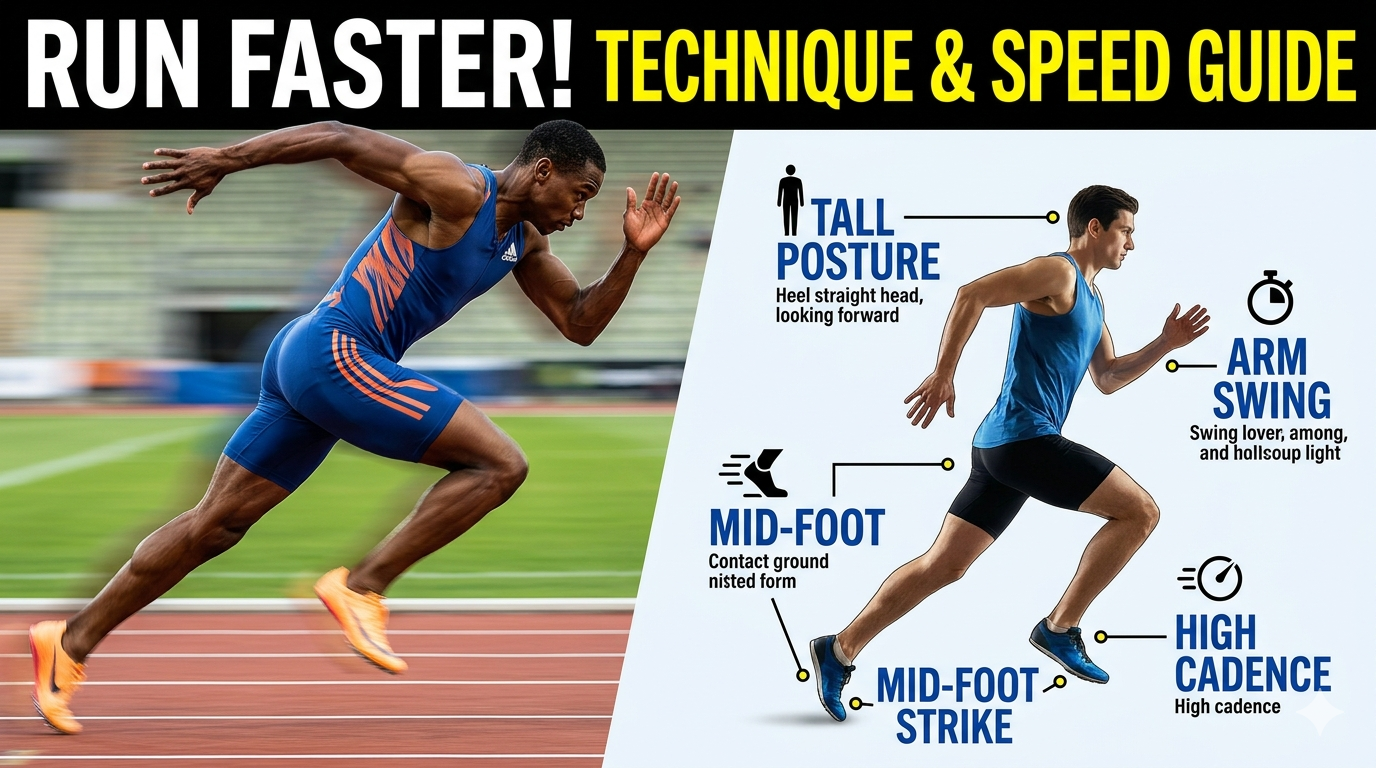
Running faster is not just about natural talent—it is a combination of proper technique, structured training, strength development, endurance building, and consistent recovery practices that work together to improve overall performance. Factors such as stride efficiency, breathing control, posture, and mental focus also play a major role in determining how fast and how long you can sustain speed.
How to Run Faster? Whether you are a beginner trying to improve your jogging pace or an athlete aiming for peak performance, learning how to optimize your movement, energy use, and training routine can significantly transform your results over time.
This complete guide to running faster breaks down proven methods used by professional coaches and athletes to enhance acceleration, improve running economy, and build lasting endurance without increasing injury risk.
| Category | Focus Area | Key Methods | Benefit |
| Speed Training | Sprint development | Intervals, hill sprints, track repeats | Improves acceleration and top speed |
| Technique | Running form | Posture, arm swing, mid-foot strike | Increases Efficiency and reduces fatigue |
| Endurance Building | Stamina development | Long runs, tempo runs, progressive runs | Sustains speed over longer distances |
| Strength Training | Muscle power | Squats, lunges, core workouts | Enhances force and stride strength |
| Recovery | Rest & repair | Sleep, stretching, foam rolling | Prevents injury and improves performance |
| Breathing Control | Oxygen efficiency | Rhythmic breathing techniques | Delays fatigue and improves stamina |
| Nutrition | Energy support | Carbs, protein, hydration | Fuels performance and recovery |
| Warm-Up Routine | Injury prevention | Jogging, dynamic stretches, drills | Prepares body for training safely |
Understanding Speed: What Makes You Run Faster?

Before learning how to improve speed, it is important to understand what actually affects running performance. Three main factors determine speed:
- Stride Length – how far you travel in each step
- Stride Frequency – how quickly your legs move
- Running Efficiency – how well your body uses energy
Improving any one of these can enhance your overall pace, but combining all three yields the best results.
How to Run Faster? Proper Running Form and Technique
One of the most important answers to how to run faster lies in mastering your running form, as proper technique directly impacts speed, Efficiency, and endurance. Poor posture wastes energy and slows you down, while correct alignment helps your body move more efficiently with less effort.
Key form tips include keeping your head upright and eyes forward, relaxing your shoulders to avoid unnecessary tension, and swinging your arms naturally at about 90 degrees to support forward momentum.
It is also important to land mid-foot rather than heavy heel striking, as this reduces impact and improves propulsion. Maintaining a slight forward lean from the ankles helps you move more effectively in the direction of motion. Good form not only reduces energy loss but also allows you to maintain higher speeds for longer periods without fatigue.
Speed Training Techniques

To improve running speed, you must train your body to move faster than usual. This is where structured speed workouts come in.
Effective Speed Workouts
- Sprint Intervals: Short bursts of maximum effort followed by rest
- Fartlek Training: Alternating between fast and slow running
- Hill Sprints: Running uphill to build explosive power
- Track Repeats: Repeated distances like 100m, 200m, or 400m
These workouts teach your muscles to generate power quickly and efficiently.
Strength Training for Faster Running
Strength plays a major role in how fast you run. Strong muscles produce more force with each step.
Key Exercises
- Squats for leg power
- Lunges for balance and stride strength
- Deadlifts for hamstrings and glutes
- Core workouts for stability
A strong core helps maintain posture, while powerful legs increase stride force.
Endurance Building for Sustained Speed

Speed without endurance is short-lived, as true running performance depends on the ability to maintain pace over longer distances. To sustain faster running over time, you need strong aerobic conditioning that improves your body’s ability to use oxygen efficiently and delay fatigue.
Effective endurance training methods include long slow distance (LSD) runs, which build a strong aerobic base; tempo runs performed at a comfortably challenging pace to improve stamina; progressive runs where speed gradually increases throughout the workout; and consistent weekly mileage buildup to enhance overall capacity.
Together, these endurance-focused strategies ensure your body can maintain higher speeds for longer periods without early fatigue, helping you become a more balanced and efficient runner.
How to Run Faster: Training Breakdown Table
| Training Component | Method | Benefit | Frequency |
| Speed Training | Sprints, intervals | Improves acceleration and top speed | 2–3 times per week |
| Strength Training | Squats, lunges, core | Builds power and stability | 2–3 times per week |
| Endurance Training | Long runs, tempo runs | Enhances stamina and energy efficiency | 1–2 times per week |
| Recovery | Rest, stretching | Prevents injury and improves performance | Daily |
| Technique Practice | Form drills | Improves running efficiency | Every run session |
Breathing Techniques for Better Performance
Many runners overlook breathing, but it plays a major role in performance.
Proper Breathing Tips
- Breathe rhythmically (e.g., 2 steps inhale, 2 steps exhale)
- Use deep belly breathing instead of shallow chest breathing
- Stay relaxed to avoid oxygen restriction
Efficient breathing helps delay fatigue and maintain speed.
Warm-Up and Injury Prevention
If you want to understand how to run faster safely, warm-ups are essential.
Best Warm-Up Routine
A proper warm-up routine should always begin with light jogging for 5–10 minutes to gradually increase heart rate and prepare the muscles for activity. This should be followed by dynamic stretches such as leg swings and arm circles, which help improve flexibility, mobility, and overall movement efficiency. Adding exercises like high knees and butt kicks activates key running muscles and improves coordination, while short acceleration runs prepare the body for faster-paced movement and improve performance readiness.
Common Injuries to Avoid
Common running injuries include shin splints, hamstring strains, knee pain caused by poor running form, and ankle sprains. These injuries often occur due to inadequate preparation, overtraining, or incorrect technique.
Proper warm-ups and cool-downs are essential because they significantly reduce injury risk and help maintain long-term running consistency and performance.
Nutrition for Speed and Performance
Food is fuel, and what you eat directly impacts running speed.
Best Foods for Runners
- Carbohydrates (rice, oats, bananas) for energy
- Protein (eggs, chicken, legumes) for muscle recovery
- Healthy fats (nuts, avocado) for endurance
- Hydration (water, electrolytes) for performance
A balanced diet ensures consistent energy levels during training.
Common Mistakes That Slow You Down
Many runners fail to improve because of simple mistakes.
Mistakes to Avoid
- Overtraining without rest
- Poor running posture
- Skipping strength training
- Ignoring recovery days
- Running too fast every session
Avoiding these mistakes is just as important as training itself.
Recovery and Rest: The Hidden Key

Recovery is often overlooked but is essential for improving running performance. Proper recovery allows the body to repair muscles, restore energy levels, and prepare for the next training session.
Effective recovery tips include getting 7–9 hours of quality sleep each night to support muscle repair and overall performance, using stretching and foam rolling to reduce muscle tightness, taking rest days seriously to prevent overtraining and injury, and staying well-hydrated after workouts to aid recovery and maintain energy balance.
Another important factor in improving running speed is tracking your progress consistently. Monitoring your pace, distance, heart rate, and recovery time can help you identify strengths and weaknesses in your training plan. Using fitness watches, running apps, or a simple training journal allows you to measure improvements over time, adjust workout intensity, and stay motivated.
Tracking progress also helps prevent overtraining by showing when your body may need extra recovery or when it is ready for increased workload.
How to Run Faster Over Time
Improvement does not happen overnight. A structured approach is required.
Weekly Training Structure Example
- 2 days of speed training
- 2 days of strength training
- 1–2 days of endurance running
- 2 rest/recovery days
Consistency is the most important factor in long-term progress.
Conclusion
Learning how to run faster is a combination of technique, strength, endurance, and discipline. By improving running form, following structured workouts, strengthening muscles, and maintaining proper recovery, anyone can significantly increase speed over time.
The key is consistency—small improvements every week lead to major long-term gains. Whether your goal is fitness, competition, or personal achievement, applying these principles will help you become a faster and more efficient runner.
Want to know about Chest Fly Machine: The Complete Guide to Building a Strong, Defined, and Symmetrical Chest and More Info Check out our Fitness category.
FAQs
Most people see improvement within 4–8 weeks of consistent training.
No, you also need strength and endurance training.
2–3 times per week is ideal for most runners.
Yes, excess weight can slow performance, while lean muscle improves speed.