

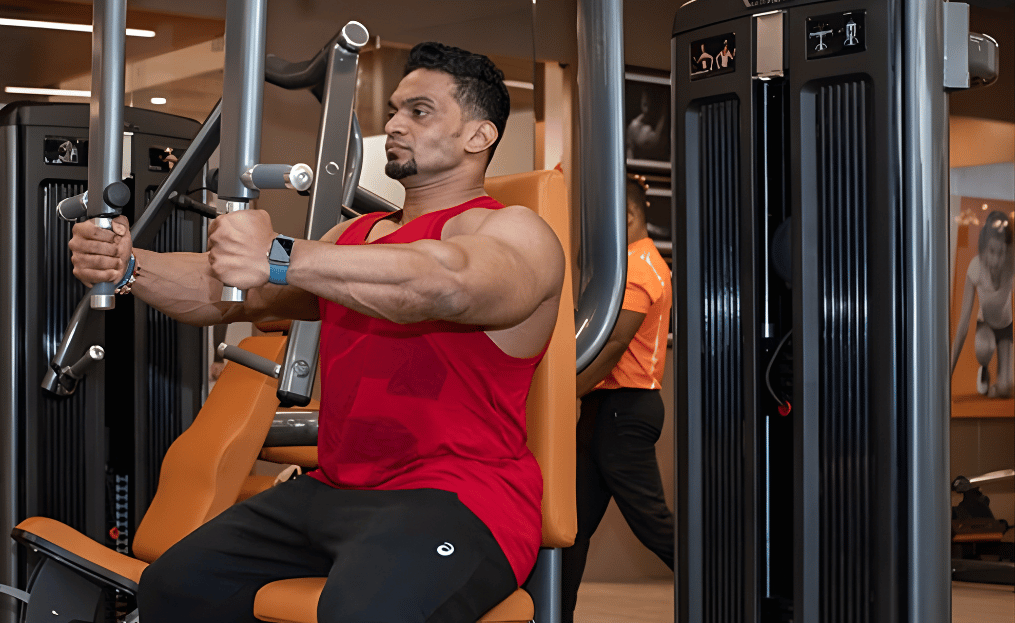
The chest fly machine is a cornerstone piece of gym equipment for anyone looking to sculpt a strong, defined chest. Unlike traditional presses, it isolates the pectoral muscles, allowing for precise activation and optimal growth while minimizing strain on the shoulders and elbows. Its guided motion makes it accessible for beginners learning proper form, yet versatile enough for advanced lifters aiming to maximize chest development.
Understanding how to use it correctly, along with its benefits and targeted muscles, can transform your chest workouts and take your upper-body strength to the next level. Mastering proper use of the machine ensures you engage the right muscles effectively. Knowing its benefits and the muscles it targets can maximize results and prevent injury.
| Section | Key Points |
| What is the Chest Fly Machine? | Gym equipment mimicking dumbbell fly motion; provides guided support; targets pectoralis major; engages stabilizers and anterior deltoids. |
| Benefits | Targeted chest activation, Joint-friendly Controlled movement. Suitable for all levels. Promotes muscle symmetry |
| Muscles Worked | Primary: Pectoralis major (upper & lower chest). Secondly, the anterior deltoids, biceps (stabilizers), and serratus anterior allow full contraction and stretch. |
| How to Use Correctly | Adjust seat & handles; back pressed to pad; slight elbow bend; controlled motion, squeezing chest; return slowly; maintain tension. |
| Step-by-Step Guide | Adjust Sea Select Weight Grip Handles Perform Fly Return Controlled 6. Repeat |
| Reps & Sets Recommendations | Muscle Growth: 3–4 sets × 10–15 reps. Strength: 4 sets × 6–8 reps. Endurance: 3 sets × 15–20 reps. Beginners: 2–3 sets × 12–15 reps |
| Common Mistakes | Heavy weights compromising form, locking elbows, shrugging shoulders, rushing reps, improper seat alignment |
| Chest Fly vs Dumbbell Fly | Stability: High vs. low form: Easier vs. can be compromised stress: Lower vs. higher if form breaks Muscle Isolation: Excellent vs. Good Beginners: Very Suitable vs. Challenging |
What is the Chest Fly Machine?
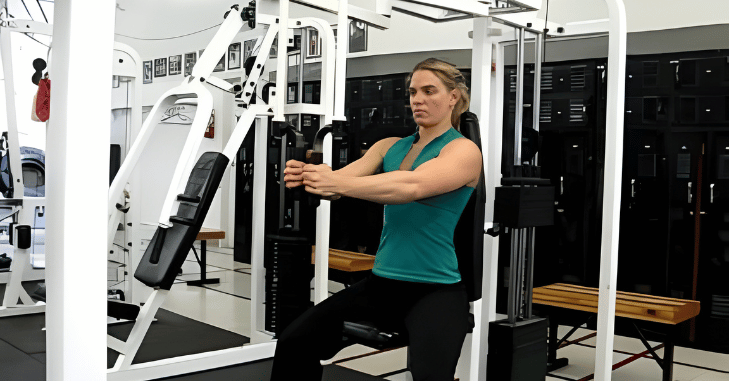
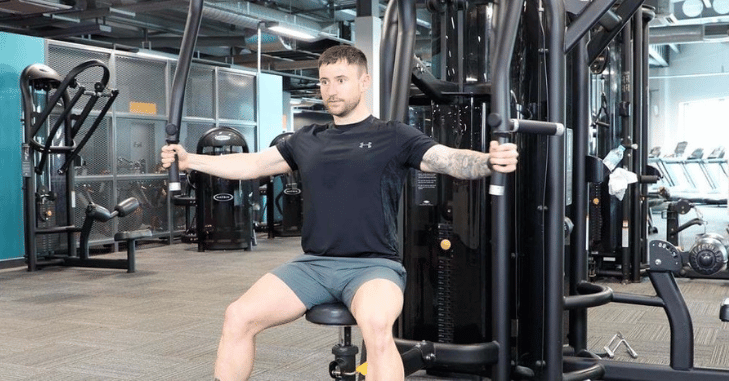
The chest fly machine is a specialized piece of gym equipment designed to isolate and strengthen the chest muscles through a controlled “fly” movement. It replicates the motion of a traditional dumbbell fly, where the arms move in a wide arc to bring the hands together in front of the body. However, unlike free weights, the machine provides guided resistance and a fixed path of motion, which helps maintain proper alignment and reduces the risk of strain or injury.
This machine primarily targets the pectoralis major, the large muscle responsible for chest size and strength. It also activates supporting muscles such as the anterior deltoids (front shoulders) and the biceps as stabilizers. Because the movement is controlled and consistent, it allows users to focus fully on muscle contraction and mind-muscle connection, making it ideal for beginners as well as experienced lifters looking to refine chest definition.
Chest Fly Machine Anterior Deltoids
It also lightly engages the anterior deltoids (front shoulders) and various stabilizing muscles, helping improve overall upper-body control. The guided motion ensures a safe range of movement, reducing strain on joints and connective tissues. This makes it perfect for both beginners perfecting their form and advanced lifters seeking concentrated chest development.
Benefits of Using the Chest Fly Machine
- Targeted Chest Activation: Directly isolates the pectoral muscles for better definition.
- Joint-Friendly: The guided path reduces strain on shoulders and elbows.
- Controlled Movement: Helps maintain proper form and reduces the risk of injury.
- Suitable for All Levels: Adjustable weights make it ideal for beginners and advanced lifters.
- Muscle Symmetry: Ensures both sides of the chest are evenly worked, which is harder with free weights.
Muscles Worked
Primarily targets the pectoralis major, engaging both the upper and lower portions of the chest for balanced development. Secondarily, muscles include the anterior deltoids (front shoulders), the biceps (as stabilizers), and the serratus anterior, which assist with movement and stabilization. It allows a full contraction at the peak of the movement and a deep stretch at the bottom, maximizing chest activation.
How to Use the Chest Fly Machine Correctly:
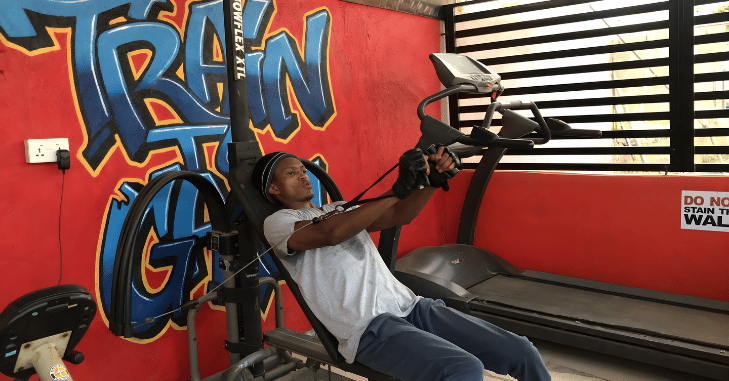
Adjust the seat and handles so your shoulders are aligned with the machine’s pivot point for proper form. Sit with your back pressed against the pad, grip the handles, and keep a slight bend in your elbows. Bring the handles together in a controlled motion, focusing on contracting your chest muscles, then slowly return to the starting position.
Chest Fly Machine Step-by-Step Guide
Adjust the Seat
Adjust the seat so your chest is perfectly aligned with the handles for optimal range of motion.
Ensure your shoulders are in line with the machine’s pivot point to maintain proper form and reduce strain.
Select Weight
Start with a lightweight to master form, then gradually increase the weight. Begin with a light weight to focus on mastering proper form and technique. Gradually increase the resistance as your strength and control improve.
Grip the Handles
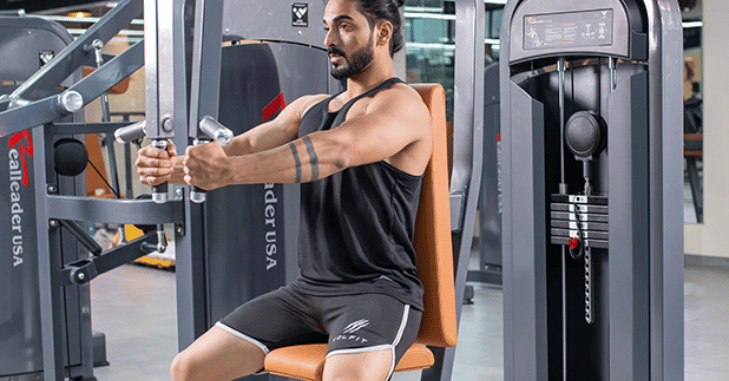
Grip the handles firmly to maintain control throughout the movement. Keep a slight bend in your elbows to protect the joints and ensure smooth motion. Focus on engaging your chest muscles rather than relying on your arms.
Perform the fly.
Slowly push the handles together in front of your chest, keeping the movement controlled.
Focus on fully contracting your pectoral muscles at the peak of the motion.
Maintain tension throughout to maximize chest activation and muscle growth.
Return Controlled
Gently let the handles return to the starting position. Keep your chest muscles engaged throughout the motion to maintain constant tension.
Reps and Sets Recommendations
| Goal | Sets | Reps |
| Muscle Growth (Hypertrophy) | 3–4 | 10–15 |
| Strength | 4 | 6–8 |
| Endurance | 3 | 15–20 |
For beginners, 2–3 sets of 12–15 reps with light weight are recommended to focus on form.
Common Mistakes to Avoid
- Using excessively heavy weights that compromise form
- Locking elbows at the end of the movement
- Shrugging shoulders instead of keeping them down and back
- Rushing through repetitions
- Not aligning the seat correctly with your chest
Chest Fly Machine vs. Dumbbell Fly
| Feature | Chest Fly Machine | Dumbbell Fly |
| Stability | High (guided path) | Low (requires balance) |
| Form | Easier to maintain | Can be compromised |
| Joint Stress | Lower | Higher if form breaks |
| Muscle Isolation | Excellent | Good, but requires control |
| Beginners | Very suitable | Challenging |
Progressive Overload and Training Progress
To achieve consistent chest development, it is important to apply progressive overload when using the chest fly machine. This means gradually increasing the resistance, repetitions, or training volume over time as your muscles adapt. Tracking workout performance and making small adjustments each week can help stimulate continued muscle growth and prevent training plateaus.
Combining the chest fly machine with compound exercises such as the bench press and push-ups creates a well-rounded chest routine that develops both strength and muscle size. By focusing on proper technique, controlled repetitions, and steady progression, users can maximize results while reducing the risk of injury and overtraining.
Conclusion
Incorporating the chest fly machine into your routine is a game-changer for building a balanced, well-defined chest. Its controlled movement ensures safety while effectively targeting the pectorals, anterior deltoids, and supporting stabilizers. Suitable for all fitness levels, it enhances muscle symmetry, improves form, and promotes hypertrophy without overloading the joints.
Whether used as a main chest exercise or a finishing movement, this machine provides a reliable and efficient path to stronger, more sculpted chest muscles. Whether used as a primary chest workout or a finishing move, this ensures consistent muscle engagement and growth. Its controlled motion and targeted activation make it an essential tool for safely building a stronger, well-defined chest.
Want to know about The Ultimate Hyrox Training Plan: Weekly Workouts, Structured Strength Programming, High-Intensity Conditioning Drills, Running Strategy, Performance Tracking, Mobility Work Check out our Fitness category.
FAQs
The machine fly, like all flies, is a fantastic exercise to mix up your chest exercises and give your muscles a different kind of strain.
The machine fly, also known as the “pec deck” fly or sitting lever fly, is a strength-training exercise modeled after the free-weight chest fly.
While the bench press is excellent for developing strength and power, chest flies are more effective for increasing chest size, so include them in your program if you want a bigger chest
Even though both exercises work well, the cable chest fly might be better since it provides consistent tension, flexibility, stability, muscle isolation, and safety. In the end, it depends on your preferences and fitness objectives.
Performing the exercise with your elbows at shoulder height is a common mistake that increases the risk of shoulder impingement.