
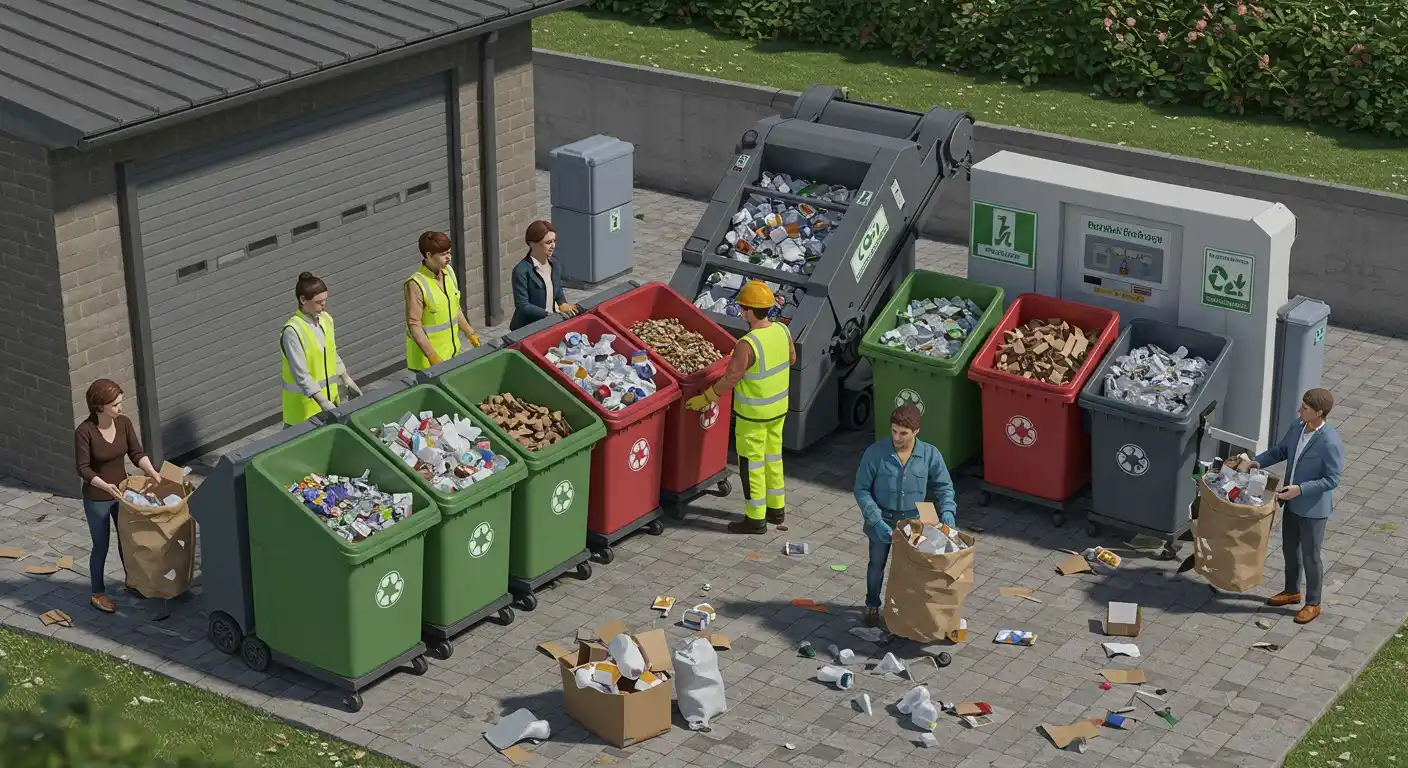
The food waste container is for food only: raw and cooked scraps, plate waste, meat and fish (including bones), fruit and vegetables, dairy, bread, eggshells, tea bags and coffee grounds. Keep out used cooking oil, packaging that your collector does not accept, glass, metal, cleaning products, cloths and anything non-biodegradable. This guide is written for commercial kitchens in the UK and Ireland, where separating food waste is now a legal duty for most businesses, and includes a printable checklist for kitchen teams.
Why food waste separation matters
Separately collected food waste is usually sent to anaerobic digestion, where it is broken down to produce biogas (used for electricity and heat) and digestate, a nutrient-rich fertiliser for farmland. That only works if the load is clean. Plastics, glass and metal damage equipment and lower the quality of the digestate, and a contaminated bin can be rejected by the collector, which means extra charges and a smelly problem left behind the kitchen.
The rules in the UK and Ireland
| Where | Main requirement for businesses |
|---|---|
| England | Under Simpler Recycling, workplaces with 10 or more employees have had to separate food waste since 31 March 2025, regardless of quantity. Micro-firms (fewer than 10 employees) must comply from 31 March 2027. |
| Wales | Since 6 April 2024, all workplaces must separate food waste under the Workplace Recycling Regulations, and food waste must not be poured down the drain or sewer. |
| Scotland | Food businesses above a small weekly threshold have had to present food waste for separate collection for several years under the Waste (Scotland) Regulations 2012. |
| Northern Ireland | The Food Waste Regulations (Northern Ireland) 2015 require food businesses above a weekly threshold to separate food waste for collection. |
| Republic of Ireland | The Waste Management (Food Waste) Regulations 2009, as amended, require commercial premises such as restaurants, hotels, pubs, shops and canteens to segregate food waste and use an authorised collector or authorised treatment facility. Using macerators to send food waste to the drain or sewer is prohibited. |
Details such as thresholds and enforcement vary, so check guidance from your local council (or the relevant environment agency) and your waste contractor. Whatever the jurisdiction, the practical principle is the same: food in the food bin, everything else elsewhere.
What can go into the food waste container
The food waste bin (often a brown or green caddy or wheelie bin) is designed for biodegradable food materials. In a commercial kitchen that typically includes:
- All raw and cooked food scraps: plate scrapings, leftovers from service, prep trimmings and peelings.
- Meat, poultry and fish: including bones, skin, shells and offcuts, raw or cooked.
- Fruit and vegetables: whole, chopped, rotten or peeled.
- Dairy: cheese, butter, yoghurt and cream. Small amounts of liquid are usually fine if mixed with solids.
- Bakery and dry goods: bread, pastries, cakes, biscuits, rice, pasta and cereals.
- Eggs and eggshells.
- Soups, sauces and gravies: in small quantities, ideally soaked up by solid waste.
- Tea bags, coffee grounds and paper coffee filters.
- Out-of-date or spoiled food: see the note on packaging below.
- Small amounts of food-soiled paper: napkins or kitchen roll with food on them, if your collector accepts it.
What cannot go into the food waste container
- Used cooking oil and liquid fat: keep it in a separate used cooking oil container for specialist collection. It must never go down the sink, where it causes fatbergs and blocked drains.
- Packaging your collector does not accept: plastic film, bags and trays, glass jars, tins, cans and foil. Clean paper and cardboard belong in dry mixed recycling.
- Non-food items: cutlery, crockery, kitchen utensils, straws and stirrers.
- Cleaning materials: cloths, sponges, blue roll used for cleaning, chemicals and their containers.
- Hazardous or non-biodegradable waste: medicines, nappies, pet waste, ash, coal, stones and soil.
- Large volumes of liquid: excess sauces, milk or wastewater poured in separately.
- Garden waste: grass clippings and large amounts of plant material, unless your collector agrees.
A note on packaged food
Collectors differ on packaged food. Some processing facilities can mechanically separate packaging, so they accept out-of-date food still in its wrapper. Others require all packaging to be removed at source. Frylite, for example, states on its website that packaging can go into its food waste bins and is separated for use as a solid recovered fuel. If your collector does not offer this, unwrap food before binning it. The rule is simple: follow your own collector’s list, and if in doubt, ask.
Common contamination mistakes
Most rejected bins are caused by the same handful of habits. Watch out for these during a busy service:
- Scraping plates with cutlery still on them, so knives and teaspoons end up in the bin.
- Throwing in disposable gloves, cling film or portion pots along with the food.
- Emptying a whole fryer’s worth of oil into the food bin at close-down.
- Using ordinary plastic bin bags as liners when the collector requires compostable liners or none.
Quick-reference checklist for kitchen teams
| Into the food waste bin | Keep out of the food waste bin |
|---|---|
| Vegetable peelings and trimmings | Used frying oil (separate oil container) |
| Meat and fish bones and offcuts | Plastic wrapping, bags and tubs (unless your collector accepts them) |
| Plate returns and uneaten portions | Glass, cans and foil |
| Bread ends, stale pastries, rice and pasta | Clean cardboard and paper (dry recycling) |
| Cheese rinds and dairy leftovers | Cleaning cloths, sponges and chemicals |
| Eggshells, coffee grounds and tea bags | Crockery and cutlery |
| Spoiled fruit and vegetables | Gloves, aprons and other non-food items |
Print this table and pin it above the bins. A visual reminder at the point of disposal prevents most mistakes.
Practical tips for busy kitchens
- Put a caddy at every station. A small lined caddy near prep areas and the pass makes scraping quick, so staff do not take shortcuts during service.
- Use a simple training rule. “If it grew or came from an animal and it is not packaging or oil, it goes in food waste.”
- Colour-code and label bins with pictures as well as words, which helps staff whose first language is not English.
- Check liners. Use compostable liners only if your collector accepts them; some prefer specific liners or none at all.
- Empty and clean regularly to control odours, flies and pests, especially in warm weather. Some collectors wash bins as part of the service.
- Do not use macerators to send food waste down the drain. It is banned for commercial premises in the Republic of Ireland and Wales and restricted elsewhere, and it blocks drains.
- Keep your paperwork. Businesses have a duty of care for their waste, so keep waste transfer notes from your collector.
Use your food waste data to cut costs
Separating food waste also shows you how much food you are throwing away. Many collectors weigh bins and send regular reports. Use them to spot patterns: large amounts of plate waste may mean portions are too big, while prep waste may point to over-ordering or trimming practices. Reducing waste at source saves on both food purchasing and collection charges.
Choosing a food waste collector
Look for a licensed or authorised collector that offers bin sizes and collection frequencies to suit your volumes, clear guidance on accepted items, and documentation for compliance. Some providers combine services; Frylite, which operates across Ireland and Northern Ireland, offers food waste collection alongside used cooking oil collection, with weighed bins and recycling reports according to its site. Comparing a couple of quotes and asking exactly what can go in the bin will save confusion later. Learn more about the company at Frylite.
Frequently asked questions
Can meat and bones go in the food waste bin?
Yes. Raw and cooked meat, poultry and fish, including bones, skin and shells, can go in the food waste container.
Can used cooking oil go in the food waste container?
No. Used cooking oil and liquid fat should go in a separate oil container for specialist collection and must never be poured down the drain.
Do I have to remove packaging from out-of-date food?
It depends on your collector. Some can separate packaging mechanically and accept packaged food; others require all packaging to be removed first. Follow your collector’s guidance.
Do businesses in England have to separate food waste?
Yes. Under Simpler Recycling, workplaces with 10 or more employees have had to separate food waste since 31 March 2025, and micro-firms must do so from 31 March 2027.
Can I use a food macerator in a commercial kitchen?
Sending food waste to the drain through a macerator is prohibited for commercial premises in the Republic of Ireland and in Wales, and restricted elsewhere. Use a separate food waste collection instead.