

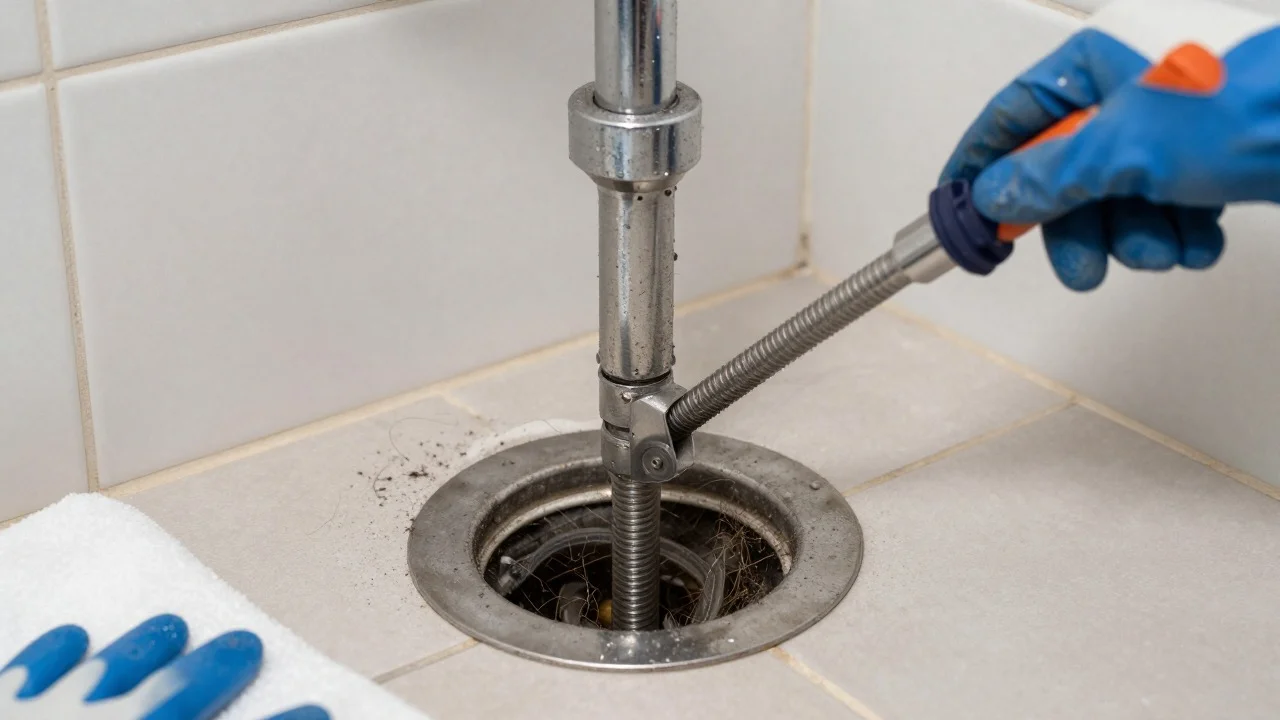
A slow-draining sink or shower can quickly become a complete blockage, but many household clogs do not need an immediate professional call-out. A drain snake can reach hair, soap residue, food debris and other material sitting deeper inside a waste pipe than a plunger can reach. Used carefully and with the correct technique, it is one of the most useful DIY tools for dealing with straightforward blocked drains around a UK home.
A drain snake is a flexible cable that is fed into a waste pipe and rotated to break up or retrieve a blockage. It works best on localised clogs in sinks, baths and showers, while toilets should normally be cleared with a purpose-built toilet auger rather than a standard exposed cable.
What Is a Drain Snake?
A drain snake, also known as a plumbing snake or drain auger, is a flexible cable designed to travel through a waste pipe until it reaches an obstruction. Unlike a plunger, which uses pressure and suction from the drain opening, the snake physically contacts the material causing the blockage. The tip may break the obstruction apart, bore through it or hook onto debris so that some of it can be pulled back out.
Drain augers are particularly useful when hair, soap residue or food waste has accumulated beyond the plughole or trap. They are not a universal answer to every drainage problem, however, because deep sewer blockages, damaged pipes and heavy deposits may require professional equipment. Knowing what type of problem you have before pushing a cable into the pipe greatly reduces the risk of turning a small blockage into a more expensive repair.
Which Type of Drain Auger Do You Need?
Not every auger is designed for the same fixture, and choosing the right type matters as much as the technique you use. A small handheld cable can be ideal for a bathroom basin but completely unsuitable for a blocked underground drain. UK guidance also recommends using a dedicated toilet auger for toilets because its protective design reduces the risk of scratching the porcelain.
| Type | Best used for | Main advantage |
|---|---|---|
| Plastic hair snake | Basins, showers and baths | Simple way to pull hair from near the plughole |
| Handheld drain auger | Sinks, baths and showers | Flexible cable reaches beyond the trap |
| Drum auger | Longer household waste pipes | More cable and better control for deeper clogs |
| Toilet auger | Toilet pans | Protective sleeve helps prevent bowl damage |
| Powered drain auger | Deep or difficult drain lines | More power and reach, usually better left to experienced users |
| Drain rods | Outdoor drains and longer underground runs | Rigid sections can reach farther through larger pipes |
For most homeowners, a manual handheld or drum-style model is the sensible starting point for an indoor sink, bath or shower. Powered machines deliver considerably more force and can damage pipework or become difficult to control when used incorrectly. If the blockage is far enough away that a normal household auger cannot reach it, professional drain-clearing equipment is usually the safer option.
When Should You Use One?
An auger is most useful when the problem appears to be confined to one fixture and simpler methods have failed. Slow drainage, standing water and repeated local blockages often indicate that debris has collected somewhere in the trap or nearby waste pipe. Hair and soap build-up are particularly common in bathroom drains, while kitchen waste pipes can become restricted by food residue and hardened fats.
Signs that an auger may be appropriate include:
A basin, bath or shower drains noticeably more slowly than normal.
A plunger has improved the flow but has not fully cleared the blockage.
You can see or suspect a build-up of hair beyond the plughole.
The same individual fixture repeatedly becomes slow.
Water backs up only in one sink, bath or shower rather than throughout the property.
You suspect a small obstruction is lodged within an accessible waste pipe.
Start with the least aggressive method that is likely to work rather than immediately forcing a cable deep into the plumbing. Visible hair can often be removed by hand or with a simple plastic tool, while a plunger may shift a soft blockage close to the trap. An auger becomes more useful once the obstruction is too deep to reach directly or does not respond to plunging.
When Should You Not Use One?
A household auger is not the right tool when several fixtures are backing up at the same time, sewage is returning through a drain or there are signs of damaged pipework. Those symptoms can indicate a blockage farther along the drainage system rather than a simple clog beneath one sink. HomeServe similarly advises professional help where multiple drains are affected or damaged or collapsed pipes are suspected.
Avoid DIY snaking when:
Several toilets, sinks or showers are backing up together.
Sewage is coming through an indoor or outdoor drain.
You suspect tree-root intrusion, a collapsed pipe or structural damage.
The cable repeatedly hits an immovable obstruction.
A powered auger would be required to reach the suspected blockage.
You have already used a strong chemical cleaner that may still be sitting in the pipe.
If a chemical drain cleaner has already been poured into the drain, do not immediately dismantle the trap or insert a cable that could splash contaminated liquid towards you. Follow the product’s safety instructions and use appropriate hand and eye protection before doing anything else. Never mix different drain-cleaning chemicals, because incompatible products can create hazardous reactions.
How to Use a Drain Snake on a Sink, Bath or Shower
Before starting, put on sturdy gloves and place towels or a bucket nearby to catch dirty water and debris. Remove the plug, strainer or drain cover where possible so the cable has a straight path into the waste opening. If you are working on a basin or kitchen sink and the U-bend is easily accessible, checking and cleaning the trap first can sometimes solve the problem without using the snake at all.
Feed in the cable slowly. Guide the tip into the waste pipe without forcing it. A slight resistance may simply mean that the cable has reached a bend rather than the blockage.
Rotate while advancing. Turn the handle gently as you feed more cable into the pipe. Rotation helps the flexible cable travel around bends instead of folding back on itself.
Identify the blockage. A clog usually feels different from a pipe bend because the resistance may feel soft, springy or uneven. Do not assume every solid stop is material that needs to be punched through.
Work the cable through the obstruction. Continue turning while applying light forward pressure. The tip may break the blockage apart or catch material that can be pulled towards the opening.
Withdraw the snake slowly. Keep some rotation on the cable while bringing it back out. Removing it too quickly can drop trapped debris back into the waste pipe and create a mess around the plughole.
Remove debris and repeat if necessary. Clean hair, sludge or other material from the tip before making another pass. Two or three gentle passes are usually preferable to one aggressive attempt.
Test the drain. Run water and watch how quickly it disappears. A properly cleared waste should drain freely without gurgling or immediately beginning to fill again.
Do not use excessive force when the cable stops moving, because it may be pressing against a tight bend or damaged section of pipe rather than the blockage. HomeServe’s current guidance similarly recommends feeding and turning the snake gently and warns that excessive force can damage pipes. If several careful attempts make no difference, stop and reconsider where the blockage is located.
Can You Use an Auger on a Toilet?
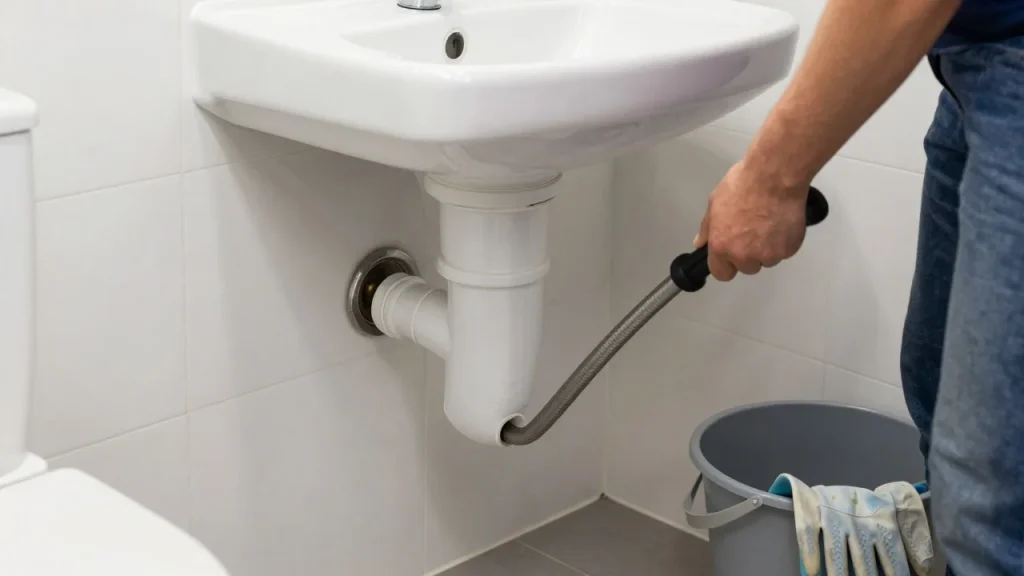
You can mechanically clear some toilet blockages, but a standard sink or bath snake is not normally the best tool. A toilet auger, sometimes called a closet auger, has a curved guide and protective section designed to travel through the toilet trap without leaving an exposed metal cable rubbing against the ceramic. Both HomeServe and Checkatrade specifically advise using a toilet auger rather than a standard sink auger for this job.
To use a toilet auger:
Stop flushing if the water level is already high.
Place the curved end of the auger into the toilet outlet.
Feed the cable forward while turning the handle slowly.
When resistance is reached, continue rotating gently rather than pushing hard.
Retract the cable and remove any material brought back with it.
Test carefully once the bowl has returned to a safe water level.
If the toilet repeatedly blocks again after apparently being cleared, the obstruction may be farther along the soil pipe or drainage system. Repeatedly forcing an auger deeper is unlikely to correct a collapsed pipe, root intrusion or major downstream blockage. At that stage, a drainage specialist can locate the problem more accurately and may use CCTV inspection or high-pressure jetting where appropriate.
What About an Outside Drain?
An outdoor drain can look like an ideal place to use a long snake, but outside blockages may involve larger pipes and more complicated causes than an indoor sink clog. Leaves and surface debris may be easy to remove, whereas fat deposits, roots or faults in underground pipework can sit several metres away. Long drain rods or professional jetting equipment are often more appropriate once the blockage has moved beyond an accessible gully.
Before attempting major work outside, check whether more than one property is affected and whether the suspected blockage is inside your responsibility area. In England and Wales, Ofwat explains that householders are generally responsible for private drains up to their connection with the public sewer, while sewerage companies are responsible for public sewers and many shared or lateral sections. Responsibility can vary with the drainage arrangement and location, so contact the relevant water or sewerage company when the blockage appears to be outside your private system.
Drain Snake vs Plunger, Drain Rods and Chemical Unblocker
A flexible auger is only one way to deal with a blockage, and the best tool depends on what is obstructing the pipe and where it is located. A plunger works close to the fixture, whereas a flexible auger physically travels into the waste pipe and drain rods are generally better suited to larger outdoor runs. Chemical products may dissolve particular types of build-up but add handling risks and do not repair structural drainage faults.
| Method | Best for | Limitations |
|---|---|---|
| Plunger | Soft, local blockages close to a plughole or toilet trap | Limited reach |
| Drain auger | Hair, soap and local debris farther inside smaller waste pipes | Can be misused or forced into pipe bends |
| Toilet auger | Toilet trap blockages | Designed mainly for toilets |
| Drain rods | Outdoor drains and larger pipe runs | Less suitable for small indoor waste pipes |
| Chemical unblocker | Certain organic deposits where product instructions permit | Does not retrieve objects or fix damaged pipes |
| Professional jetting | Deep, persistent or heavy blockages | Requires specialist equipment |
For a slow bathroom sink or shower, it often makes sense to remove visible debris first, try a plunger second and then use a snake if the problem remains. Outside drains and repeated whole-house drainage problems deserve more caution because the obstruction may be much farther away. Wordify’s guide to common plumbing and drainage problems covers additional warning signs such as gurgling, sewer smells and recurring slow drainage.
Common Snaking Mistakes to Avoid
Most DIY problems occur because the cable is forced, the wrong auger is chosen or the user assumes every obstruction must be pushed through. An auger works through controlled rotation and gradual movement rather than brute force. Paying attention to how the cable feels as it moves through the pipe is therefore more important than pushing it as far as possible.
Common mistakes include:
Using an exposed metal sink snake inside a toilet pan.
Forcing the cable when it reaches a tight bend.
Continuing after the cable begins to kink.
Feeding excessive cable into a very short waste pipe.
Pushing debris farther down rather than attempting to retrieve it.
Forgetting to clean and dry a reusable metal cable after use.
Assuming a repeatedly blocked drain has been permanently fixed.
Using a powerful electric machine without suitable experience.
One successful attempt should improve drainage immediately rather than merely make the water disappear a little faster for a few minutes. If the same drain becomes slow again within a short period, there may be more material farther along the pipe or an underlying drainage defect. Recurring symptoms are useful diagnostic information and should not simply be treated with repeated aggressive snaking.
What If the Cable Will Not Go Around a Bend?
Resistance near the start of the pipe often means the cable has reached the trap or another change of direction. Pull the cable back slightly, keep it rotating and try advancing again with less pressure rather than ramming the end forward. If the snake repeatedly stops in exactly the same place, removing an accessible U-bend may provide a better entry point into the waste pipe.
A cable that keeps folding back or appearing at another opening is also a sign that it is following the plumbing rather than reaching the obstruction you expected. Continuing to feed more cable can make retrieval harder and does not necessarily improve the chance of clearing the drain. Stop if you cannot control the direction of the tool.
What If the Snake Comes Back Clean but the Drain Is Still Blocked?
A clean cable may mean the snake has passed beside the blockage, has not reached far enough or is travelling through the wrong section of pipe. It can also indicate that the problem is not a removable hair or debris clog at all. Grease deposits, scale, damaged pipes and distant main-line blockages may require a different method.
Check whether any neighbouring fixtures are also draining slowly before trying again. If several drains are affected, the location of the fault is probably farther downstream than the individual sink or shower. That is a better point to stop DIY work and arrange a proper drainage investigation.
When Should You Call a Professional?
Call a drainage professional when the blockage returns repeatedly, affects several fixtures or cannot be reached safely with normal household equipment. Sewage backing up, foul water appearing around an inspection chamber and a completely immovable obstruction are stronger reasons to stop immediately. Understanding when to hire a professional for a clean-out also helps you judge which jobs are worth paying for. Professional contractors can use equipment such as CCTV cameras and high-pressure water jetting to identify and clear problems that a short manual cable cannot reach.
You should also investigate responsibility before paying for work on a suspected shared or public sewer. Ofwat states that sewerage companies are responsible for public sewers, while property owners are generally responsible for the private drains serving their property until they connect with the public system in England and Wales. If nearby homes are experiencing the same drainage problem, contacting the local sewerage company can therefore be more appropriate than repeatedly attempting to clear your own fixtures.
How to Prevent Blocked Drains
The easiest blockage to clear is the one that never develops, and many common clogs begin with everyday waste entering the wrong drain. Hair traps and sink strainers prevent larger material from entering waste pipes. A regular bathroom cleaning routine also makes it easier to spot hair collecting around the plughole before it reaches the trap. Cooking fats should be allowed to cool and disposed of appropriately instead of being poured into the sink. Toilets should be kept for toilet paper and bodily waste rather than wipes and sanitary products.
Simple prevention measures include:
Fit strainers over kitchen and bathroom plugholes.
Remove collected hair before it travels into the trap.
Wipe greasy pans before washing them.
Keep cooking oils and fats out of sinks and drains.
Put wipes and sanitary products in the bin.
Deal with slow drainage before the pipe becomes completely blocked.
Investigate recurring gurgling, smells or back-ups rather than repeatedly treating the symptom.
Water UK reports around 300,000 sewer blockages annually and identifies fats, oils, grease and unflushable items as major contributors to blocked sewers. The organisation recommends cooling leftover fat before binning or recycling it and using sink strainers to stop food waste entering the pipe. Keeping these materials out of the drainage system reduces both household blockages and problems farther along the sewer network.
Frequently Asked Questions
Is an auger better than a plunger?
An auger is not automatically better because the two tools work in different ways. A plunger is simple and effective for many soft blockages close to a fixture, while a snake can physically reach debris farther inside the waste pipe. For a typical household blockage, trying the least invasive suitable method first is usually the sensible approach.
Can an auger damage pipes?
Yes, an auger can damage plumbing when it is forced, kinked or used in unsuitable pipework. The risk becomes greater with powered machines because they apply substantially more torque than a small hand auger. Gentle rotation, correct tool selection and stopping when you encounter unexplained solid resistance are important parts of safe use.
How far should the cable go?
There is no single distance that a snake must travel because household plumbing layouts vary. You only need enough reach to get to the blockage, and feeding several extra metres into a short waste line does not improve the result. If the obstruction appears to be beyond the practical reach of a manual household auger, professional equipment may be more appropriate.
Can I use an auger in a shower?
An auger can work very well in a shower where hair and soap build-up have collected beyond the drain opening. Remove the cover and any debris you can reach first, then feed the cable gradually while rotating it. Avoid forcing it through resistance because shower waste pipes can contain tight bends and relatively small-diameter fittings.
Can I use a normal sink auger in a toilet?
A standard exposed metal cable should generally not be used in a toilet pan. A purpose-built toilet auger has a protective design intended to navigate the toilet trap while reducing the chance of scratching the ceramic. Current UK plumbing guidance recommends making that distinction rather than treating every auger as interchangeable.
The Bottom Line
A drain snake is a useful household tool when a blockage is local, reachable and caused by ordinary debris such as hair or soap build-up. Choose the correct auger, work slowly and let rotation rather than force move the cable through the pipe. If several drains are affected, sewage is backing up or the blockage repeatedly returns, stop snaking and investigate the wider drainage system instead.