

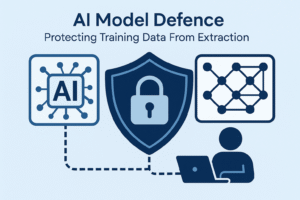
The growing sophistication of AI systems has brought new security challenges, particularly concerning the protection of training data from unauthorised extraction attempts. As AI researchers and machine learning engineers, understanding defensive strategies is crucial for maintaining the integrity and security of your models whilst protecting sensitive information that may be embedded within training datasets.
Understanding Data Extraction Vulnerabilities
Modern AI models, particularly large language models and deep neural networks, can inadvertently memorise portions of their training data. This phenomenon creates potential vulnerabilities that malicious actors might exploit to extract sensitive information, intellectual property, or personal data from deployed models.
The research community has identified several attack vectors that highlight the importance of robust defensive measures. Academic institutions and commercial entities have begun developing comprehensive security frameworks to address these concerns. Companies working across various sectors, including those in the entertainment and gaming industries like https://fortunica3.com/en-gb, are increasingly aware of the need to protect their AI implementations from such vulnerabilities.
Understanding these vulnerabilities helps researchers design more secure systems from the ground up, rather than attempting to retrofit security measures after deployment. This proactive approach significantly reduces the risk of successful data extraction attempts.
Core Defensive Strategies for Model Protection
Implementing effective defensive measures requires a multi-layered approach that addresses vulnerabilities at different stages of the machine learning pipeline. These strategies focus on preventing unauthorised access to training data whilst maintaining model performance and utility.
Primary defensive techniques include:
- Differential privacy implementation: Adding calibrated noise during training to prevent specific data point extraction.
- Data sanitisation protocols: Removing or anonymising sensitive information before training begins.
- Access control mechanisms: Implementing strict authentication and authorisation for model interactions.
- Output filtering systems: Monitoring and restricting model responses that might reveal training data.
- Regular security auditing: Conducting systematic reviews of model behaviour and potential vulnerabilities.
These foundational strategies form the backbone of comprehensive AI security frameworks, providing multiple layers of protection against various extraction attempts.
| Defense Strategy | Implementation Difficulty | Performance Impact | Security Level |
| Differential Privacy | High | Medium-High | Excellent |
| Data Sanitisation | Medium | Low | Good |
| Access Controls | Low-Medium | Minimal | Good |
| Output Filtering | Medium | Low-Medium | Fair-Good |
Advanced Privacy-Preserving Techniques
Beyond basic defensive measures, cutting-edge privacy-preserving techniques offer sophisticated protection against data extraction whilst maintaining model functionality. These advanced methods represent the current state-of-the-art in AI security research.
Federated learning approaches allow models to be trained across distributed datasets without centralising sensitive information. This technique significantly reduces the risk of large-scale data exposure whilst enabling collaborative model development across organisations.
Homomorphic encryption enables computation on encrypted data, allowing models to process sensitive information without ever accessing it in plaintext form. Although computationally intensive, this approach provides mathematical guarantees about data protection that traditional methods cannot match.
Key advanced techniques include:
- Secure multi-party computation: Enabling collaborative training without data sharing.
- Zero-knowledge proofs: Validating model performance without revealing training data.
- Synthetic data generation: Creating artificial datasets that preserve statistical properties without exposing real data.
- Model distillation with privacy: Training smaller models from larger ones whilst removing sensitive information.
- Gradient compression techniques: Reducing information leakage through gradient sharing protocols.
Implementation Guidelines and Best Practices
Successful implementation of defensive measures requires careful consideration of trade-offs between security, performance, and functionality. Different applications may require varying levels of protection based on the sensitivity of their training data and deployment contexts.
Establishing robust governance frameworks ensures consistent application of security measures across development teams. These frameworks should include clear guidelines for data handling, model training procedures, and deployment protocols that prioritise security alongside performance metrics.
| Implementation Phase | Critical Considerations | Required Resources | Timeline |
| Planning | Risk assessment, compliance requirements | Security experts, legal review | 2-4 weeks |
| Development | Privacy budget allocation, testing protocols | ML engineers, privacy tools | 4-8 weeks |
| Deployment | Monitoring systems, incident response | DevOps team, security monitoring | 2-3 weeks |
| Maintenance | Regular audits, updates | Ongoing security assessment | Continuous |
Regular testing and validation of defensive measures help identify potential weaknesses before they can be exploited. This includes both automated testing systems and manual security assessments conducted by specialised teams.
Monitoring and Incident Response
Effective AI security requires continuous monitoring of model behaviour and rapid response capabilities when potential extraction attempts are detected. Establishing comprehensive logging and alerting systems enables quick identification of suspicious activities.
Incident response protocols should include procedures for isolating compromised models, assessing the extent of potential data exposure, and implementing corrective measures. These protocols must balance security concerns with operational continuity requirements.
Essential monitoring components include:
- Query pattern analysis: Identifying unusual or systematic extraction attempts.
- Response anomaly detection: Flagging outputs that might indicate memorised training data.
- Access pattern monitoring: Tracking user behaviour for signs of malicious intent.
- Performance baseline tracking: Detecting changes that might indicate security compromises.
- Automated alert systems: Providing real-time notifications of potential security incidents.
Building Secure AI Systems from the Ground Up
Protecting AI models from data extraction requires comprehensive defensive strategies implemented throughout the development lifecycle. By combining foundational security measures with advanced privacy-preserving techniques, researchers can create robust systems that maintain functionality whilst safeguarding sensitive information.
The evolving landscape of AI security demands continuous learning and adaptation of defensive measures. Staying current with the latest research, implementing proven techniques, and maintaining vigilant monitoring practices form the foundation of effective AI security.
Ready to strengthen your AI security posture? Begin by conducting a thorough assessment of your current models and training practices, implement appropriate defensive measures based on your specific risk profile, and establish ongoing monitoring systems to detect potential threats. Remember that AI security is an ongoing process that requires continuous attention and regular updates to remain effective against emerging threats.