

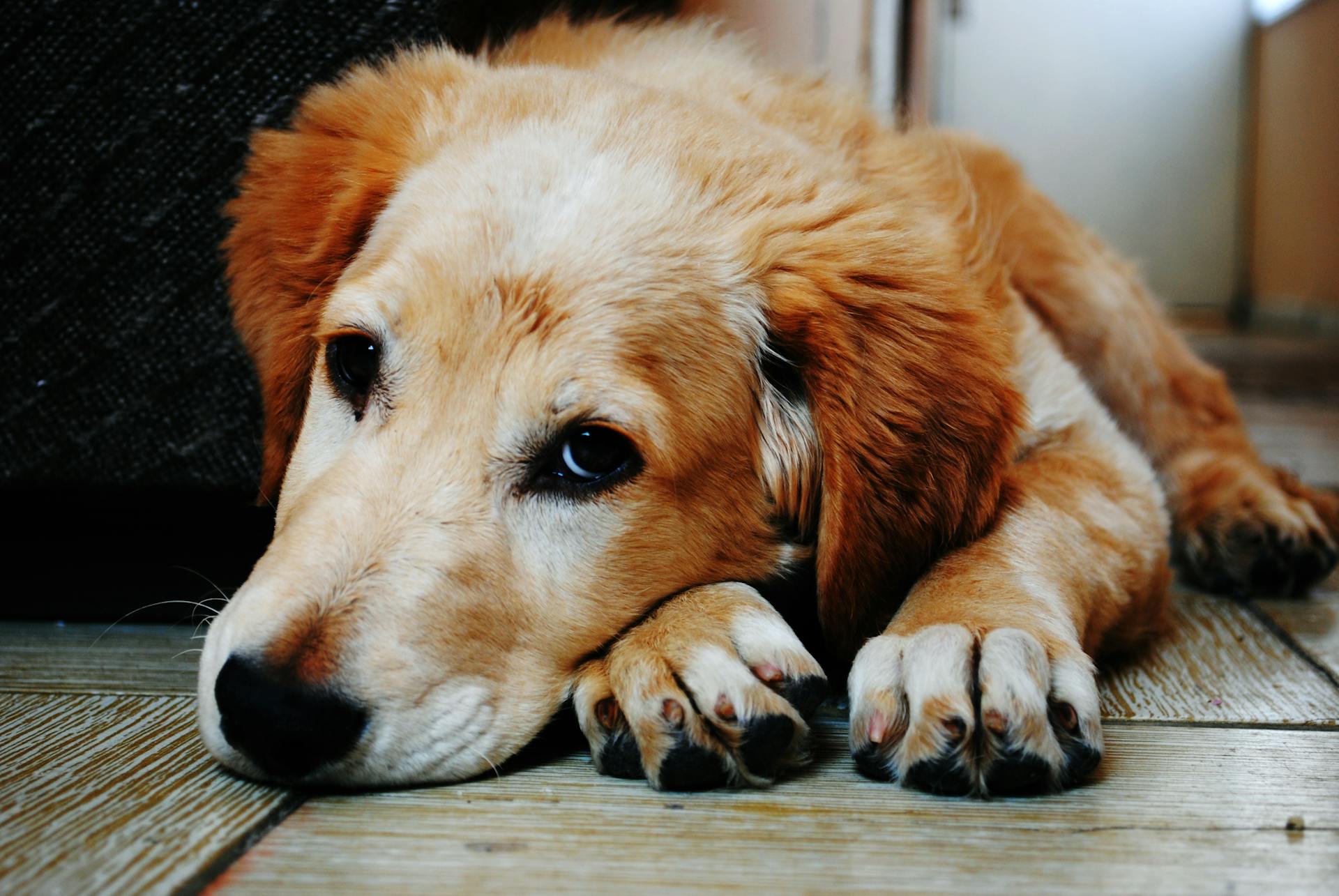
You can usually tell whether a dog is friendly or aggressive by reading its whole body at once. A friendly dog looks loose and wiggly: soft eyes, relaxed open mouth, a tail that wags at mid-height with the hips joining in, and a curved, unhurried approach. A dog that may bite looks stiff and still: weight forward or backward, a hard stare or whale eye (whites showing), closed mouth or lips pulled back, tail held high and rigid or tucked low, raised hackles and a growl. When in doubt, do not approach, and let the dog choose to come to you.
Most dogs are harmless and many warning signs are subtle, so it pays to know what to look for, especially around children. This guide covers each signal, a quick comparison table, how to greet a dog safely and what to do if a dog behaves aggressively or bites.
Friendly vs Aggressive: Quick Comparison
| Signal | Friendly or relaxed | Stressed, fearful or aggressive |
|---|---|---|
| Body | Loose, wiggly, curved | Stiff, frozen, leaning forward or crouched |
| Tail | Mid-height, broad wag, hips moving | High and rigid, fast flicking, or tucked under |
| Ears | Natural position for the breed | Pinned flat back, or pricked hard forward |
| Eyes | Soft, blinking, squinting | Hard stare, whites showing, avoiding your gaze |
| Mouth | Relaxed, slightly open | Closed tight, lip licking, lips curled, teeth shown |
| Hackles | Flat | Raised along the shoulders or back |
| Sound | Higher-pitched play barks, happy whines | Low growl, snarl, deep repeated bark |
| Approach | Curved, bouncy path | Straight, fast charge, or slow circling while staring |
Watch the Tail, but Not in Isolation
A wagging tail does not always mean a happy dog. A friendly wag is usually loose and broad, often at mid-height, and it moves the whole back end; some dogs even wag in circles. A tail held high and stiff, especially one that vibrates or flicks quickly at the tip, signals arousal and can come before a lunge. A tail tucked between the legs means fear, and a frightened dog that feels cornered can bite defensively.
Breed matters. Greyhounds naturally carry their tails low, huskies curl them high over the back, and some dogs have docked tails. Always compare against what is normal for that type of dog and read the tail together with the rest of the body.
Observe Overall Body Posture
Friendly dogs move in curves and look relaxed. A “play bow”, with front legs down and bottom in the air, is an invitation to play. Rolling over can signal comfort, although a dog that rolls over while stiff and staring may be anxious rather than asking for a belly rub.
An aggressive or highly aroused dog often stands tall with weight shifted forward, muscles tense, as if ready to lunge. A fearful dog may lower itself, lean away and shift weight onto its back legs. Either way, freezing is one of the most important warning signs: a dog that suddenly goes still when you reach towards it is telling you to stop.
Look at the Ears
Relaxed ears sit in their natural position for the breed. Ears pinned flat against the head usually mean fear or anxiety. Ears pricked hard forward show intense focus, which combined with a stiff body and stare can mean the dog is about to challenge or chase. Floppy-eared breeds are harder to read, so watch the base of the ear, where it meets the head.
Read the Face: Eyes and Mouth
A friendly dog has soft, often slightly squinting eyes and a relaxed, open mouth that can look like a smile. Warning signs include:
- Hard stare: fixed, unblinking eye contact.
- Whale eye: the dog turns its head away but keeps its eyes on you, showing the whites.
- Stress signals: lip licking, yawning when not tired, and panting when not hot often mean the dog is uncomfortable.
- Clear threats: a wrinkled muzzle, lips curled back to show teeth, and a snarl.
Listen to Vocal Cues
Barking is not automatically aggressive. Dogs bark to greet, to ask for attention, from excitement, boredom or alarm. Friendly barks tend to be higher-pitched and come with a loose, wiggly body. Deeper, repeated barks from a stiff dog, low growling, snarling and snapping at the air are warnings to back off.
Never punish a dog for growling. A growl is a warning; dogs that learn not to growl may skip straight to biting.
Notice How the Dog Approaches
Friendly, well-socialised dogs usually approach in a curve with a bouncy gait and sniff politely. A dog that charges in a straight line, raises its hackles or slowly circles you while staring may be defending territory or feeling threatened. Do not try to stroke or engage with it.
Understand Why Dogs Become Aggressive
Most aggression is not about “dominance”. Common causes include:
- Fear: the dog feels trapped or threatened. Signs include a tucked tail, crouching, pinned ears and avoiding eye contact, followed by a sudden snap if pushed.
- Resource guarding: protecting food, toys, beds or people.
- Territorial behaviour: guarding a garden, car or doorway.
- Pain or illness: a normally gentle dog may bite when touched on a sore spot. Sudden behaviour changes deserve a vet check.
- Frustration: dogs on a lead or behind a fence can react strongly because they cannot move away.
- Maternal protection: mothers with puppies.
Regular exercise, mental stimulation and good socialisation reduce many of these risks. Our guide to keeping your dog fit and happy covers the basics.
How to Greet an Unfamiliar Dog Safely
- Ask the owner first, and accept “no” without argument.
- Stand side-on rather than facing the dog head-on, and avoid leaning over it.
- Let the dog come to you. If it does not, leave it.
- If it sniffs and stays relaxed, stroke the side of the chest or shoulder briefly, not the top of the head.
- Stop after a few seconds and see if the dog asks for more by leaning in or nudging you.
Teach children never to hug dogs, put their face near a dog’s face, or disturb a dog that is eating, sleeping or has a toy. Always supervise children with dogs, including the family pet.
What to Do if a Dog Acts Aggressively
- Stop moving and stay calm. Do not run, as it can trigger chasing.
- Avoid direct eye contact and turn slightly side-on.
- Keep your hands close to your body and speak in a low, calm voice if at all.
- Back away slowly once the dog loses interest.
- If the dog comes at you, put something between you, such as a bag, coat or bike.
- If knocked down, curl into a ball and protect your face, neck and head with your arms.
If you are bitten
Wash the wound thoroughly with soap and running water and seek medical advice, as dog bites can become infected easily. In the UK, contact NHS 111 or your GP, or go to A&E for serious bites. Get the owner’s details if you can, photograph the injury and the location, and note any witnesses. In the UK, a dog that is dangerously out of control can be reported to the police under the Dangerous Dogs Act 1991, and stray dogs can be reported to the local council.
Laws on owner liability differ between countries and, in the US, between states. Anyone injured in the United States, for example in Nebraska, may want to look into Legal help for dog attack injury victims, as local rules on compensation and time limits vary. In the UK, a personal injury solicitor can explain options, which may include the owner’s home or pet insurance.
The Escalation Ladder: How Warnings Build
Dogs rarely bite “out of nowhere”. Behaviourists often describe a ladder of escalating signals, where a dog starts with subtle calming gestures and moves up to more obvious threats if the pressure continues. Knowing the order helps you step back early.
| Stage | What you might see | What to do |
|---|---|---|
| Early discomfort | Yawning, lip licking, blinking, turning the head away | Give the dog more space and stop what you are doing |
| Avoidance | Walking away, hiding behind the owner, sniffing the ground | Let it leave; do not follow or reach |
| Freezing | Sudden stillness, hard stare, whale eye | Stop moving, look away, back off slowly |
| Open threat | Growling, lifted lip, raised hackles | Calmly withdraw and keep something between you |
| Snap or bite | Air snap, nip or full bite | Protect yourself and seek help |
Dogs whose early warnings have been ignored or punished may skip the lower rungs, which is why respecting small signals keeps everyone safer.
Common Mistakes People Make When Reading Dogs
- Assuming a wagging tail always means “come and stroke me”.
- Reaching over a dog’s head, which many dogs find threatening.
- Hugging or kissing dogs, especially ones you do not know well.
- Approaching a dog that is tied up outside a shop, in a car or behind a gate, where it cannot move away.
- Judging a dog by its breed rather than its body language at that moment.
- Staring at a nervous dog to “show it who is boss”.
Quick Checklist Before You Approach a Dog
- Has the owner said yes?
- Is the body loose and wiggly rather than stiff?
- Are the eyes soft and the mouth relaxed?
- Is the dog choosing to come towards you?
- Is it free to walk away if it wants to?
If the answer to any of these is no, admire the dog from a distance instead.
Frequently Asked Questions
Does a wagging tail mean a dog is friendly?
Not always. A loose, broad wag with a wiggly body usually is friendly, but a high, stiff or fast-flicking tail can signal arousal or aggression.
What are the first warning signs before a dog bites?
Early signs include lip licking, yawning, turning away, whale eye and freezing. Later signs include a stiff body, hard stare, growling, lifted lips and snapping.
Should I run from an aggressive dog?
No. Running can trigger a chase. Stand still, turn side-on, avoid eye contact and back away slowly when the dog loses interest.
Why is my normally friendly dog suddenly aggressive?
Sudden aggression can be caused by pain, illness, fear or a change in environment. Book a vet check first, then consider a qualified behaviourist.
What should I do after a dog bite in the UK?
Clean the wound, seek medical advice through NHS 111, your GP or A&E, record the details and report a dangerously out-of-control dog to the police.
Is a dog that rolls over always friendly?
Not necessarily. A relaxed dog with a loose body may roll over for a belly rub, but a stiff dog that rolls over while staring or licking its lips may be anxious and asking you to back off.
This article is general information, not medical, veterinary or legal advice.
Bottom Line
To tell whether a dog is friendly or aggressive, read the whole body rather than one signal: loose, curved and soft usually means relaxed, while stiff, still and staring means stay away. Let dogs come to you, respect early warnings like lip licking and freezing, and if a dog does threaten you, stand still, turn side-on and back away slowly.