
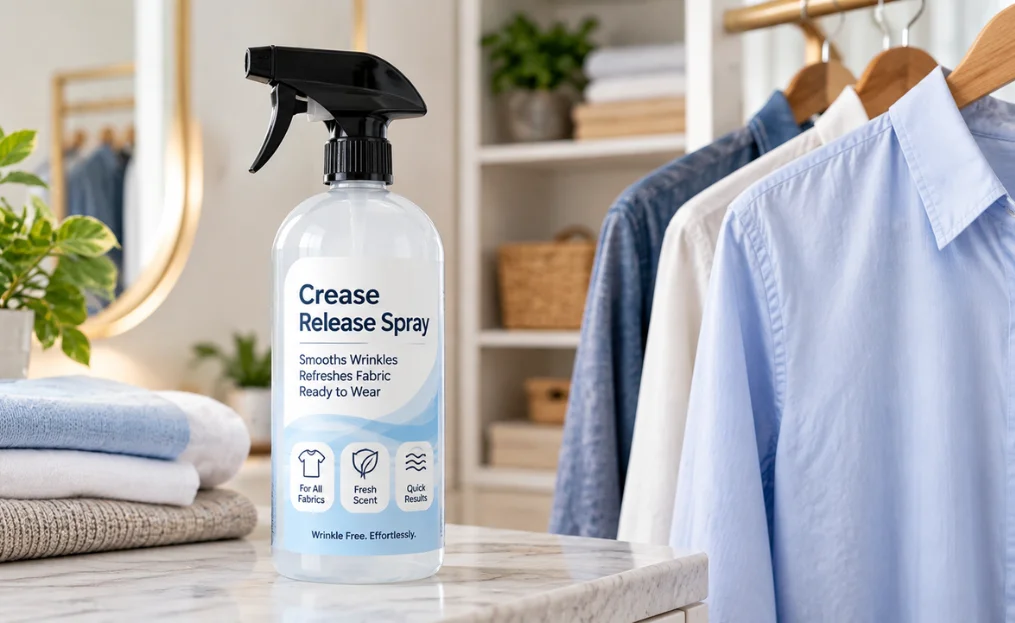
A crease release spray can smooth light and moderate wrinkles without an iron, especially on everyday clothes and bedding. You mist the fabric, smooth it, or stretch it gently, then let it dry. It saves time, but it cannot create the crisp finish an iron provides.
Crease releaser sprays lightly dampen fabric and help fibers move more freely, making wrinkles easier to smooth by hand. They work best on light to moderate creases, casual clothes, and bedding. They are convenient for travel, but irons and steamers give sharper results on collars, linen, and stubborn folds.
| Crease Release Spray | What to know |
|---|---|
| Main purpose | Smooth light to moderate wrinkles without direct heat |
| Best use | Everyday clothes, bedding, and travel touch-ups |
| Method | Mist, smooth, or stretch, then air dry. |
| Main limit | Does not create sharp, pressed creases |
| Fabric caution | Check both labels and patch test uncertain fabrics. |
| Alternative tools | Steamer for speed; iron for crisp structure |
Key Takeaways
| Point | Takeaway |
|---|---|
| Effectiveness | Most useful for light wrinkles and quick clothing refreshes |
| Technique | A light mist plus gentle smoothing works better than soaking fabric. |
| Expectations | It saves effort but does not fully replace ironing or steaming. |
| Safety | Check fabric instructions and protect hard floors from overspray. |
What Is Crease Release Spray, and How Does It Work?
These sprays usually combine water with ingredients that help fibers relax or move more easily. The exact formula varies, so different products may behave differently on the same garment. Some also add fragrance, making them useful for quick clothing refreshes between washes.
Manufacturers commonly tell users to spray wrinkled fabric, smooth it by hand, and leave it to dry. The Lab Co. gives similar directions for moderate creases and suggests heat for deeper folds. This distinction matters because sprays work better as refreshers than heavy-duty pressing tools.
Good results depend on using enough moisture without soaking the garment. Too little product may leave stubborn wrinkles unchanged, while too much extends drying time. A light, even mist gives you more control and reduces the chance of marks.
How to Use It for Better Results
Start with the garment hanging freely or lying flat on a clean surface. Check the care label and the spray label before applying anything. If the fabric is unfamiliar, test a hidden area first.
- Hang or lay the garment flat on a clean surface.
- Read the clothing care label and the product instructions.
- Lightly and evenly mist the wrinkled area.
- Smooth or gently stretch the damp fabric with clean hands.
- Hang the garment so gravity helps as it dries.
- Repeat lightly only if a crease remains after drying.
After spraying, use clean hands to smooth the material in the direction you want it to fall. Gentle tension helps loosen the wrinkle while the fibers are damp. Let gravity assist by keeping shirts, dresses, and trousers on hangers while drying.
Do not dress immediately if the fabric still feels damp. Drying time varies with fabric weight, room conditions, and how heavily you sprayed. Planning a few minutes ahead usually gives better results than applying more product at the last moment.
Which Fabrics Need Extra Care?
Many everyday fabrics tolerate wrinkle-release products well when the label allows them. Cotton, blends, and common synthetics are typical candidates for light touch-ups. Delicate or easily water-marked materials need more caution. Silk, suede, leather, and some delicate synthetics may need a different approach.
Pressed advises avoiding silk, leather, and suede, while other brands list their own exclusions. The safest rule is to follow the specific bottle and garment instructions. Patch testing is useful because color, finish, and fiber treatments can change a fabric’s reaction. Wordify’s guide to upholstery cleaning also recommends checking products on a hidden area first. That habit is sensible whenever a liquid treatment meets an unfamiliar textile.
Spray vs Steamer vs Iron: Which Makes Sense?
| Method | Best for | Main strength | Main drawback |
|---|---|---|---|
| Crease releaser | Light wrinkles and travel | Fast setup with no heat | Needs drying time |
| Garment steamer | Hanging clothes and deeper wrinkles | Quick, gentle heat | Needs power and equipment |
| Iron | Formal clothing and sharp creases | Crispest finish | More setup and direct heat |
A wrinkle spray is the easiest option for a low-effort touch-up without heat. A steamer is faster for many stubborn wrinkles and works well on hanging garments. An iron remains stronger for crisp collars, pleats, trouser creases, and formal shirts.
Which? describes these sprays as a simple way to tackle creases without getting an iron out. Its guidance also notes that overspray can make hard floors slippery. Put a towel underneath the garment or spray where the floor is protected.
Common Mistakes and Safety Points
Applying more product is not always the fastest route to smoother clothing. Heavy spraying can leave garments damp for longer and may increase residue or fragrance. Use the smallest amount that lets your hands relax the visible wrinkles.
Strong fragrance is another practical consideration, especially on clothes worn close to the face. Some products are scented, while others use lighter or fragrance-free approaches. Read the label before buying if perfume sensitivity or scent layering matters to you.
Useful at Home and While Travelling
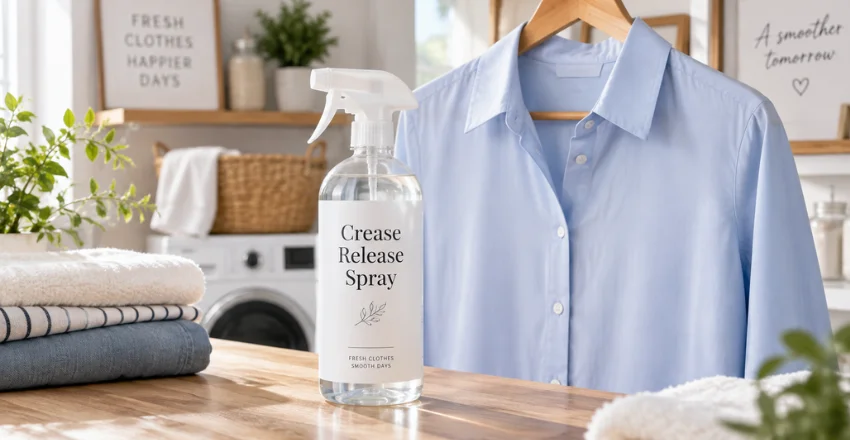
Crease sprays are particularly handy for suitcase wrinkles, guest rooms, work trips, and rushed mornings. A small bottle takes less space than an iron or steamer. Always check current luggage liquid rules before packing any spray in cabin baggage.
They can also help on sheets, duvet covers, and pillowcases when the product label permits bedding use. Ideal Home reported visible improvement after using a releaser on crumpled bedding. Results may be softer than freshly ironed linen, but the effort is much lower.
For broader household-care advice, Wordify’s air fryer cleaner guide makes a similar point about matching products to surfaces. Care products work best when their instructions suit the material being treated. That principle matters more than choosing the strongest-sounding formula.
How to Choose One in the UK
UK prices vary widely between mass-market and specialist products. Which? reported that many wrinkle-release sprays cost less than £3, while specialist options can cost more. Prices change, so compare bottle size, instructions, fabric limits, and fragrance before paying extra.
A travel bottle can be useful if you mostly need help with suitcase creases. A larger trigger bottle suits regular use on shirts, casual wear, or bedding at home. Choose a size that fits your routine rather than assuming bigger always means better value.
Look for clear directions that explain fabric suitability and drying steps. Check whether the product is intended for clothes, bedding, or both. A useful label should also explain warnings, ingredients, and any fabrics requiring a patch test.
The Bottom Line
Crease releasers earn their place when convenience matters more than a pressed, formal finish. Use them carefully, give the fabric time to dry, and keep an iron or steamer for stubborn work. Browse Wordify’s Home Improvement section for more practical household-care guides.
Frequently Asked Questions
Does Crease Release Spray Work on All Fabrics?
Not always, because formulas and garment finishes differ. Many sprays suit cotton, blends, and everyday synthetics, but delicate fibers may react differently. Follow both labels and patch test a hidden area when you are unsure.
Is a Wrinkle Releaser the Same as Fabric Freshener?
No, although some products combine wrinkle reduction with a fresh scent. A fabric freshener may focus mainly on odor rather than smoothing fibers. Check the stated purpose instead of assuming every clothing spray does the same job.
How Long Does It Take to Dry?
Drying can take minutes or much longer, depending on the product and how you use it. Fine misting on light fabric usually dries faster than soaking a thick garment. Leave enough time before dressing, especially when treating work or travel shirts.
Can You Use It on Bedding?
Yes, if the product label allows use on household textiles. Bedding is a common use because large sheets are awkward to iron. Smooth the fabric after spraying, then let it dry fully before making the bed.
Can It Replace an Iron?
It can replace ironing for many light, everyday wrinkles, but not every finish. Formal shirts, sharp pleats, collars, and deep folds still benefit from heat and pressure. Think of the spray as a convenient touch-up tool, not a complete replacement for ironing.