

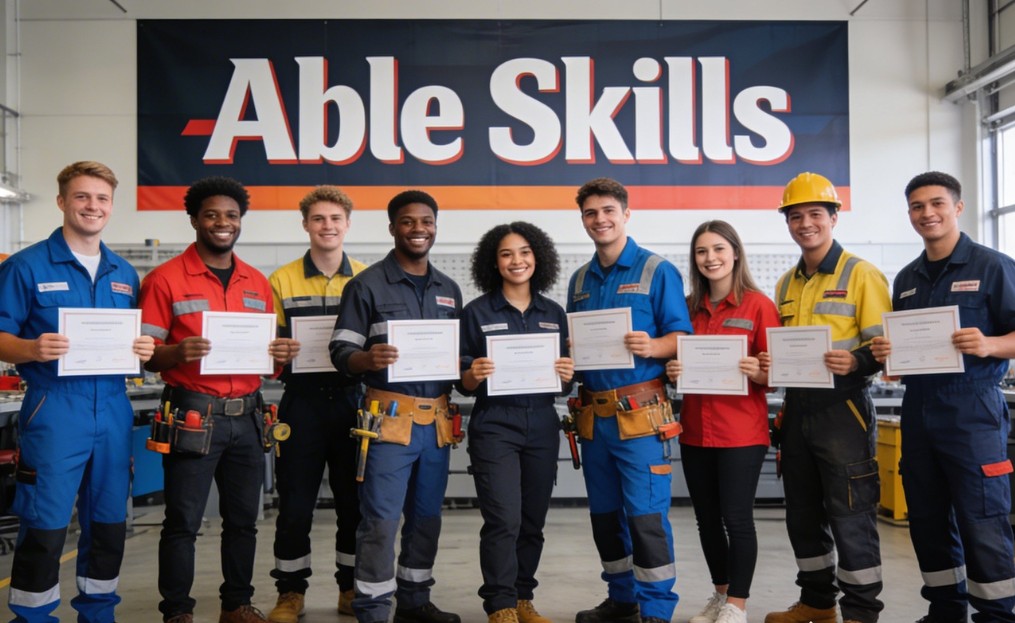
Able skills are practical, transferable abilities that enable individuals to perform effectively across different roles, industries, and environments. These skills, such as communication, problem-solving, adaptability, and teamwork, are essential for turning technical knowledge into real-world results.
In today’s fast-changing, technology-driven workplace, strong skills not only enhance employability but also support collaboration, leadership, and long-term career growth. By strengthening these capabilities, individuals can adapt to change, improve performance, and create meaningful professional impact.
Moreover, able skills play a crucial role in helping individuals navigate workplace challenges, build strong professional relationships, and contribute to team success. They foster resilience and continuous learning, allowing professionals to remain relevant despite evolving job demands.
As organizations increasingly value flexibility and innovation, possessing strong, able skills becomes a key factor in achieving sustained career advancement and personal development.
| Category | Summary |
| Able Skills | Transferable practical skills |
| Importance | Enhances employability |
| Core Skills | Communication, problem-solving |
| Additional Skills | Adaptability, teamwork, and leadership |
| Application | Work, teams, relationships |
| Identification | Reflection, feedback, achievements |
| Development | Practice, feedback, learning |
| Demonstration | Resume, interviews, and job performance |
| Challenges | Measurement, time, mindset |
| Career Stages | Entry to senior growth |
| Impact | Performance & career success |
Able Skills

Able skills” is a flexible term describing the practical, transferable capabilities a person brings to tasks, roles, and relationships, sometimes called soft skills, transferable skills, or employability skills. In an era of rapid technological change and shifting job requirements, these abilities, such as communication, problem‑solving, adaptability, and teamwork, are essential because they enable individuals to apply technical knowledge effectively, collaborate across functions, and pivot when roles evolve.
Why Able Skills Matter?
Able skills complement technical expertise by enabling people to translate knowledge into results. Where technical know-how can earn a job interview, strong, able skills determine long-term success: they make it possible to communicate findings clearly, coordinate with stakeholders, and navigate organizational dynamics.
These skills increase employability across industries because they are transferable; someone with strong communication, problem‑solving, and project management abilities can shift between roles or sectors more readily than someone whose strengths are narrowly technical.
Able skills also drive team performance and leadership effectiveness. Empathy, active listening, and constructive feedback strengthen cohesion and productivity. Finally, in a labor market shaped by automation and AI, abilities such as learning agility, resilience, and adaptability reduce the risk of obsolescence and help professionals take on evolving responsibilities.
Key Able Skills for Success

Communication
Communication, both written and verbal, is fundamental because miscommunication causes errors, wasted time, and friction. Practical expressions of this skill include clear emails, concise briefs, persuasive presentations, and empathetic client conversations. Strong communicators tailor their message to the audience, structure information logically, and listen actively to ensure mutual understanding.
Problem Solving and Critical Thinking
Problem-solving and critical thinking involve analyzing situations, identifying root causes, and implementing solutions. Employees who can structure problems, use data to inform choices, and design small experiments contribute materially to organizational improvement. This skill set includes diagnosing issues, weighing alternatives, and iterating based on results.
Adaptability and Learning Agility
Adaptability and learning agility denote the willingness and ability to learn new tools quickly and handle ambiguity. These traits are indispensable in changing‑heavy environments, allowing individuals to pivot roles, adopt new technologies, and thrive amid shifting priorities.
Collaboration and Teamwork
Collaboration and teamwork are essential because most meaningful work today is cross‑functional. Productive team members share credit, align on deliverables, communicate expectations clearly, and resolve conflicts constructively to achieve shared goals.
Time Management and Organization
Time management and organization ensure consistent delivery without burnout. Effective practitioners prioritize high‑impact tasks, maintain realistic schedules, set boundaries, and use tools and systems to control workflow and track progress.
Emotional Intelligence and Initiative
Emotional intelligence, the awareness of one’s own and others’ emotions, coupled with initiative, anticipating needs, and acting without instruction, enhances individual and team outcomes. Together, they enable constructive interactions, proactive problem prevention, and better leadership at all levels.
Client and Customer Orientation
Client or customer orientation focuses attention on stakeholder needs and aligns delivery to desired results. This competency includes asking clarifying questions, managing expectations, and delivering solutions that prioritize client satisfaction and long‑term relationships.
Creativity and Innovation

Creativity and innovation enable novel solutions and practical experimentation. These abilities help teams reframe problems, generate alternative approaches, and run pilots to test new ideas that can lead to measurable improvements.
Leadership and Influence
Leadership and influence describe the ability to mobilize resources and inspire trust without relying exclusively on formal authority. This includes mentoring others, building coalitions, setting clear direction, and persuading stakeholders to support initiatives.
Able skills play a vital role in shaping how effectively individuals perform in modern workplaces, as they go beyond technical knowledge and focus on how people think, interact, and solve problems. These skills help employees adapt to new challenges, communicate ideas clearly, and work collaboratively within diverse teams, making them essential in nearly every profession.
As industries continue to evolve with automation and digital transformation, employers increasingly prioritize candidates who demonstrate strong transferable abilities alongside technical expertise. Developing transferable skills also contributes to personal growth, allowing individuals to build confidence, improve decision-making, and maintain long-term career stability in competitive job markets.
How to Identify Your Able Skills
- Start with reflection: list the tasks you enjoy and those you dislike; note the activities that energize you versus those that drain you.
- Review feedback: examine performance reviews, LinkedIn recommendations, and informal remarks from colleagues and mentors for recurring strengths.
- Inventory achievements: record specific work examples (projects led, meetings run, reports written) that produced measurable outcomes.
- Map experiences to skills: link each activity or achievement to one or more able skills (e.g., “led weekly sprint meetings” → leadership, communication, time management).
- Use assessments as supplements: take validated tools like CliftonStrengths or VIA Character Strengths to gain structured insight—treat results as clues, not final answers.
- Perform a gap analysis: compare your mapped skills to the requirements in job descriptions you want and identify priority development areas.
- Track progress: periodically review your evidence file, add new examples, and adjust priorities as your goals evolve.
How to Develop and Strengthen Able Skills
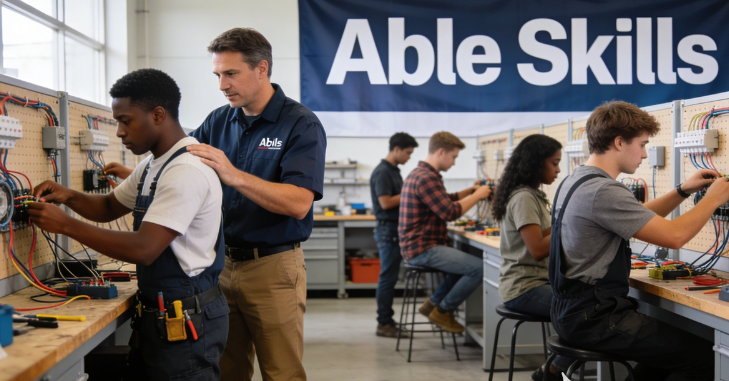
Able skills improve with deliberate practice, stretch assignments, feedback, and exposure to diverse challenges. Break complex skills into subcomponents, for example, split communication into clarity, structure, and listening, and practice each element deliberately.
Seek stretch assignments that push you outside your comfort zone, such as leading cross‑functional projects or taking temporary leadership roles; repeated, real‑time exposures accelerate learning more than passive study.
Learn from mentors and role models by observing their behavior and asking for targeted coaching. Use structured learning resources, workshops, webinars, books, and frameworks like the Pyramid Principle or structured problem‑solving methods to provide tools you can apply immediately.
Create feedback loops after each task with focused questions (start, stop, continue) and run brief post-mortems to capture lessons learned. Simulations such as role-plays and mock presentations help rehearse high-stakes interactions and reduce anxiety.
Finally, pairable skills with complementary technical competencies (for instance, storytelling with data visualization) so your abilities produce measurable outcomes.
How to Demonstrate Able Skills? (Resumes, Interviews, and On-the-Job)
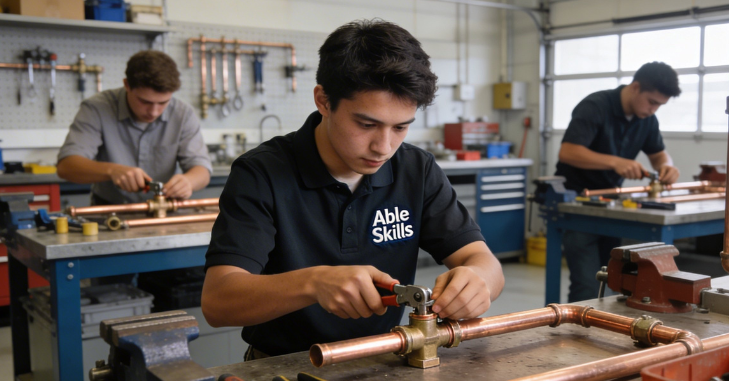
- Translation of ability into evidence is essential. On resumes, use achievement‑focused bullets with metrics—show how your actions produced measurable improvement, such as reduced processing time, higher client satisfaction, or cost savings.
- In interviews, structure your answers using STAR stories that highlight context, the actions you took, and quantifiable results; emphasize judgment and trade-offs to show mature decision-making. During performance reviews, present concise evidence, request stretch goals tied to skill development, and document feedback and agreed timelines.
- On the job, make contributions visible through concise status updates and regular communication of impact metrics, volunteer to mentor junior colleagues, and seek roles that align with the specific abilities you want to grow.
Overcoming Common Challenges
Debunking the “Natural” Myth
The belief that you must be a “natural” at soft skills is misleading. Deliberate practice, focused repetition, and regular feedback are stronger predictors of improvement than innate talent. Treat skill development as a learnable process: set specific goals, practice targeted behaviors, and solicit corrective input to accelerate growth.
Measuring Progress with Proxy Metrics
Measurement difficulty need not be a blocker. Use proxy metrics to quantify improvement—cycle time reductions, customer satisfaction scores, decreased error rates, or meeting efficiency gains can all serve as tangible evidence that able skills are producing impact.
Shifting Organizational Culture with Quick Wins
In organizations that undervalue able skills, start small and demonstrate value. Run quick pilots (a streamlined handoff process, a brief facilitation experiment, or a rapid-response client protocol) that deliver measurable benefits. Visible, short‑term wins build momentum and make the case for broader adoption.
Integrating Development into Daily Work
When time is scarce, fold development into regular duties. Practice facilitation during weekly meetings, negotiate routinely with vendors or partners, coach a junior colleague during downtime, and seek micro‑stretch assignments. Small, consistent efforts compound into significant skill gains over time.
Able Skills Across Career Stages
At the entry level, focus on clarity in communication, time management, and learning agility; actively seek feedback and document concrete examples of impact.
At mid-level, prioritize leadership, project management, and strategic thinking to lead cross‑functional initiatives, mentor juniors, and measure team outcomes.
Senior professionals should emphasize organizational influence, vision communication, and culture building—sponsor development programs, lead transformational change, and track long‑term results.
Conclusion
Able skills are foundational to sustained career success. They turn technical knowledge into actionable impact, enable effective collaboration, and provide the adaptability needed to navigate evolving workplaces. While technical skills remain important, professionals who intentionally cultivate communication, problem‑solving, adaptability, emotional intelligence, and leadership will stand out.
The encouraging reality is that able skills can be learned and strengthened through deliberate practice, feedback, and real‑world application.
By mapping your experiences to specific skills, seeking targeted development opportunities, and documenting measurable outcomes, you can build a compelling professional profile that demonstrates both competence and the capacity to grow—qualities employers will value now and into the future.
Want to know about Why Strong College Applications Don’t Always Look Check out our Education category.
FAQs
K5, Riverside Industrial Estate, Riverside Way, Dartford DA1 5BS.
Up-skilling/Re-skilling – Normally, having a duration from 35 to 60 hours and spaced over up to 35 days. Short Term Training – Normally, having a duration from 200 to 300 hours and up to 3 months, as stipulated in National Occupational Standards (NOS) and Qualification Packs (QPs).
What’s the best way to prepare able‑skill examples for interviews?
Use the STAR method (Situation, Task, Action, Result). Keep concise, quantified stories ready that show your skills, specific actions, and measurable impact.
Communication, problem‑solving, adaptability/learning agility, teamwork, time management, emotional intelligence, and leadership are consistently sought across sectors.