
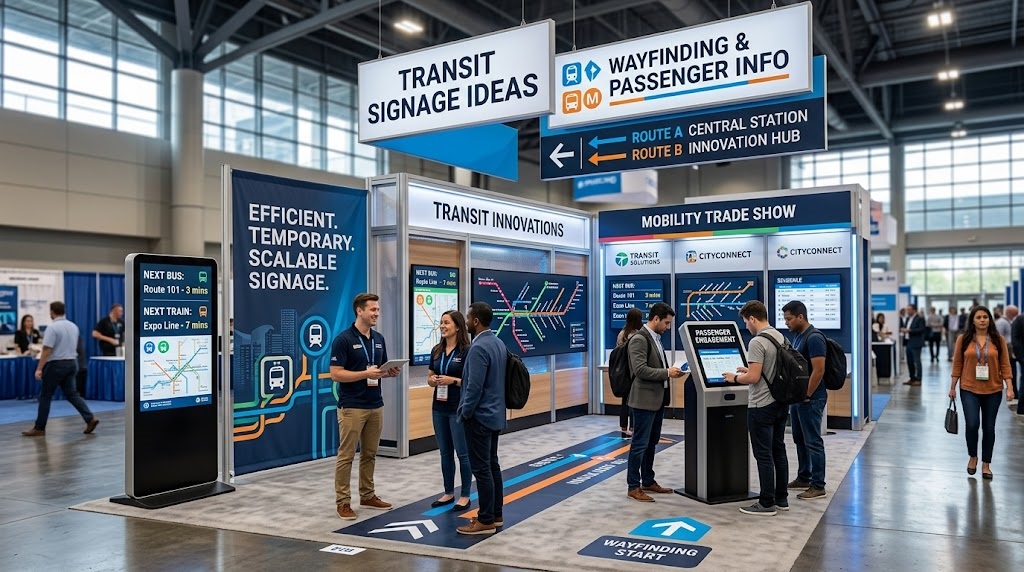
Transit signage is not limited to workstations. Airports, rail brands, mobility startups, and smart city vendors often use signage language inside trade show booths and temporary exhibits. Visitors may not be catching a train, but they still need to understand routes, systems, and service promises quickly.
A mobility booth can borrow the clarity of a station without copying it literally. Maps, route boards, platform-style messaging, live data simulations, and LED wayfinding walls can turn a technical offer into a visitor journey. The key is to make the signage useful, not decorative.
Build the Booth Around a Journey
A strong exhibit has a beginning, middle, and end. The entrance should explain the theme in a few seconds. The middle should guide visitors through products, data, or demos. The exit should leave them with a clear next step: scan, meet, request a demo, or visit a larger installation.
Transit-style content can help because it is already built around movement. A rail technology company might use platform-inspired zones. An airport systems vendor might show a simulated departures wall. A bus operator might present route changes on a live-looking information board. Esdlumen’s exhibition LED screen solution is relevant for this type of project because exhibition displays need to hold attention while fitting a temporary booth environment.
Use Real Signage Logic, Not Fake Complexity
A common mistake is filling a booth screen with map lines, animated dots, and data labels that look impressive but do not explain anything. Visitors should be able to tell what the display means without a salesperson standing beside it.
If the exhibit uses route maps, keep the hierarchy simple. If it uses arrival boards, make the columns readable. If it uses alerts, write them in plain English. Transit signage works because it reduces uncertainty. A booth should do the same.
Thinking About Camera Readability
Trade show visitors often photograph booths, and exhibitors often record walkthrough videos. Refresh rate, meaning how often the display redraws its image, can affect how LED screens appear on camera. Moire is a visual interference pattern that can appear when a camera sensor conflicts with the pixel pattern of a display. These issues are familiar in broadcast and virtual production, but they also matter when an exhibit is meant to be photographed.
Pixel pitch matters too. A close-view booth display may need a finer pitch than a large sign across an exhibition hall. The goal is not only to impress from the aisle, but also to keep text and graphics clean when visitors stand close.
Make the Screen Work with Physical Space
Transit-themed exhibits can easily become cluttered if every surface carries a message. LED should be used where change, scale, or motion adds value. Static printed signs can handle labels and basic instructions. Digital displays should show live scenarios, route simulations, service comparisons, or large visual anchors.
Temporary exhibits also need practical planning: rigging, power, service access, content loading, and safe traffic flow. A display that blocks the booth entrance or creates a bottleneck can weaken the visitor experience.
Turn Familiar Transit Cues into Storytelling
The best mobility exhibits use familiar cues in a fresh way. A “next departure” board can become a product roadmap. A line map can become a customer journey. A station alert can become a service reliability demo. These ideas work because visitors already understand the visual language.
Transit signage in an exhibit should help people move through the story, not simply signal that the brand belongs in transportation. For teams planning museum installations, smart mobility booths, or temporary transit-themed experiences, Esdlumen’smuseum and trade show display planning offers a useful reference for combining high-impact LED visuals with temporary exhibit requirements.