

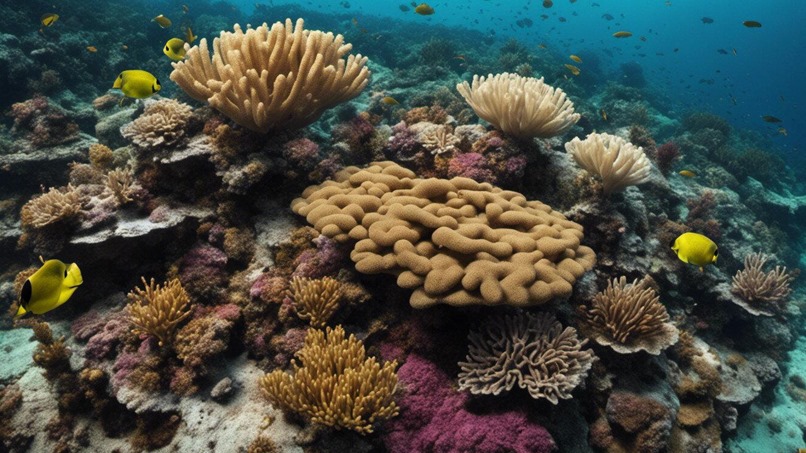
Sea sponges are simple multicellular animals from the phylum Porifera that live attached to the seabed and feed by pumping water through tiny pores. They have no organs, nerves or muscles, yet they have survived for hundreds of millions of years, filter vast amounts of seawater, and produce chemicals that have led to real cancer and antiviral medicines.
Natural sea sponges are among the oldest and most fascinating creatures in the ocean, and this guide explains how they work, the main groups, where they live, their remarkable lifespans and regenerative tricks, and what to know if you use a natural sponge at home.
What Are Sea Sponges?
The name Porifera means “pore bearer”, which sums up how a sponge works. If you are wondering What Are Sea Sponges at the most basic level, the answer is that they are animals, not plants, even though adults stay fixed in one place for their whole lives.
A sponge’s body is covered in tiny inlet pores called ostia. Water flows in through these pores, passes through a network of canals and chambers, and leaves through larger openings called oscula. Lining the chambers are specialised collar cells, or choanocytes, each with a whip-like flagellum. The beating of thousands of flagella keeps water moving, and the collars trap bacteria, plankton and organic particles for food. Oxygen is absorbed and waste removed in the same flow, so one simple system handles feeding, breathing and excretion.
The body is supported by a skeleton made of tiny mineral spicules, a flexible protein called spongin, or a combination of both. That skeleton is what gives each type of sponge its texture, from rock-hard to soft and squeezable.
How Sponges Are Built
| Feature | What It Does |
|---|---|
| Ostia (pores) | Let water enter the body |
| Canal system | Channels water past feeding cells |
| Choanocytes | Collar cells that pump water and trap food |
| Oscula | Larger openings where filtered water exits |
| Spicules | Mineral skeleton pieces made of calcium carbonate or silica |
| Spongin | Soft protein fibres that make bath sponges squeezable |
| Amoebocytes | Mobile cells that transport nutrients and can change into other cell types |
Diversity and Types of Sea Sponges
More than 9,000 sponge species have been described, and scientists continue to find new ones. Almost all are marine, though some live in freshwater lakes and rivers. They come in a huge range of shapes and colours, from encrusting sheets and tubes to vases, fans and branching forms. Sponges are usually grouped into four classes:
- Demospongiae: the largest group, making up roughly 90% of known species. It includes the soft bath sponges harvested commercially, whose skeletons are made mostly of spongin.
- Calcarea: sponges with spicules made of calcium carbonate, usually small and often found in shallow waters.
- Hexactinellida: the glass sponges, which live mainly in deep water and have intricate silica skeletons that can look like spun glass.
- Homoscleromorpha: a small group once lumped in with demosponges, now treated as a separate class based on genetic and structural differences.
Where Sea Sponges Live
Sponges are found in every ocean, from tropical coral reefs and seagrass beds to cold polar seas and the deep ocean floor. Diversity is especially high in warm, shallow waters, but glass sponges can form large reefs in deep, cold water, and new species continue to be recorded from extreme habitats such as the deep sea. Because adults cannot move, they rely on currents to bring food and on free-swimming larvae to spread to new sites.
Why Sponges Matter to Ocean Ecosystems
Sponges are quiet but important engineers of marine habitats:
- Water filtration: by pumping and filtering seawater, they remove bacteria and particles and help keep water clear.
- Nutrient recycling: on reefs, sponges help recycle dissolved organic matter into forms other animals can eat.
- Habitat: their canals and surfaces shelter shrimps, crabs, worms, brittle stars and small fish.
- Food source: some turtles, fish and sea slugs feed on sponges, including the hawksbill turtle.
- Reef structure: certain sponges help bind loose reef material together, while others bore into rock and coral.
Lifespan and Growth
Most sponges grow slowly, often only millimetres or a few centimetres a year depending on species and conditions. Some are thought to live for an extraordinarily long time. Researchers have estimated that certain Antarctic glass sponges may be many thousands of years old, with some estimates exceeding 10,000 years, which would place them among the longest-lived animals on Earth. These figures are estimates based on growth rates in cold, stable water, so they come with considerable uncertainty.
Reproduction and Regeneration
Sponges reproduce in two main ways. Sexually, most species release sperm into the water, which is drawn into another sponge to fertilise eggs; the resulting larvae swim off and settle elsewhere. Asexually, sponges can bud, fragment, or in freshwater species form tough resting bodies called gemmules that survive harsh conditions.
Their regenerative ability is one of their most astonishing traits. Classic experiments showed that if some sponges are broken down into individual cells, those cells can reaggregate and rebuild a functioning sponge. Pieces broken off by storms can also attach and grow into new individuals.
Secrets and Medical Potential
Because sponges cannot run or hide, many defend themselves chemically. Those compounds have attracted major research interest, and some have already led to approved medicines:
- Cytarabine, a chemotherapy drug used for certain leukaemias, was developed from nucleosides first discovered in a Caribbean sponge.
- Eribulin, used to treat some advanced breast cancers, is a synthetic drug based on halichondrin B, a compound originally isolated from a marine sponge.
Researchers continue to study sponge compounds for antibacterial, antiviral and anti-inflammatory activity. Sponge-derived chemistry is a reminder of why protecting marine biodiversity matters for human health as well as the oceans.
Natural vs Synthetic Sponges
If you have come across natural sea sponges for bathing, cleaning or crafts, here is how they compare with synthetic ones:
| Factor | Natural Sea Sponge | Synthetic Sponge |
|---|---|---|
| Material | Spongin skeleton of a real sponge | Plastic foam such as polyurethane |
| Feel | Soft, springy and gentle on skin | Varies; can be firmer or harsher |
| Absorbency | Very high, holds a lot of water | Good, but usually lower |
| Durability | Long-lasting with proper care | Can break down and shed fragments |
| End of life | Biodegradable | Not biodegradable |
| Sustainability | Depends on responsible harvesting | Made from fossil-fuel based materials |
How to Choose and Care for a Natural Sponge
- Buy from suppliers who explain where and how their sponges are harvested; well-managed fisheries cut sponges so the base can regrow.
- Choose fine, dense textures such as silk sponges for the face and coarser “wool” types for the body or household cleaning.
- Before first use, soak the sponge in warm water until it is soft and fully expanded.
- After each use, rinse thoroughly, squeeze out excess water and let it dry in an airy spot away from direct heat.
- Avoid soaking in bleach or very hot water, which can damage the fibres.
- Replace the sponge if it starts to smell or break apart, especially if used for skin care.
Common Myths About Sea Sponges
- “Sponges are plants.” They are animals, and among the earliest branches of the animal family tree.
- “All sponges are soft.” Many have hard skeletons of silica or calcium carbonate; only some are soft enough for bathing.
- “Sponges do nothing.” Their constant filtering and recycling make them important for water quality and reef food webs.
Bottom Line on Natural Sea Sponges
Sea sponges look simple, but they are ancient, efficient animals that filter seawater, shelter other species, live for remarkable lengths of time and have already given medicine important drugs. Whether you are curious about ocean life or choosing a natural sponge for your bathroom, knowing how they live helps you appreciate them and buy them responsibly.
FAQs
Are sea sponges alive?
Yes. Living sea sponges are animals that feed, breathe and reproduce. The natural sponges sold for bathing are the cleaned, dried skeletons of sponges that have been harvested.
How do sea sponges eat?
Sponges are filter feeders. Collar cells beat their flagella to pull water through pores, trapping bacteria, plankton and organic particles as food.
How long do sea sponges live?
Lifespan varies widely by species. Many live for years or decades, and some Antarctic glass sponges are estimated to be thousands of years old, though those figures are uncertain.
Do sea sponges have brains or feel pain?
Sponges have no brain, nerves or nervous system. They can respond to their surroundings, for example by slowing water flow, but they do not have the structures generally associated with feeling pain.
Are natural sea sponges sustainable?
They can be, when harvested responsibly. Good practice involves cutting the sponge above its base so it can regrow and limiting harvest in each area, so it is worth choosing suppliers who explain their sourcing.
What are sea sponges used for?
Natural sponges are used for bathing, skin care, cleaning, painting and pottery. Scientists also study sponge compounds, some of which have led to approved cancer medicines.