

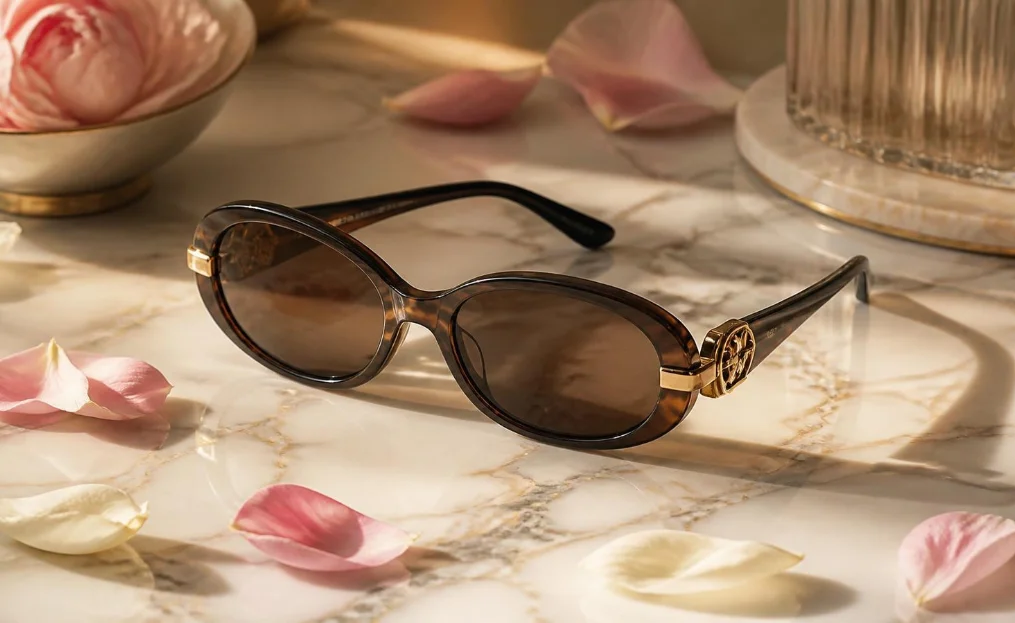
Oval sunglasses have moved beyond a passing retro trend and become an easy everyday accessory. Their curved lenses can soften sharper features while adding character to simple outfits. UK shoppers can now find them across budget, high-street, designer, and prescription ranges.
Quick answer: Choose a frame width that matches your face and feels secure without pinching. Slim metal designs create a lighter look, while acetate frames make more impact. Check UV protection before colour, branding, or price, then choose proportions that balance your facial features.
| What to compare | A useful starting point |
|---|---|
| Face shape | Square, heart, diamond, and oval faces often suit curved frames |
| Frame material | Metal feels lighter; acetate usually creates more visual weight |
| Lens colour | Grey is neutral; brown adds warmth; coloured tints make a stronger statement |
| UV protection | Look for suitable UV protection and recognised safety markings |
| Fit | Temples should sit securely without pressing behind your ears |
| UK price range | Options currently range from affordable high-street pairs to £600-plus designer models |
| Best everyday choice | Medium-sized frames with a comfortable bridge and neutral lens colour |
Why This Frame Shape Is Popular Again

Curved eyewear fits neatly into the continuing interest in nineties and Y2K-inspired fashion. Current UK collections include narrow retro designs, chunkier acetate versions, and minimal metal frames. The shape also works without demanding an entirely trend-led wardrobe.
That versatility matters because accessories usually work harder when they complement clothes you already own. Wordify’s guide to current fashion trends also recommends experimenting without replacing your whole wardrobe. A well-chosen pair can refresh familiar denim, tailoring, dresses, and knitwear.
UK retailers currently offer the shape at dramatically different prices. H&M has listed examples below £10, while Ace & Tate lists several frames around £125. Dior’s current collection reaches above £600, showing how broad this category has become.
How to Choose Oval Sunglasses That Suit You
Start with your facial proportions rather than a rigid rule about face shape. The frame should feel balanced beside your cheekbones and should not overwhelm your features. Comfort and scale usually matter more than following a single styling formula.
Square faces often benefit from curved frames because the softer outline contrasts with a defined jawline. UK optical guidance commonly suggests rounder or oval styles for people with square features. Medium-sized lenses can provide balance without hiding too much of your face.
Heart-shaped faces can also work well with softly curved designs. A medium width can balance a broader forehead while avoiding excess weight around the upper face. Extremely narrow frames may feel less balanced on some wearers.
People with oval faces have plenty of freedom because many frame shapes already work with their proportions. Try to avoid a pair that extends far beyond your widest facial point. A proportionate design keeps the result intentional rather than oversized by accident.
Rounder faces need slightly more care because another soft outline can emphasise existing curves. A stretched or narrower oval can create more horizontal definition than a perfectly round lens. Darker rims can also produce a stronger visual boundary around the eyes.
Compare the Main Styles Before You Buy
The lens outline is only one part of the finished appearance. Frame thickness, material, scale, bridge design, and tint can change the effect significantly. Two curved pairs can therefore look completely different on the same person.
| Style | Advantages | Possible drawbacks | Best suited to |
|---|---|---|---|
| Slim metal | Light appearance, retro character, easy with tailoring | Can feel delicate or visually small | Minimal wardrobes and understated styling |
| Thin acetate | More definition without heavy proportions | Fit varies considerably by bridge shape | Everyday casual outfits |
| Thick acetate | Strong accessory impact and visible colour | Can dominate smaller faces | Statement dressing |
| Narrow retro | Clear nineties influence and compact proportions | May not balance wider faces | Trend-focused outfits |
| Larger oval | More coverage and softer proportions | Can overpower petite features | People wanting more lens area |
| Polarised option | Helps reduce glare in suitable conditions | Usually costs more | Driving, holidays, water, outdoor use |
Verdict: a medium-width frame with moderate lens depth is the safest starting point for most shoppers. Neutral black, tortoiseshell, brown, or metal finishes also offer greater wardrobe flexibility. Choose bolder proportions only when you want the eyewear to become a focal accessory.
Check UV Protection Before Buying for Style
Dark lenses do not automatically provide stronger ultraviolet protection. UK health guidance recommends choosing protective eyewear with appropriate standards and a secure fit. Wraparound designs can further reduce light entering around the lens edges.
Look for reliable product information rather than judging protection from colour alone. UK guidance references UV protection alongside recognised standards when choosing sun eyewear. Reputable optical retailers should make those specifications easy to find.
Polarisation is a separate feature from UV filtering. It can reduce reflected glare from surfaces such as roads or water. That feature can be useful for driving, holidays, and bright outdoor environments.
What Should You Expect to Pay in the UK?
There is no single sensible budget because current prices cover an unusually wide range. High-street pairs can cost less than £10, while accessible optical brands sit around £100. Luxury designer collections can exceed £500 for individual models.
A higher price may reflect branding, materials, construction, design, or optical options. It does not remove the need to check comfort and suitable UV protection. An expensive frame that constantly slips will still be a poor purchase.
Consider cost per wear before paying extra for a seasonal colour or unusual proportion. Neutral frames may work across more outfits and several seasons. That approach also suits Wordify’s discussion of eco-friendly jewellery and sustainable accessory practices.
How to Style Curved Frames With Everyday Clothes
Black frames are one of the easiest choices for everyday wardrobes. They pair naturally with denim, white shirts, monochrome clothing, leather jackets, and structured coats. A thinner rim looks quieter, while a thick black frame adds greater contrast.
Tortoiseshell works well with warmer palettes such as cream, tan, navy, olive, and brown. The patterned finish brings detail without requiring brightly coloured lenses. It can also feel softer than solid black against many complexions.
Metal frames suit outfits that already contain cleaner lines and lighter accessories. Try them with relaxed tailoring, button-down shirts, fine knitwear, or a simple summer dress. Matching every metal accessory is unnecessary, although keeping tones related can create cohesion.
For evenings, let one accessory become the main point of interest. Wordify’s UK going-out outfit guide recommends building looks around a clear focal piece. A distinctive frame can fill that role without adding several statement accessories.
Fit Matters More Than the Trend
A good frame should remain stable when you look down or turn your head normally. The bridge should rest comfortably without leaving painful pressure points. Temple arms should also feel secure without squeezing behind your ears.
Check the listed lens width, bridge width, and temple length when shopping online. Compare those measurements with a pair you already find comfortable. Small differences can noticeably change how a narrow design sits.
Virtual try-on tools can help judge scale and colour before ordering. They cannot tell you whether the bridge feels comfortable or whether the temples pinch. Always check the retailer’s current returns terms before purchasing online.
Are Oval Sunglasses Different for Men and Women?
The basic frame shape is naturally unisex. Size, colour, thickness, and styling often influence how a particular model is marketed. Several current UK collections include designs intended for men, women, or both.
Rather than shopping only by gender labels, compare measurements with your facial width. A smaller frame may suit someone with narrower features regardless of the department carrying it. The same applies to larger or wider designs.
Colour can then shape the final mood without changing the fundamental fit. Matte black and dark metal can create a sharper result. Warm tortoiseshell, translucent acetate, or pale metal can produce a softer finish.
A Practical UK Buying Checklist
Use this checklist before choosing your next pair:
- Check the frame width against your face and an existing comfortable pair.
- Confirm suitable UV protection rather than relying on dark lenses.
- Decide whether polarisation would help with glare during your usual activities.
- Choose metal for a lighter look or acetate for more frame presence.
- Consider black, brown, tortoiseshell, or metal for maximum outfit flexibility.
- Review bridge width and temple length before ordering online.
- Compare current return policies when fit cannot be tested in person.
- Spend more only when the materials, design, or optical features matter to you.
Frequently Asked Questions
Are oval sunglasses still in style in 2026?
Yes, curved and narrow eyewear remains visible across UK and international collections in 2026. Current retailers carry everything from inexpensive high-street versions to premium designer models. The range suggests the silhouette now extends beyond one short-lived microtrend.
What face shape looks best with curved frames?
Square and angular faces are common matches because curved lenses soften stronger facial lines. Heart and diamond shapes can also suit balanced medium-sized frames. Your individual facial width and frame size remain more useful than rigid rules.
Do dark lenses give better UV protection?
No, darkness alone does not prove how much ultraviolet radiation a lens blocks. Check the product’s stated protection and recognised markings instead. UK health guidance advises wearing appropriate protective eyewear when exposed to strong sunlight.
Are polarised lenses worth paying extra for?
They can be worthwhile when reflected glare bothers you during driving or outdoor activities. Polarisation and ultraviolet filtering perform different jobs, so check both specifications separately. Your normal activities should determine whether the additional cost makes sense.
Which colour is easiest to wear every day?
Black is simple and works with most colour palettes throughout the year. Tortoiseshell offers a warmer alternative that pairs easily with brown, cream, denim, and earthy shades. Metal frames are useful when you want something lighter and less visually dominant.