

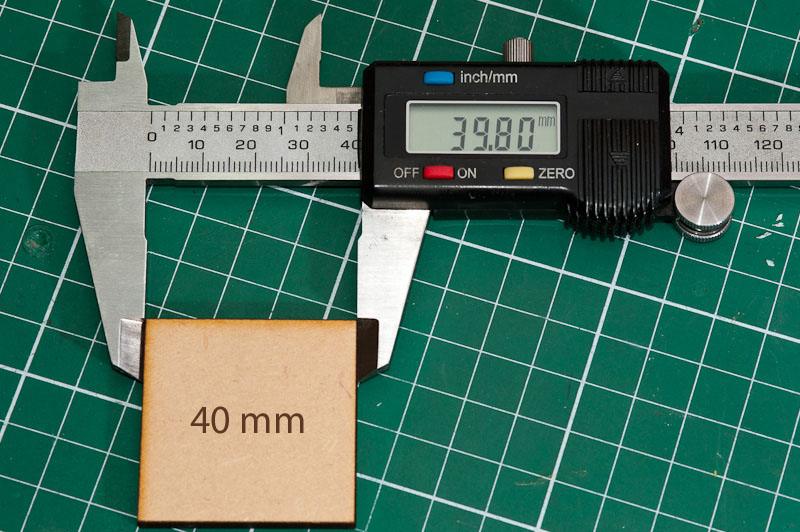
An MDF cut to size board is a sheet of medium density fibreboard that a supplier machine-cuts to your exact measurements before delivery, so it arrives ready to assemble, paint or fit. It suits shelving, cabinet carcasses, wall panelling and furniture builds where square edges and accurate dimensions matter more than handling full 2440 x 1220mm sheets yourself.
This guide explains what MDF is, which grade to choose, how to measure and specify an order without costly mistakes, and how to finish the boards once they arrive.
What Is MDF and Why Does It Cut So Cleanly?
Medium density fibreboard is an engineered wood product made by breaking softwood and hardwood residues down into fibres, mixing them with resin and wax, then pressing them into panels under heat and high pressure. The result is a dense, uniform sheet with no grain, knots or voids.
That consistency is exactly why MDF suits cut-to-size work. A panel saw or CNC router meets the same density across the whole board, so edges come out straight and crisp, and the faces stay flat. Solid timber can move, cup or split along the grain; MDF behaves predictably, which makes it ideal for painted finishes, veneers and laminates.
There are trade-offs worth knowing. Standard MDF is heavy, it swells if water gets into raw edges, and it does not hold screws in its edges as well as solid wood or plywood. Knowing those limits helps you pick the right grade and design joints sensibly.
Why Choose an MDF Cut to Size Board Instead of Full Sheets?
A full sheet of 18mm MDF weighs roughly 40kg and is awkward to carry, store and cut accurately at home. Ordering an MDF cut to size board from a specialist supplier moves the hardest part of the job onto professional machinery.
- Accuracy: beam saws and CNC machines cut square, repeatable panels, which matters when several parts must line up, such as doors on a wardrobe or shelves in an alcove.
- Less waste: you pay for the panels you need rather than storing offcuts you may never use.
- Time saved: no marking out, no setting up a track saw, no sanding wandering cuts.
- Safety and dust control: cutting MDF produces very fine dust. Having it cut in a workshop with proper extraction means far less dust in your home.
- Easier transport: smaller panels fit in a car or come delivered, and they are easier to carry upstairs.
Common Uses for Cut-to-Size MDF
Because it takes paint so well and arrives dimensionally accurate, cut-to-size MDF turns up in a wide range of projects:
- Furniture: bookcases, sideboards, bedside tables, desks and fitted wardrobes.
- Alcove and under-stairs storage: shelves and cupboards cut to fit walls that are rarely square.
- Wall panelling: shaker, board-and-batten and geometric panelling, where dozens of identical strips need to be consistent.
- Radiator covers and window seats: painted MDF gives a clean, built-in look.
- Shopfitting and displays: counters, plinths, shelving and signage backboards.
- Kitchens and bathrooms: using moisture-resistant grades for unit panels, plinths and vanity carcasses.
Types of MDF You Can Order Cut to Size
Choosing the right grade is the most important decision after getting your measurements right. The table below compares the common options.
| MDF type | Best for | Points to consider |
|---|---|---|
| Standard MDF | Indoor furniture, shelving, panelling in dry rooms | Most economical; seal all edges before painting |
| Moisture-resistant MDF (often green core) | Kitchens, bathrooms, utility rooms, window boards | Resists humidity, but is not waterproof and should still be sealed |
| Fire-rated MDF | Commercial interiors, public buildings, escape routes | Check the classification matches the building’s requirements |
| Veneered MDF | Furniture and joinery needing a real wood look | Requires careful edge treatment to match the veneer |
| Pre-finished or coloured MDF | Displays and projects where painting is impractical | Less flexible if you change the colour scheme later |
| Lightweight MDF | Larger panels, wall-hung units, items you move often | Lower density means slightly weaker screw holding |
Choosing the Right Thickness
Thickness affects strength, weight and how the finished piece looks. As a rule of thumb:
- 3–6mm: cabinet backs, drawer bottoms, templates and craft work.
- 9–12mm: panelling strips, small boxes, light-duty shelves over short spans.
- 15–18mm: the workhorse sizes for carcasses, doors, bookcases and most shelving.
- 22–25mm: heavy-duty shelves, worktop-style surfaces and pieces that need a chunky look.
Remember that MDF shelves sag over long spans under load. For books or heavy items, keep spans shorter, use thicker board, or add a front lip or a central support.
How to Measure and Order an MDF Cut to Size Board
Most errors happen at the measuring stage, not at the saw. Follow these steps before you place an order:
- Measure in millimetres. Suppliers cut in mm, so avoid converting from inches at the last minute.
- Measure each opening in several places. Alcoves and recesses are rarely square. Take width readings at the top, middle and bottom, and use the smallest figure for a panel that must fit inside.
- Allow for the board’s own thickness. When designing a carcass, remember the sides sit either inside or outside the top and bottom, which changes the panel sizes.
- Decide on clearances. Doors need gaps of a few millimetres for hinges and opening; fitted panels may need a small scribe allowance.
- Write a cutting list. List each part with length, width, thickness, grade and quantity, and label which dimension runs which way.
- Check edge and drilling options. Some suppliers offer edge banding, edge profiling, hinge boring or shelf-pin holes, which saves further work at home.
- Double-check before you pay. Cut panels usually cannot be returned, so a second look at the list is worth the few minutes.
Finishing Cut-to-Size MDF Properly
MDF faces take paint beautifully, but cut edges are more absorbent and will soak up paint and raise fibres if they are not prepared.
- Lightly sand the edges and remove dust with a dry cloth.
- Seal the edges with an MDF primer, a thinned coat of PVA, or a dedicated edge sealer, then sand smooth once dry.
- Apply a good MDF primer to all faces. Water-based primers can raise fibres slightly, so expect a light denib between coats.
- Finish with two coats of your chosen topcoat, sanding lightly between them with a fine abrasive.
- For a factory-smooth result, sprayed finishes give the most even coat on large flat panels.
Working Safely with MDF
Even with pre-cut panels you will probably drill, rout or sand some pieces at home. MDF dust is very fine, so wear a properly fitted dust mask rated for fine particles, work in a ventilated space and use dust extraction on power tools wherever possible. The Health and Safety Executive publishes guidance on controlling wood dust for anyone doing this regularly.
Common Mistakes to Avoid
- Ordering standard MDF for a steamy bathroom when a moisture-resistant grade was needed.
- Screwing straight into MDF edges without pilot holes, which can split the board. Use pilot holes and screws designed for chipboard or MDF, or use dowels and confirmat fixings.
- Forgetting the board thickness when calculating carcass dimensions.
- Painting raw edges without sealing them first, leaving a rough, furry finish.
- Designing long, unsupported shelves that will bow over time.
Benefits for Professionals and DIY Enthusiasts
For joiners, fitters and shopfitters, ordering pre-cut panels speeds up projects and gives consistent parts across large jobs, which means less time on site and a more reliable finish for clients.
For DIYers, it removes the need for a table saw or track saw and lets you concentrate on design, assembly and finishing. Beginners can tackle a fitted alcove unit or a run of panelling with far more confidence when every piece arrives square and to size.
Frequently Asked Questions
Is it cheaper to buy MDF cut to size or cut it myself?
If you already own accurate saws and have space to break down full sheets, cutting yourself can work out cheaper on materials. For most home projects, though, cut-to-size panels reduce waste, avoid tool costs and cut out mistakes, so the overall cost is often similar or lower.
Can MDF be used in a bathroom?
Use moisture-resistant MDF for bathrooms and kitchens, and seal every face and edge with primer and paint. It copes with humidity, but it is not designed for direct or prolonged contact with water.
What thickness of MDF is best for shelves?
For most shelving, 18mm MDF is a sensible choice, with 25mm better for heavy loads or longer spans. Keep spans modest or add support underneath to prevent sagging.
How accurate are cut-to-size MDF boards?
Panels cut on professional beam saws or CNC machines are typically far more accurate and square than hand-held cuts. Check your chosen supplier’s stated tolerance if your project needs very tight fits.
Do I need to prime MDF before painting?
Yes. Prime all faces and seal the cut edges first, otherwise the edges absorb paint unevenly and look rough. A dedicated MDF primer gives the best base for your topcoat.
Bottom Line on MDF Cut to Size Boards
An MDF cut to size board takes the heaviest, dustiest and most error-prone part of a project out of your hands. Choose the right grade for the room, measure carefully in millimetres, write a clear cutting list and seal the edges before painting, and you will get crisp, professional-looking results whether you are building a single shelf or fitting out a whole room.