

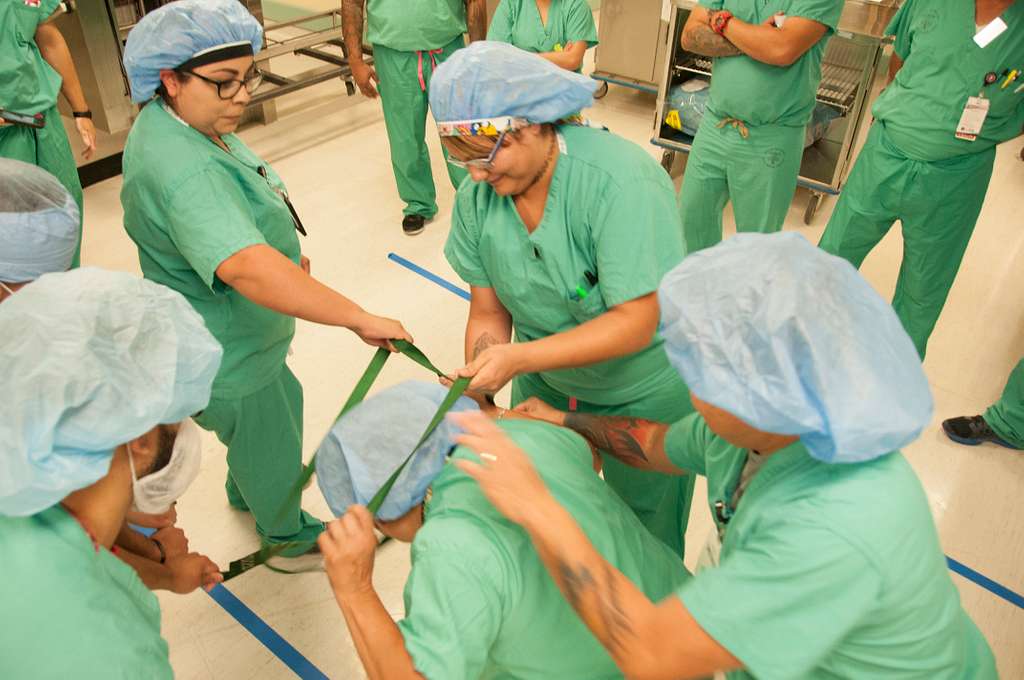
Most patients never think about what happens to the surgical instruments used in their procedure. They don’t see the journey those instruments take — from the operating room, through decontamination, inspection, and sterilization, back to the sterile field of the next surgery. That invisible process is managed entirely by Sterile Processing Technicians, and it is one of the most critical patient safety functions in any hospital.
Surgical site infections (SSIs) remain one of the most common and costly complications following surgery. The CDC estimates that roughly 1 in 31 hospital patients have at least one healthcare-associated infection on any given day. Sterile processing is the primary line of defense against instrument-related transmission — and that defense is only as strong as the people and systems behind it.
What happens during sterile processing
Every surgical instrument travel through a defined cycle. After use, it moves to the decontamination zone where technicians begin manual pre-cleaning, followed by ultrasonic cleaning and automated washer-disinfectors. The instrument is then inspected for damage, rust, or residual contamination — any compromised tool is pulled from circulation immediately.
Once cleared, instruments are assembled into surgical trays according to specific procedure requirements, wrapped in barrier materials, and run through the appropriate sterilization cycle: steam autoclave for most metal instruments, hydrogen peroxide plasma or ethylene oxide for heat-sensitive items. Every cycle is documented, monitored with biological indicators, and traceable back to its load.
A single missed step — an inadequately cleaned cannula, a failed autoclave cycle that wasn’t caught — can result in patient infection, extended hospital stays, or worse. This is why attention to detail in sterile processing is not just a professional virtue. It is a patient safety requirement.
What sterile processing classes teach
Quality sterile processing classes that cover patient safety protocols go well beyond teaching steps in sequence. Students learn the microbiology behind sterilization: why certain bacteria survive specific methods, what biofilm is, and why pre-cleaning matters so disproportionately, how different sterilization mechanisms work at a cellular level. This conceptual understanding is what separates a technician who follows steps from one who understands why each step matters — and can make sound decisions when something unusual happens.
The curriculum also covers regulatory compliance: CDC guidelines, OSHA standards, AAMI/ANSI ST79 protocols for steam sterilization, and Joint Commission standards that hospitals must meet. Technicians who understand these frameworks contribute to their facility’s accreditation of readiness, not just their own daily tasks.
Online delivery — flexibility without compromising depth
For working adults and career changers, sterile processing classes online with CRCST preparation offer a practical path into the profession without requiring a full-time in-person commitment. What matters is that the online program prepares students for a recognized certification exam — CRCST through IAHCSMM or CSPDT through HSPA. These credentials are the industry standard, recognized by hospitals across the United States. Multyprep’s program is structured around CRCST exam preparation, with 89% of students passing their first attempt, and instruction from technicians actively working in New York hospitals.
The regulatory layer: why documentation matters as much as sterilization itself
Hospitals operate under continuous scrutiny from accrediting bodies. Joint Commission surveyors can arrive unannounced and will review sterilization records as part of any infection control assessment. The documentation created by sterile processing technicians — sterilization logs, biological indicator results, load records — is the paper trail that proves compliance or reveals gaps.
This is a dimension of the role that often surprises new technicians. The technical skill of running a sterilizer cycle is learnable quickly. Maintaining the documentation discipline that sustains a hospital’s accreditation requires a different kind of training — one that quality sterile processing classes build from the first week.
Career outlook for trained sterile processing technicians
The demand for qualified sterile processing technicians is not a temporary trend. The volume of surgical procedures in the United States increases annually, driven by an aging population and expanding outpatient surgical capacity. Hospitals, ambulatory surgical centers, dental offices, and specialty clinics all require trained sterile processing staff.
The certification differential matters significantly in hiring. Facilities consistently prioritize candidates with CRCST or CSPDT credentials, and certified technicians earn meaningfully more than uncertified staff. The investment in training and certification — typically a few months and a few hundred dollars for the exam — returns quickly once employment begins.
For anyone considering a move into healthcare, sterile processing offers a realistic path: defined training timeline, recognized certification, genuine patient impact, and employment demand that isn’t going away.