

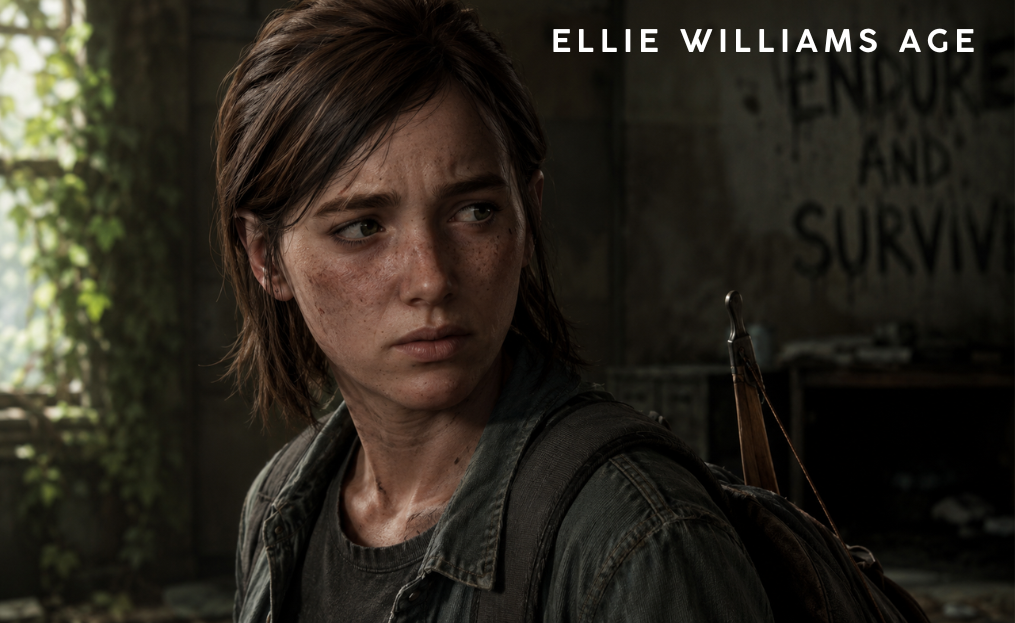
Ellie Williams is one of the most compelling and emotionally complex protagonists in modern storytelling, best known for her role in The Last of Us. From her origins in a post-apocalyptic world to her transformation into a resilient young survivor, her journey captures themes of loss, identity, and human endurance.
Understanding Ellie Williams age provides important context for her development, as her growth from a 14-year-old teenager in The Last of Us Part I to a 19-year-old young adult in The Last of Us Part II reflects not only physical maturity but also deep psychological and emotional change.
Alongside her age and birth year, Ellie’s physical appearance, education, abilities, relationships, and cultural impact all contribute to her status as one of the most iconic fictional characters of her time.
| Category | Details |
| Full Name | Ellie Williams |
| Birth Year | 2019 |
| Age | 14 years (The Last of Us Part I), 19 years (The Last of Us Part II) |
| Height | Approximately 5 feet 3 inches (160 cm) |
| Physical Appearance | Slim, athletic build; brown hair; hazel/greenish-brown eyes; forearm tattoo with moth and plant design; visible scars |
| Education | Basic FEDRA schooling (literacy, numeracy, restricted history) + survival-based learning |
| Skills | Combat, stealth, crafting, adaptability, weapon handling |
| Unique Trait | Immunity to Cordyceps infection |
| Role | Survivor, key figure in potential cure, central protagonist |
| Key Relationship | Joel Miller (father figure) |
| Personality Traits | Resilient, sarcastic, emotionally complex, morally conflicted |
| Psychological Themes | Trauma, grief, survivor’s guilt, moral ambiguity |
| Cultural Impact | Widely praised for realism, LGBTQ+ representation, and strong character writing |
| Portrayed By | Ashley Johnson (game), Bella Ramsey (TV series) |
Ellie Williams Age and Birthyear
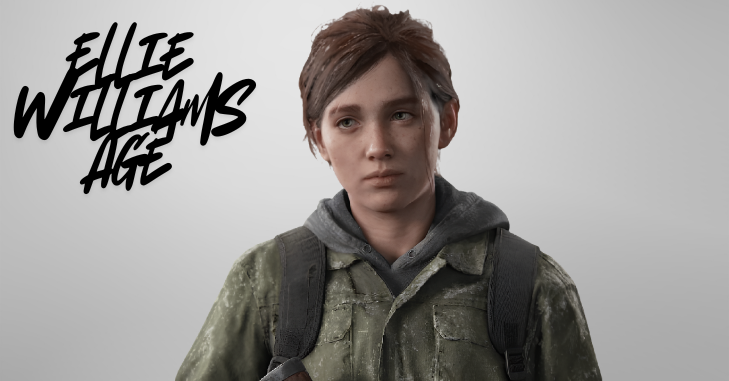
Ellie Williams was born in 2019, shortly after the global outbreak of the Cordyceps infection that reshaped human civilization in The Last of Us universe. Although her exact birthdate is not officially specified, 2019 is consistently recognized as her birth year across canon materials, making Ellie Williams’s age closely tied to this timeline.
Her age changes significantly throughout the series. In The Last of Us Part I, set in 2033, she is approximately 14 years old. By the time of The Last of Us Part II, set in 2038, she is around 19 years old. This progression from early adolescence to young adulthood is central to her character development, as she matures both emotionally and psychologically under extremely harsh circumstances.
Height and Physical Appearance
- Ellie Williams is generally depicted as 5 feet 3 inches (160 cm) tall, reflecting a relatively short but realistic stature for a teenager and young adult.
- She has a slim, athletic build, honed by years of survival in a dangerous post-apocalyptic environment where strength, agility, and endurance are essential.
- Her hair is naturally brown, and its style changes depending on her age and circumstances. In her younger years, it is usually kept shorter and more practical, while in her older years, it appears slightly longer and more natural.
- Her eyes are typically described as greenish-brown or hazel, giving her a facial expression that is expressive and emotionally rich, reflecting her inner struggles.
- One of her most distinctive features in the later part of the story is her forearm tattoo, featuring moth and plant imagery that symbolizes transformation, growth, and emotional complexity.
- Over time, Ellie’s facial features and physical appearance become more hardened, showing visible signs of stress, trauma, and survival.
- She also develops scars and physical wear, which reflect the harsh and violent world she has lived in, reinforcing her identity as a survivor rather than an ordinary teenager.
Education and Learning Experience

Limited Formal Education
Ellie does not receive a traditional education after the outbreak because society has collapsed. However, she grew up in a controlled environment under FEDRA (Federal Disaster Response Agency), where she received basic schooling. This includes fundamental literacy and numeracy, as well as heavily restricted historical knowledge shaped by government control.
Survival-Based Learning
While this structured education is limited, Ellie’s most meaningful learning comes from survival experience. She learns how to handle weapons, navigate dangerous environments, and adapt quickly to unpredictable threats. Much of her knowledge is practical rather than academic, shaped by necessity rather than formal instruction.
Emotional and Psychological Development
Her emotional and psychological education comes from lived experiences. Relationships, loss, and exposure to violence play a major role in shaping her worldview. In many ways, Ellie’s education is defined not by classrooms but by survival itself.
Career and Role in the Story
Ellie does not follow a traditional career path. Instead, her role evolves throughout the narrative as she transitions from a dependent child to an independent survivor.
In the early part of her story, she is primarily a protected individual under Joel’s care. However, she quickly becomes capable of surviving on her own, demonstrating skills in combat, stealth, and decision-making.
A key aspect of her identity is her immunity to the Cordyceps infection. This makes her potentially vital to developing a cure, positioning her as one of the most important individuals in the entire storyline. This biological uniqueness drives much of the narrative conflict surrounding her.
In the later stages of the story, particularly in The Last of Us Part II, Ellie becomes driven by personal loss and a desire for revenge. This phase of her life defines her emotional journey, as she navigates the consequences of violence and the psychological toll it takes on her.
Abilities and Survival Skills
- Ellie is highly skilled in survival-based abilities. She is proficient with firearms, stealth, and close-combat techniques. Her agility and quick thinking allow her to adapt to life-threatening situations effectively. She is also capable of crafting tools, traps, and improvised weapons using limited resources.
- Her immunity to infection is not a learned skill but a biological advantage that sets her apart from others. However, this does not make her invincible; she still faces significant physical and emotional risks throughout her journey.
Relationships and Emotional Growth
Ellie’s relationships are central to her emotional development. Her connections with others shape her identity, influence her decisions, and play a key role in how she copes with the harsh realities of her world.
Bond with Joel Miller
One of the most significant figures in her life is Joel, who serves as a father figure and protector. Their relationship is deeply emotional but also complicated, shaped by trust, love, and eventual conflict. This bond becomes a core part of Ellie’s journey and emotional growth.
Friendships and Romantic Connections
Other relationships, including friendships and romantic connections, also play important roles in shaping her identity. These connections highlight her capacity for love and emotional vulnerability, even in a world defined by violence and loss.
Impact of Loss and Emotional Struggles
However, repeated experiences of loss significantly affect her psychological state. Each emotional attachment she forms becomes a source of both strength and potential pain, contributing to her internal struggles.
Psychological and Symbolic Interpretation
Ellie represents several deeper symbolic themes. She embodies the loss of innocence in a broken world, the psychological burden of survival, and the moral ambiguity of human behavior under extreme pressure. Her journey reflects how trauma can shape identity and influence decision-making.
Her character also explores the cycle of violence, showing how revenge can perpetuate suffering rather than resolve it. Psychologically, Ellie is often interpreted as a character dealing with grief, survivor’s guilt, and emotional fragmentation.
Despite this, she also represents resilience. Even after repeated trauma, she continues to move forward, making her a symbol of human endurance.
Cultural Impact
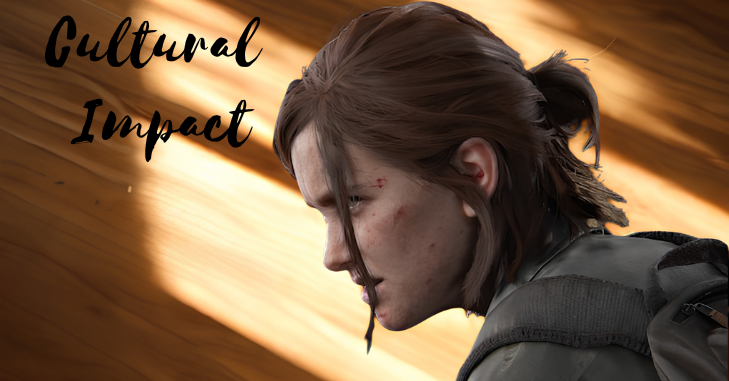
- Ellie Williams has had a significant cultural impact across gaming and television audiences. Her character is widely praised for emotional depth, realism, and strong narrative writing. Performances by Ashley Johnson in the games and Bella Ramsey in the television adaptation have contributed to her popularity and critical acclaim.
- She is also recognized for her representation of LGBTQ+ identity, adding another layer of cultural significance to her character. Ellie has helped redefine how female protagonists are written in modern media, moving away from stereotypes and toward more realistic, emotionally complex portrayals.
Conclusion
Ellie Williams is a deeply layered fictional character whose age, appearance, personality, and experiences contribute to one of the most emotionally powerful narratives in modern entertainment. From her birth in a post-apocalyptic world to her transformation into a complex young adult, her journey reflects themes of survival, trauma, identity, and moral struggle.
Her story is not just about survival in a dangerous world but also about the emotional cost of that survival. Through her development, Ellie stands as a powerful representation of human resilience and emotional depth in the face of overwhelming adversity.
Want to know about Paris Fury Age Check out our Entertainment category.
FAQs
Ellie is 19 years old for the majority of The Last of Us Part II. The game takes place roughly 4 years after the original, shifting her age from 14 to 19 as she embarks on her quest for revenge in Seattle. By the final scenes on the farm, she is likely 20 or turning 20.
Ellie’s height in TLOU part 2 is 5’5” (166cm) at 19 years old and 5’3” (160cm) at 14/15 years old (museum flashback).
In the first game, The Last of Us (2013), Joel Miller is tasked with escorting a 14-year-old Ellie across a post-apocalyptic United States in an attempt to create a cure for an infection to which Ellie is immune. While players briefly assume control of Ellie, the artificial intelligence primarily controls her actions.
Enemies die with an overuse of blood and gore for dramatic effect. Extreme violence and gore, much like the original. Violence is very often extremely brutal and gory. A character gets shot in the head.