

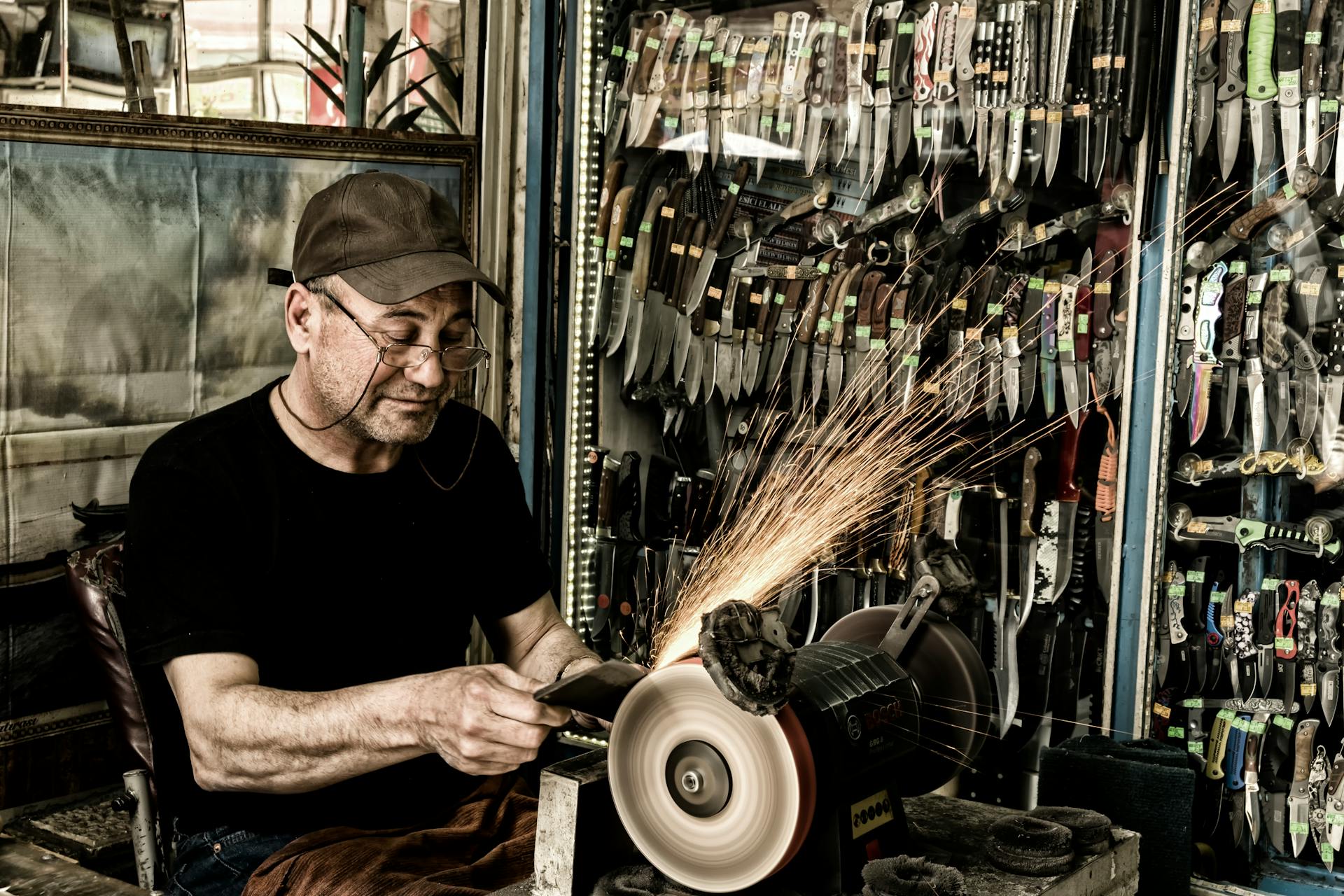
The best professional knife sharpener for most people is the one that holds a consistent angle on your particular knives: a guided or whetstone system for maximum control and edge quality, an electric sharpener for speed in busy kitchens, and a honing rod for daily upkeep between sharpenings. Choosing well comes down to your steel, your skill and how many knives you look after.
A sharp knife is safer and faster than a dull one, yet even premium blades lose their edge within weeks of regular use. This guide explains how the main types of professional knife sharpeners work, compares their strengths and weaknesses, and gives a practical routine for keeping kitchen knives sharp for years.
Why Sharp Knives Matter
A dull blade needs more downward pressure, which is exactly when knives skid off a tomato skin or onion and into a finger. A keen edge bites on contact, so you can cut with control rather than force. That is why chefs treat sharpness as a safety issue as much as a quality one.
- Cleaner cuts: herbs stay green instead of bruising, and fish and meat slice without tearing.
- Less fatigue: a sharp knife reduces wrist and forearm strain during long prep sessions.
- Better consistency: even dice and thin slices cook evenly.
- Longer knife life: regular light sharpening removes less metal than occasional heavy regrinding of a badly blunted edge.
Sharpening vs Honing: Know the Difference
Sharpening removes metal to create a new edge. Honing realigns an existing edge that has rolled or bent slightly during use, removing little or no steel. A blade that feels dull may simply need honing; if a few strokes on a rod do not restore it, the edge is worn and needs sharpening. Understanding this saves both time and steel.
Types of Professional Knife Sharpeners Compared
| Type | Edge quality | Speed | Skill needed | Best for |
|---|---|---|---|---|
| Whetstones | Excellent | Slow | High | Enthusiasts, chefs, Japanese knives |
| Guided (fixed-angle) systems | Excellent and repeatable | Moderate | Low to moderate | Anyone wanting whetstone results with angle control |
| Electric sharpeners | Good | Very fast | Low | Busy kitchens, large knife sets |
| Manual pull-through | Fair to good | Fast | Very low | Quick touch-ups at home |
| Honing rods | Maintains edge only | Seconds | Low to moderate | Daily upkeep |
1. Whetstones (sharpening stones)
Water stones and oil stones give complete control over angle and pressure. They are graded by grit: coarse stones (around 200 to 400) repair chips, medium stones (around 1000) set a working edge, and fine stones (3000 and above) polish it. The trade-off is technique: holding a steady angle freehand takes practice, and stones need flattening as they wear.
Best for: cooks prepared to learn, and anyone sharpening thin, hard Japanese blades that suffer in aggressive machines.
2. Guided sharpening systems
Guided systems clamp the knife and run the abrasive along a fixed arm set to a chosen angle. They combine the edge quality of stones with near-perfect repeatability, which is why many professionals and knife makers use them. Setup takes a few minutes per knife, but the results are consistent from one session to the next and the angle can be matched exactly to the original factory edge.
Best for: anyone who wants professional, repeatable edges without years of freehand practice.
3. Electric knife sharpeners
Motorised abrasive wheels set at fixed angles do the work for you, usually across two or three stages from coarse grinding to fine honing. They are quick and simple, but they remove metal fast, and fixed angles may not suit every knife. Run the blade through with light, even pressure and never force it.
Best for: professional kitchens or households with many Western-style knives that need regular, fast attention.
4. Manual pull-through sharpeners
You draw the blade through preset carbide or ceramic slots. Professional-grade models hold a fixed angle and are handy for quick touch-ups, but cheap carbide slots can tear the edge rather than refine it. Use them for maintenance, not for restoring a seriously damaged blade.
Best for: home cooks who want a fast, simple tool in the drawer.
5. Honing rods
Steel, ceramic and diamond rods straighten a rolled edge. A smooth steel or fine ceramic rod suits daily use; diamond rods actually remove metal, so use them sparingly. A few light strokes per side before each session keeps an edge working far longer between sharpenings.
Best for: daily upkeep in every kitchen.
How to Choose a Professional Knife Sharpener
- Angle control: Western kitchen knives are commonly sharpened at around 20 degrees per side, and many Japanese knives at around 15 degrees. Choose a sharpener that can match the angle of your knives, or let you set it precisely.
- Abrasive type: diamond plates cut fast and stay flat; ceramic and natural or synthetic stones give finer polish; carbide is quick but harsh.
- Range of grits or stages: at least one coarse and one fine option lets you both repair and refine an edge.
- Knife types you own: serrated bread knives, single-bevel Japanese blades and cleavers may need specific tools or attachments.
- Volume of work: a restaurant sharpening a dozen knives daily needs speed; a home cook with three knives can afford a slower, finer method.
- Build and spares: look for solid clamps, stable bases and replaceable abrasives so the tool lasts.
Step-by-Step: Sharpening a Kitchen Knife on a Stone or Guided System
- Check the edge under a bright light. Shiny spots on the very edge show dull or rolled areas.
- Prepare the abrasive. Soak or splash water stones as the maker directs; diamond plates usually need only a little water.
- Set or hold the angle to match the existing bevel. A marker pen line along the bevel shows whether you are hitting the edge.
- Work the coarser grit along the whole edge, heel to tip, until you can feel a slight burr along the opposite side.
- Repeat on the other side until the burr forms again, then reduce pressure.
- Move to finer grits, alternating sides with lighter strokes to refine the edge and shrink the burr.
- Remove the remaining burr with a few very light strokes, a strop or a fine honing rod.
- Test by slicing paper or a tomato, then wash and dry the knife to remove metal particles.
Common Sharpening Mistakes to Avoid
- Changing the angle mid-stroke, which rounds the edge instead of sharpening it.
- Pressing too hard on electric or pull-through tools, which removes excessive metal.
- Skipping the burr: if no burr forms, you have not reached the edge yet.
- Using a coarse grit for routine touch-ups, which wears knives out unnecessarily.
- Sharpening serrated knives on flat stones without a tapered rod made for serrations.
- Storing knives loose in a drawer, undoing your work in a day.
Maintaining Knives Between Sharpenings
Good habits make every sharpening last longer:
- Hone regularly, ideally before each prep session.
- Sharpen only when necessary, typically every few weeks for heavily used knives and less often at home.
- Clean blades after sharpening to remove metal particles.
- Use wooden or plastic boards; glass, stone and ceramic boards blunt edges quickly.
- Store properly in a block, on a magnetic strip or in blade guards.
- Hand wash and dry rather than using the dishwasher, which can dull edges and damage handles.
Why Professionals Invest in High-Quality Sharpeners
In a professional kitchen, a knife is a working tool used for hours every day. Quality sharpeners balance speed with precision, remove only as much steel as needed and produce the same edge every time, so blades last longer and cooks spend less time fighting their equipment. For butchers, chefs and serious home cooks, that consistency quickly repays the initial cost.
Frequently Asked Questions
How often should a professional chef sharpen knives?
It depends on use and steel, but busy kitchen knives are often sharpened every few weeks and honed daily. If honing no longer restores the edge, it is time to sharpen.
Are electric knife sharpeners bad for good knives?
Not necessarily, but they remove metal faster than stones and use fixed angles. For expensive or thin Japanese blades, a whetstone or guided system gives more control and preserves the knife for longer.
What angle should I sharpen a kitchen knife at?
Many Western kitchen knives use around 20 degrees per side and many Japanese knives around 15 degrees. The safest approach is to match the angle the knife came with or follow the manufacturer’s guidance.
Is a honing steel the same as a sharpener?
No. A honing steel realigns a rolled edge and removes little or no metal, while a sharpener grinds a new edge. Use the steel for daily upkeep and the sharpener when honing stops working.
What grit whetstone should a beginner buy?
A combination stone with a medium grit around 1000 and a finer grit for polishing is a sensible start. Add a coarse stone later if you need to repair chips or reshape very dull blades.
Final Thoughts on Professional Knife Sharpeners
Match the sharpener to how you cook: a guided system or whetstones for the finest, longest-lasting edges, an electric sharpener for speed across many knives, and a honing rod for daily upkeep whatever else you choose. Keep the angle consistent, use the finest grit that gets the job done, and store knives safely, and even everyday blades will cut like new.