


Payroll outsourcing has become an increasingly popular solution for businesses seeking to simplify complex payroll processes while ensuring accuracy and compliance. By delegating payroll responsibilities to specialized third-party providers, organizations can efficiently manage tasks such as salary processing, tax compliance, employee benefits, and reporting without the burden of maintaining an in-house system.
This approach not only saves time and reduces operational costs but also allows businesses to focus on strategic growth and core activities. With evolving labor laws and technological advancements, payroll outsourcing offers a reliable and scalable way to manage employee compensation effectively.
| Category | Key Points |
| Definition | Third-party payroll |
| Core Tasks | Salary, taxes, payments |
| How It Works | Set up, process, report. |
| Key Services | Salaries, compliance, benefits |
| Types | Full, partial, cloud |
| Benefits | Efficiency, accuracy, savings |
| Risks | Data, control, dependency |
| Target Users | SMEs, enterprises, startups |
| Provider Factors | Experience, tech, support |
| Main Outcome | Simplified payroll |
What Is Payroll Outsourcing?

Payroll outsourcing is the practice of hiring a third-party service provider to manage payroll-related tasks on a business’s behalf. These tasks typically include salary calculations, tax deductions, compliance reporting, and employee payments.
Instead of maintaining an in-house payroll department, organizations rely on external experts who use advanced systems and knowledge to handle payroll efficiently.
Outsourcing payroll allows businesses to benefit from professional expertise without investing heavily in infrastructure or staff training. It is widely used by companies of all sizes, from small startups to large multinational corporations, as it helps ensure accuracy and compliance with ever-changing regulations.
How Payroll Outsourcing Works?
Initial Setup and Data Collection
The payroll outsourcing process begins with onboarding and data collection. The service provider gathers essential information, including employee details, salary structures, tax information, and company policies. This step is crucial for setting up an accurate and reliable payroll system.
Payroll Processing
Once the system is set up, the provider processes payroll on a regular schedule, typically monthly or biweekly. This involves calculating wages, overtime, bonuses, and deductions, including taxes, insurance, and retirement contributions. Advanced software is often used to ensure precision and efficiency.
Compliance and Tax Filing
A significant aspect of payroll outsourcing is ensuring compliance with local, national, and, in some cases, international regulations. Service providers handle tax filings, statutory deductions, and reporting requirements, reducing the risk of legal issues for the business.
Payment Distribution and Reporting
After processing payroll, the provider manages salary disbursements, ensuring employees are paid accurately and on time. They also generate reports that give businesses insights into payroll expenses, tax liabilities, and financial planning.
Key Services in Payroll Outsourcing

Salary and wage processing is one of the primary services offered in payroll outsourcing, involving the accurate calculation of employee salaries, including components such as basic pay, allowances, bonuses, and overtime. In addition, payroll providers handle tax management and compliance by calculating deductions, filing tax returns, and staying up to date with changing tax laws to help businesses avoid penalties.
They also manage employee benefits administration, ensuring that benefits such as health insurance, retirement plans, and leave entitlements are properly administered so employees receive their full compensation package.
Furthermore, outsourcing providers maintain payroll records and documentation efficiently, ensuring accuracy, compliance, and easy accessibility for audits and future reference.
Types of Payroll Outsourcing
Full-Service Payroll Outsourcing
In full-service outsourcing, the provider handles all aspects of payroll, including data entry and processing, as well as compliance and reporting. This is ideal for businesses that want to delegate payroll responsibilities completely.
Partial Payroll Outsourcing
Some businesses prefer to outsource only specific tasks, such as tax filing or salary calculations, while keeping other functions in-house. This approach provides flexibility and control.
Cloud-Based Payroll Solutions
Cloud-based payroll services use online platforms to manage payroll processes. These systems offer real-time access to data, automation, and scalability, making them a popular choice for modern businesses.
Benefits of Payroll Outsourcing
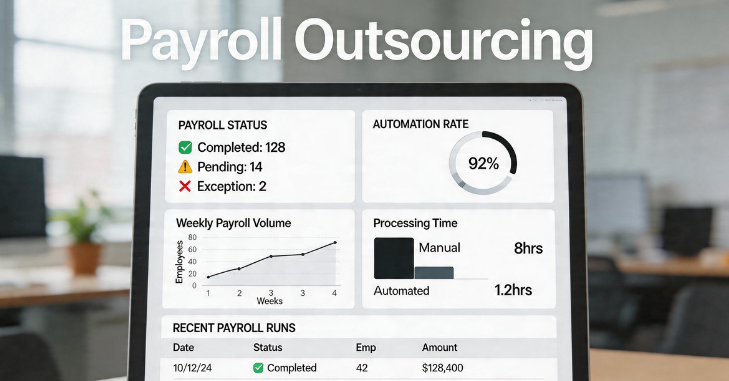
- Increased Efficiency and Time Savings: Outsourcing payroll significantly reduces the time and effort required to manage payroll internally. This allows businesses to focus on strategic activities such as growth and innovation.
- Improved Accuracy: Payroll errors can lead to employee dissatisfaction and legal complications. Professional service providers use advanced tools and expertise to ensure high levels of accuracy.
- Cost-Effectiveness: Maintaining an in-house payroll team can be expensive, including salaries, training, and software costs. Outsourcing eliminates many of these expenses, making it a cost-effective solution.
- Compliance Assurance: Keeping up with changing tax laws and labor regulations can be challenging. Payroll outsourcing providers stay up to date on these changes, ensuring compliance and reducing risk.
Risks and Challenges of Payroll Outsourcing
One of the main concerns with outsourcing payroll is the security of sensitive employee information. Businesses must ensure that their service provider has robust security measures in place to protect data.
Outsourcing means handing over critical functions to a third party, potentially reducing control over payroll processes. Clear communication and service agreements are essential to address this issue. Relying heavily on an external provider can create challenges if the provider fails to deliver services effectively or experiences technical issues. Choosing a reliable provider is crucial.
While outsourcing can be cost-effective, businesses should be aware of potential hidden fees. Understanding the pricing structure beforehand helps avoid unexpected expenses.
Who Should Consider Payroll Outsourcing?

Small and Medium-Sized Businesses
Smaller organizations often lack the resources to maintain a dedicated payroll department. Outsourcing provides them with access to professional services at a lower cost.
Large Enterprises
Even large companies can benefit from outsourcing by improving efficiency and ensuring compliance across multiple locations.
Growing Startups
Startups experiencing rapid growth may find it challenging to manage payroll internally. Outsourcing allows them to scale operations smoothly without administrative burdens.
Choosing the Right Payroll Outsourcing Provider

- Experience and Expertise: Selecting a provider with a strong track record in payroll management is essential. Experienced providers are better equipped to handle complex payroll requirements.
- Technology and Tools: Contemporary payroll systems depend on advanced technology, and selecting a provider that utilizes the latest software helps ensure both efficiency and accuracy.
- Compliance Knowledge: A reliable provider should possess strong expertise in applicable laws and regulations, ensuring that all payroll processes remain fully compliant with legal standards.
- Customer Support: Dependable customer support is essential for resolving issues and maintaining seamless operations, so businesses should select providers that deliver timely and effective assistance.
Conclusion
Payroll outsourcing has emerged as a key approach for businesses aiming to enhance efficiency, ensure accuracy, and maintain compliance in managing employee compensation. By leveraging specialized providers, organizations can simplify payroll operations, reduce costs, and focus on their core activities.
While there are certain risks and challenges associated with outsourcing, careful selection of a reliable provider and clear communication can mitigate these concerns. With ongoing technological advancements, payroll outsourcing is set to become more sophisticated and widely accessible, making it an increasingly valuable solution for businesses of all sizes.
Apart from that, if you want to know more about From Beans to Brand: Building Memorable Customer Experiences then visit our Business category.
FAQs
Payroll outsourcing is when a business hires someone else to handle all or part of its payroll. Full-service providers usually do more than just run payroll. They also help with tax reporting, following the rules, keeping data safe, and filing unemployment claims.
Outsourcing payroll means hiring an external company to handle payroll management.
There are four main types of outsourcing: onshore, offshore, nearshore, and onsite. Outsourcing can help a business cut costs and improve operations by using skills it doesn’t have in-house.
There are four main types of payroll systems: manual processing, payroll software, outsourced services, and Professional Employer Organizations (PEOs). These choices range from managing everything in-house to having a third party handle it all. They are suitable for businesses of all sizes and compliance needs.