
Mullein Flower vs Mullein Leaf is a common question because both come from the same plant, yet they are not used in the same way. If you buy mullein tincture, tea, or oil, the plant part matters. In this guide, you will see how the flower and the leaf differ in texture, traditional use, preparation, and practical selection. The goal is simple: help you understand what each part is usually chosen for, without hype or confusion.
What is mullein?
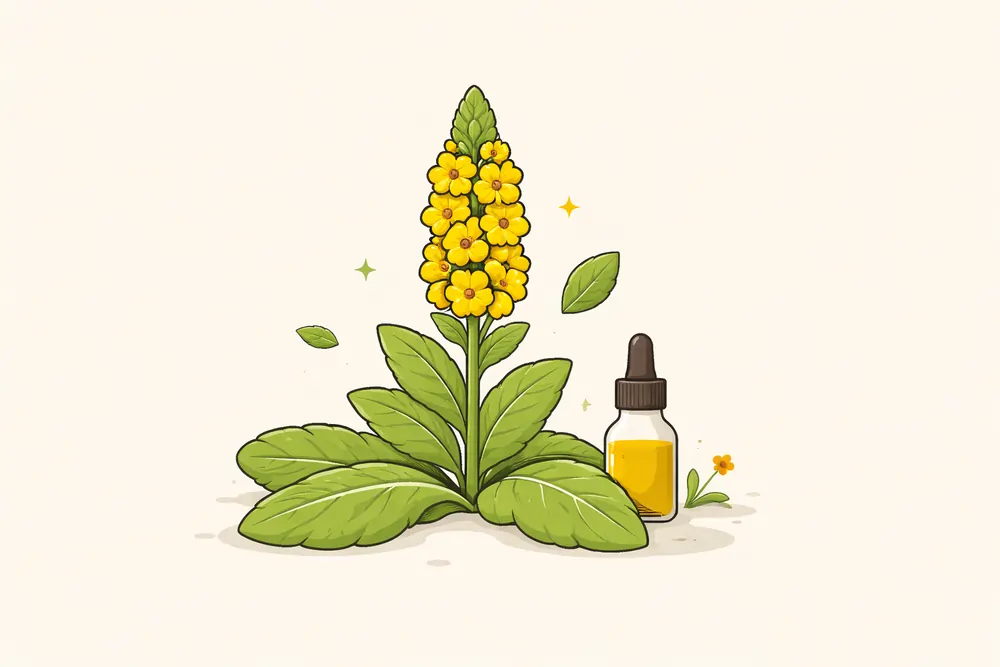
Mullein usually refers to Verbascum Thapsus, a tall biennial plant known for its soft, fuzzy leaves and yellow flower spike. In the first year, it forms a large basal rosette of velvety leaves. In the second year, it sends up a tall stem with clustered yellow blossoms.
In herbal practice, the two most discussed parts are:
- Mullein leaf — the large, woolly leaves
- Mullein flower — the small yellow blossoms collected from the flowering spike
Both appear in herbal products. Both are associated with traditional respiratory use. But they differ in feel, concentration, common forms, and historical emphasis.
What is the short answer to Mullein Flower vs Mullein Leaf?
The short answer is this: mullein leaf is more often used in teas, tinctures, and broader respiratory herbal blends, while mullein flower is more often highlighted in delicate infusions and infused oils, especially in traditional preparations focused on the throat or external use.
That does not mean the leaf and flower have separate roles. There is overlap. Many formulas use both. Still, when people compare Mullein Flower vs Mullein Leaf, they are usually choosing between a more accessible, bulk herb part and a more selective, premium plant part.
| Feature | Mullein Leaf | Mullein Flower |
| Main plant part | Large fuzzy leaves | Yellow blossoms |
| Common herbal forms | Tea, tincture, extract, capsules | Tea, tincture, infused oil |
| Traditional focus | Respiratory support blends | Throat-focused and soothing preparations |
| Availability | More common and usually cheaper | Less abundant and often pricier |
| Handling notes | Needs careful straining due to hairs | Also strained, but often used in smaller amounts |
Why do herbalists separate the flower from the leaf?
They separate them because plant parts are not identical, even when they come from the same species. Leaves and flowers differ in structure, texture, harvest method, and traditional application.
Botanical and practical differences
The leaf is thick, soft, and densely hairy. It is easy to recognize and easy to harvest in quantity. The flower is small, bright yellow, and more delicate. It must be gathered with more care, often over several harvest sessions.
That difference alone shapes the market. Leaf becomes the everyday herb part. Flower becomes the more selective herb part.
Formulation differences
Leaf works well in loose herbal tea blends and liquid extracts. Flower is often used when a formula aims for a gentler, more refined profile. In traditional herbal commerce, mullein flower also gained attention in infused oil products.
Which one is more common in teas?
Mullein leaf is more common in tea. It is easier to source, easier to process in larger batches, and widely used in respiratory support formulas. Many commercial mullein teas rely mainly on the leaf, even when the label says only “mullein.”
Why leaf is common in tea
- It is abundant
- It is cost-effective
- It blends well with herbs such as marshmallow, thyme, peppermint, or licorice root
- It has a long history of herbal infusions
Important preparation notes
Mullein leaf contains fine hair. These hairs can be irritating if the tea is not strained well. A fine mesh filter, cloth, or paper filter is better than a wide tea infuser. This is one of the most practical differences readers should remember.
Which one is more associated with infused oil?
Mullein flower is more strongly associated with infused oil in traditional herbal practice. When people talk about mullein oil, they often mean an oil made from the flowers rather than the leaves.
Why flower is preferred for oil traditions
The flower has a softer image in traditional herbal use and is commonly selected for smaller-batch external preparations. This does not make the flower automatically better. It means the flower developed a distinct place in herbal tradition and product identity.
If you are shopping, check whether the label specifies flower, leaf, or a mixed aerial-part extract. The difference affects both price and positioning.
Does mullein flower work better than mullein leaf?
Not automatically. Better depends on the format, the formula, and the reason for use. In many cases, the more useful question is not “Which is stronger?” but “Which plant part fits this preparation?”
For example:
- If you want simple herbal tea, leaf is often the standard choice.
- If you want a traditional infused oil, flowers are often the featured part.
- If you want a broad herbal extract, some formulas use both.
Evidence for mullein remains largely traditional rather than strongly clinical. That is why careful language matters. It is better to talk about traditional herbal use, soothing botanical preparations, and product form rather than making hard outcome claims.
How do active compounds compare?
Mullein contains classes of plant compounds often discussed in herbal literature, including mucilage, flavonoids, saponins, and phenolic compounds. However, the exact profile can vary by species, plant part, harvest timing, and processing.
That is one reason why simple internet claims can be misleading. A dried leaf tea, a fresh flower oil, and an alcohol extract do not behave like the same product.
| Comparison point | What it means in practice |
| Plant chemistry varies by part | Leaf and flower are similar in some ways, but not interchangeable in every formula |
| Processing changes to the final product | Tea, tincture, and oil extract different compounds |
| Traditional use is stronger than clinical proof | Use careful expectations and avoid overclaiming |
| Quality depends on harvest and filtration | Poor filtering can reduce comfort and product experience |
How should you choose between mullein flower and mullein leaf?
Choose by format first, not by marketing language.
Choose mullein leaf when
- You want tea or infusion
- You need a more affordable bulk herb
- You are building a respiratory support tea blend
- You want a common tincture ingredient
Choose mullein flower when
- You want traditional flower-based infused oil
- You prefer a more selective herbal ingredient
- You are comparing premium mullein products
- You want a label that clearly identifies the flower part
Choose both when
A brand clearly explains why both parts are included and how the extract is made. A mixed-part formula can make sense, but only if the labeling is transparent.
Checklist: what to check before buying a mullein product
- Check the botanical name: Verbascum thapsus or clearly stated related species
- Check the plant part: leaf, flower, or aerial parts
- Check the form: tea, tincture, extract, capsule, or infused oil
- Check whether the product explains filtration or preparation quality
- Check whether the brand avoids exaggerated health claims
- Check whether the label gives serving or preparation directions
- Check whether you use medicines or other supplements that may need review with a healthcare professional
Are there safety differences between mullein flower and mullein leaf?
The main practical issue is not a dramatic safety divide between flowers and leaf. It is product quality, proper preparation, and individual context.
Key safety points
Leaf preparations should be strained carefully because the fine hairs may irritate the mouth or throat. Flower products also need proper handling. People who are pregnant, breastfeeding, managing symptoms that persist, or taking medicines should use extra caution and seek personalized guidance. Herbal products can interact with medications, and evidence is not equally strong across all uses.
If someone has fever, shortness of breath, worsening symptoms, or ongoing symptoms, self-treatment with herbs is not the best next step. That needs medical review.
What do labels and product descriptions often get wrong?
The biggest problem is vagueness. Many products say “mullein” without naming the plant part. That leaves the buyer guessing.
Common label issues
- No clear plant part listed
- No botanical name
- No extraction details
- Claims that sound stronger than the evidence
- Confusion between traditional use and proven clinical effect
A better product page states whether it uses mullein leaf, mullein flower, or both. It also explains the format in plain language.
FAQ
No. They come from the same plant, but they are different plant parts with different traditional uses and product formats.
Mullein leaf is more commonly used in tea because it is easier to source and widely used in bulk herbal infusions.
The flowers are smaller, more delicate, and slower to harvest, so they are usually less abundant than the leaves.
Yes. Some extracts and blends use both parts. The label should make that clear.
Yes. Careful straining is important, especially with leaf preparations, because fine hair may cause irritation.
Strong clinical evidence is limited. Much of mullein’s reputation comes from traditional herbal use rather than large modern trials.
Look for the botanical name, plant part, product form, and clear preparation details.
Glossary
- Verbascum Thapsus — The botanical name most linked with common mullein.
- Botanical name — The scientific plant name used for accurate identification.
- Aerial parts — The above-ground parts of a plant, such as leaves, flowers, and stem.
- Infusion — A tea made by steeping plant material in hot water.
- Tincture — A liquid herbal extract, often made with alcohol or another solvent.
- Infused oil — Oil prepared by soaking plant material to transfer fat-soluble constituents.
- Mucilage — A plant substance with a soothing, gel-like character.
- Saponins — Naturally occurring plant compounds are often discussed in herbal chemistry.
- Traditional use — Use based on long-standing herbal practice rather than strong modern clinical proof.
- Filtration — The process of straining preparation to remove particles and fine plant hairs.
Conclusion
Mullein Flower vs Mullein Leaf is less about which one is superior and more about matching the right plant part to the right preparation. Leaf is the usual choice for tea and bulk extracts, while flower holds a more specific role in delicate infusions and traditional infused oils.