

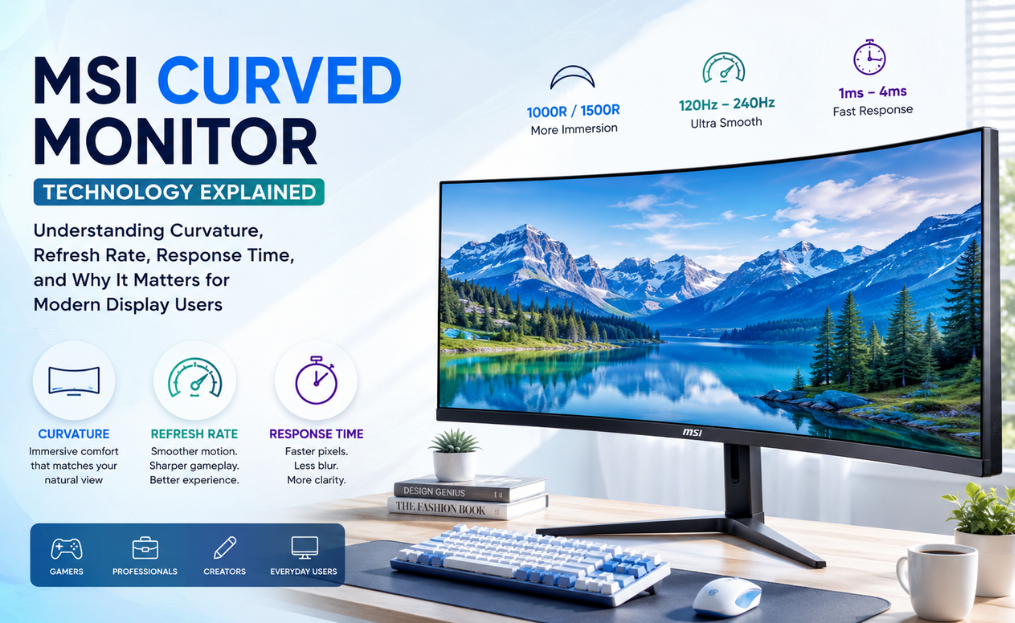
If you’ve been shopping for a new monitor lately, chances are you’ve come across MSI’s impressive lineup of curved displays and felt a little overwhelmed by the numbers. Whether you’re a creative professional, a remote worker, a student, or a gamer who plays after hours, MSI curved monitor technology is designed to improve both comfort and performance, but only if you know what you’re looking at.
What does “1000R curvature” actually mean? Is 240Hz overkill for everyday use? And why does response time even matter if you’re not a hardcore gamer? These are fair questions. Understanding these specs can genuinely change how you choose and enjoy your screen. Modern displays are no longer just “screens.” They have become productivity tools, entertainment hubs, and even long-hour work companions. Our related guide, Understanding the Importance of an Official Website in Modern Mexico, goes further into this.
That means small technical differences like refresh rate, panel type, or screen curvature can have a real impact on eye strain, speed, visual clarity, and overall user experience. MSI focuses on blending these factors into a single balanced display system that supports both high-performance gaming and everyday multitasking.
MSI Curved Monitor: Key Features & Technology Breakdown
| Feature | Explanation |
|---|---|
| Curved Screen Design | Provides immersive viewing by wrapping the display around your natural field of vision |
| 1000R Curvature | Deep curve that closely matches human eye comfort and improves immersion |
| 1500R Curvature | Balanced curvature suitable for gaming and productivity |
| 1800R Curvature | Gentle curve ideal for office and casual use |
| Refresh Rate | Determines how smooth motion appears on screen |
| 60Hz Standard | Basic smoothness for everyday tasks |
| 144Hz Gaming Level | Smooth gameplay experience for most gamers |
| 240Hz Ultra Smooth | Extremely fast refresh for competitive gaming |
| Response Time | Measures how fast pixels change color |
| 1ms Response Time | Reduces motion blur and ghosting in fast scenes |
| VA Panel | Offers strong contrast and deep blacks |
| IPS Panel | Provides accurate colors and wide viewing angles |
| Ultrawide Display | Expands horizontal workspace for multitasking |
| Eye Comfort Mode | Reduces blue light for long viewing sessions |
| Anti-Flicker Tech | Minimizes screen flicker to reduce eye strain |
| Adaptive Sync | Eliminates screen tearing during gameplay |
| FreeSync Support | Smooth performance with AMD GPUs |
| G-Sync Compatibility | Better syncing with NVIDIA graphics cards |
| High Resolution | Delivers sharper and more detailed visuals |
| HDR Support | Enhances brightness and color contrast |
| Gaming Optimization | Improves response and visual performance in games |
| Ergonomic Stand | Adjustable height, tilt, and rotation support |
| Thin Bezels | Maximizes screen space and modern design appeal |
| Wide Color Gamut | Produces more vibrant and realistic colors |
| Multitasking Efficiency | Allows multiple windows on one screen easily |
| MSI Gaming Software | Helps customize display settings and performance modes |
What Does “Curved” Actually Mean in an MSI Curved Monitor?
The curve on an MSI curved monitor isn’t just a style of choice. It’s an engineering decision rooted in how the human eye naturally works. Our field of vision is inherently curved, and a flat screen forces your eyes to constantly adjust their focal depth, especially at the edges. A curved display eliminates much of that strain by keeping every point on the screen roughly equidistant from your eyes.
Understanding MSI’s Curvature Ratings
MSI uses curvature ratings like 1000R, 1500R, and 1800R to describe how tight or gentle the curve is. The “R” stands for the radius of a circle in millimeters; the lower the number, the more pronounced the curve.
- 1000R: MSI’s most aggressive curvature, matching the average human eye’s natural field of view (~1,000 mm). Best for gaming and cinematic ultrawide setups. Found in the MSI MAG series.
- 1500R: A moderate curve, comfortable for long work sessions and immersive enough for casual gaming.
- 1800R: A subtle curve, ideal for productivity users who want eye-comfort benefits without an overpowering effect.
What a Curve Actually Does for You?
Even a gentle curve makes a meaningful everyday difference. Text stays sharper toward screen edges; color consistency improves across the full panel, and after a long workday, your eyes simply feel less fatigued. It’s one of those things that’s hard to appreciate until you’ve used it, and hard to go back from.
Refresh Rate: Why 144Hz, 165Hz, and 240Hz Are Not Just Marketing Numbers?
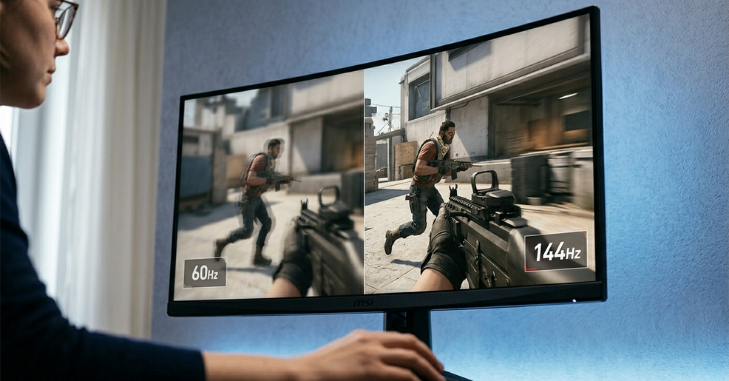
Refresh rate tells you how many times per second your monitor redraws the image, measured in Hertz (Hz). A standard office monitor runs at 60Hz. MSI curved gaming monitors push this to 144Hz, 165Hz, 240Hz, and even 360Hz on high-end models.
Why Higher Refresh Rate Matters Beyond Gaming?
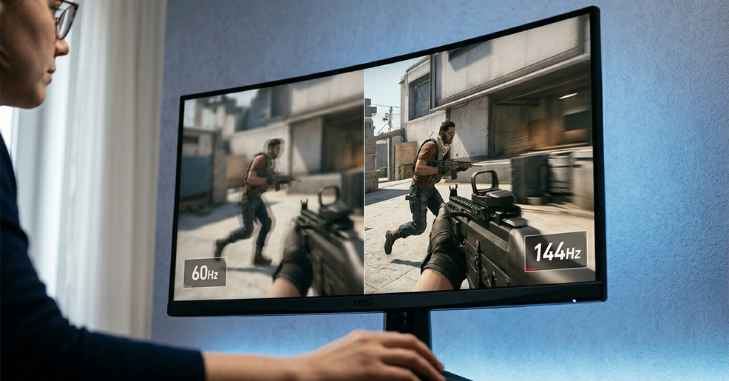
Even in everyday tasks- scrolling a webpage, dragging windows, watching video- a higher refresh rate produces noticeably smoother motion. The jump from 60Hz to 144Hz is something most people perceive instantly. The whole desktop feels more fluid.
For competitive gamers, the stakes are even higher. Titles like Valorant, CS2, and Apex Legends run at very high frame rates, and a monitor that keeps up at 240Hz+ gives players a real edge in reaction time. Research has confirmed that the human eye detects motion differences well above 60 fps, particularly in peripheral vision, where split-second movement matters most in fast-paced games.
Free Sync and G-Sync: Eliminating Tearing
MSI pairs most of its curved monitors with AMD FreeSync Premium or NVIDIA G-Sync Compatible technology. These synchronize the monitor’s refresh rate dynamically with your GPU’s output, eliminating screen tearing- that jarring horizontal split mid-frame- without adding input lag.
The result is a visual experience that feels polished and tight whether you’re browsing or battling online. For video editors and motion graphics artists, a higher refresh rate also makes timeline scrubbing feel natural, and animation previews more accurate.
Response Time: The Spec That Separates Smooth from Smeared
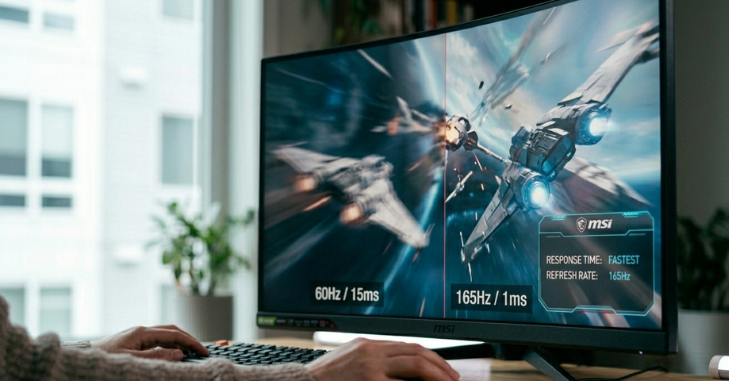
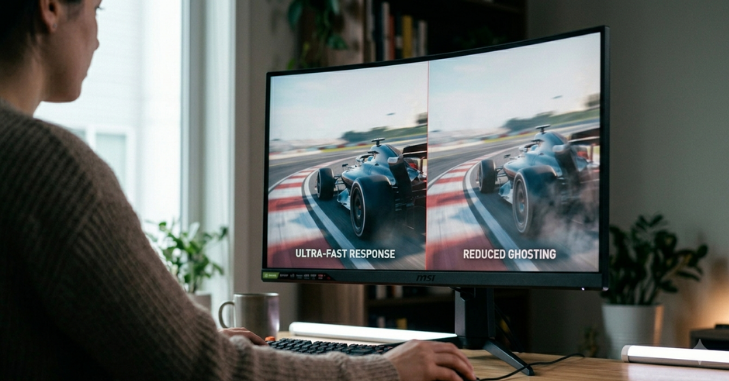
Response time measures how quickly a single pixel can change color, in milliseconds (ms). The most common measurement is GtG (Gray-to-Gray).
Why Slow Response Time Ruins the Experience
If a pixel takes too long to change color, fast-moving objects leave a ghost trail- a blurry smear that makes motion look messy. In gaming, this makes it harder to track targets. In everyday use, it shows up as soft blur when you quickly scroll text. MSI curved monitors typically offer response times between 1ms and 4ms, keeping ghosting to a minimum.
Panel Types: TN vs VA vs IPS; Which One Is Right for You?
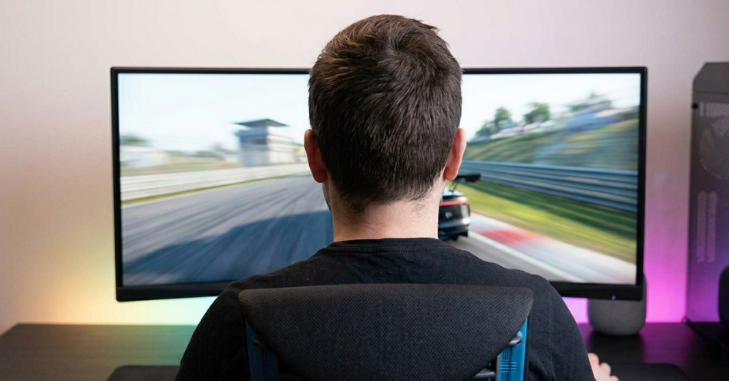
MSI curved monitors use three main panel technologies, and each behaves differently:
- TN Panels: Fastest response (often 1ms GtG), lowest price, but narrower viewing angles and weaker color reproduction. Best for budget-competitive gaming.
- VA Panels: Deep contrast ratios and rich blacks, excellent for movies and immersive gaming. Response times are typically 4–8ms, though MSI’s premium VA panels have improved significantly in recent years.
- IPS Panels: Best color accuracy and wide viewing angles. The go-to choice for creative professionals. Modern IPS panels reach 1–4ms response times, making them highly competitive for gaming as well.
MSI Rapid IPS: When Speed Meets Color Accuracy
MSI’s Rapid IPS technology, found in monitors like the MAG274QRF-QD, pushes IPS response times down to approximately 1ms by enabling faster liquid crystal movement. It delivers the color accuracy IPS is known for, combined with response times previously seen only in TN panels. For users who don’t want to compromise between image quality and speed, it’s one of the most practical advances MSI has brought to their curved display lineup.
Resolution and Panel Size: How It All Ties Together
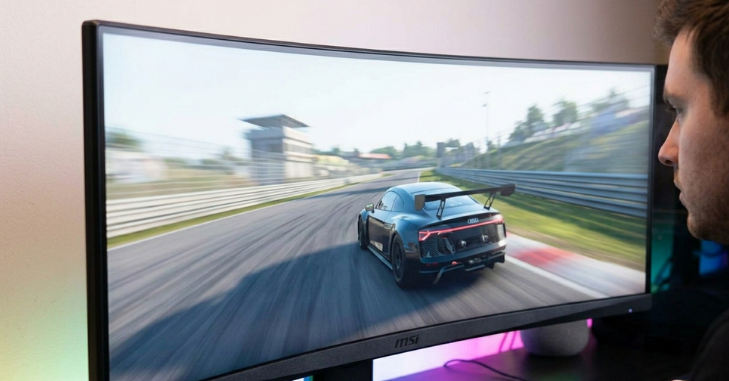
A great MSI curved monitor is only as impressive as the resolution behind it. MSI offers curved displays ranging from 1080p (Full HD) through 1440p (QHD) to 4K UHD, with screen sizes spanning 24 to 49 inches.
Finding Your Sweet Spot
For most users, 1440p on a 27-inch curved panel is the ideal balance, sharp enough that pixels are invisible at normal viewing distances, wide enough that multitasking feels comfortable, and not so GPU-demanding that you have to sacrifice frame rate. MSI’s Optix and MAG QHD curved series are built exactly around this logic.
Ultrawide Curved Monitors: One Screen to Rule Them All
Ultrawide curved monitors (21:9 or 32:9 aspect ratios) go one step further, replacing a dual-monitor setup with a single seamless screen. The MSI MEG series offers 49-inch super-ultrawide displays at 5120×1440, effectively two 27-inch 1440p monitors side by side, with no bezel dividing the view. For traders, developers, and content creators, it’s a genuinely transformative setup.
Who Should Buy an MSI Curved Monitor? A Practical Breakdown
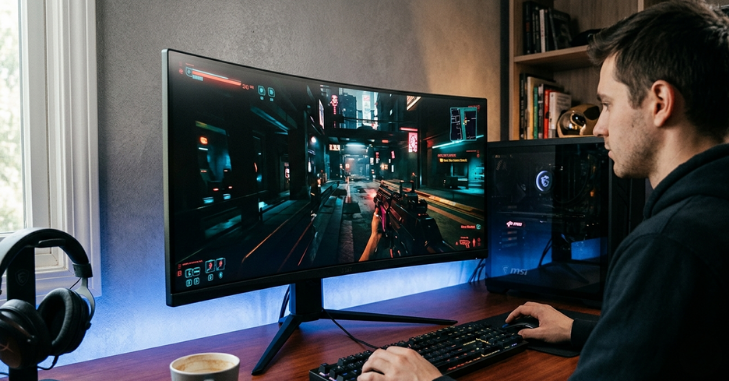
Understanding specs is only useful if you know how they apply to your life. Here’s a simple guide:
For Competitive Gamers
Prioritize a high refresh rate (165Hz+) and low response time (1ms). Enable VRR (FreeSync or G-Sync). Resolution matters less than raw smoothness. The MSI MAG series is built precisely for this user.
For Creative Professionals
Focus on wide color gamut (DCI-P3 coverage above 95%), accurate colors (delta-E below 2), and an IPS panel. Response time is secondary to color fidelity. MSI’s creator-focused curved monitors deliver this reliably.
For Remote Workers and Everyday Users
A 100–144Hz IPS curved monitor at 1440p is a significant upgrade over any standard flat display, without needing the fastest specs on the market. You’ll notice the difference immediately and not feel you’ve overpaid.
For Users Who Do a Bit of Everything
MSI’s mid-range curved lineup strikes an intentional balance: solid refresh rates, respectable color accuracy, and good response times in a single panel. It’s the “do everything well” approach that most buyers actually need.
Final Thoughts
MSI curved monitor technology is more than a visual trend. The curvature eases eye strain, the high refresh rates smooth out every interaction, the low response times keep motion clean, and the range of panel options means there’s genuinely a right MSI curved display for every type of user.
Once you understand what these numbers mean- not in abstract spec-sheet terms, but in terms of how they affect your daily experience- choosing becomes straightforward. The best monitor is the one that matches how you actually work, play, and create. Your eyes have been doing extra work on flat, slow screens for years. They’ll thank you for the upgrade.
Want to know about How New Streamers Break Through on Twitch When Nobody’s Watching Check out our Tech category.
Frequently Asked Questions (FAQs)
It shows how curved the screen is. A lower number, such as 1000R, indicates a stronger curve and a more immersive viewing experience.
Curved monitors provide better immersion and reduced eye movement, especially on wide screens, while flat monitors are better for basic use.
120Hz–165Hz is great for most users, while 240Hz is ideal for competitive gaming.
Yes, lower response time improves overall clarity, reduces blur, and makes motion smoother even for videos and daily use.