

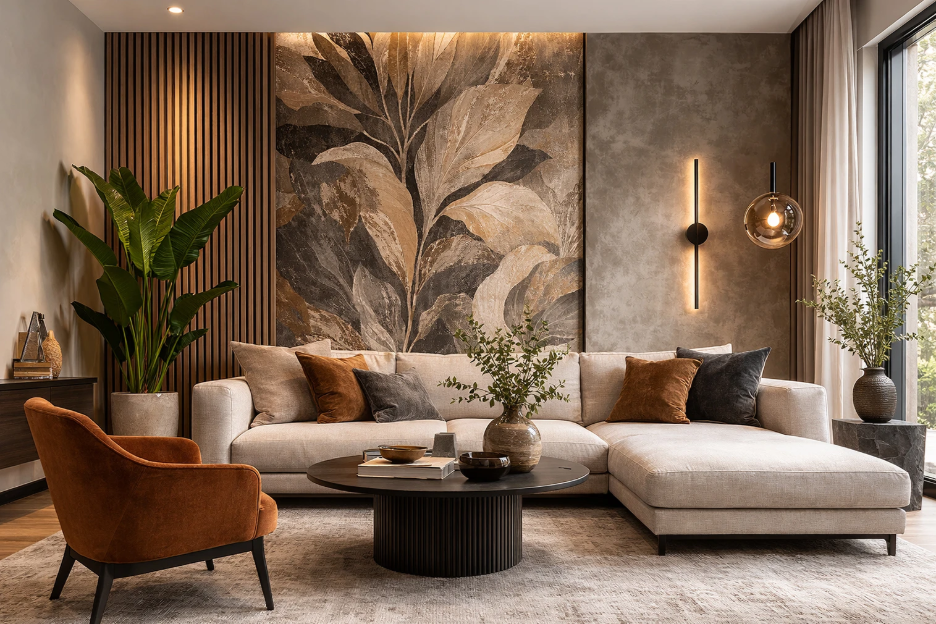
Interior design has always been closely connected to the way walls are finished. Walls define the visual structure of a room, influence how light behaves in a space, and determine whether an interior feel refined, unfinished, warm, or contemporary. Over the past decade, homeowners across the Denver metro area and throughout Colorado have increasingly moved beyond simple paint and begun exploring richer wall finishes such as wallpaper, decorative plaster, textured coatings, architectural panels, and accent walls.
This shift reflects a broader design movement: people want interiors that feel distinctive, layered, and thoughtfully crafted rather than generic. Paint remains common, but it no longer dominates the way it once did. Designers and homeowners now look at walls as architectural surfaces capable of carrying texture, pattern, and depth.
In Colorado—particularly in the Denver metro area, where contemporary homes, mountain-inspired interiors, and modern urban renovations coexist—this transformation has become especially visible. Homes in Denver, Boulder, Lakewood, Cherry Creek, and surrounding communities increasingly feature sophisticated wall finishes that combine design aesthetics with skilled installation.
Understanding how these materials work, why they are gaining popularity, and how professional installation affects the result is essential for anyone planning a renovation or building a new interior.
Why Wall Finishes Are Becoming the Centerpiece of Interior Design
Historically, walls were treated primarily as neutral backgrounds. Designers focused on furniture, lighting, and decor while the walls remained understated. That approach has changed significantly.
Modern interior design now treats walls as active elements of architectural composition.
Several factors contributed to this shift:
1. The search for visual depth
Flat painted surfaces often lack character. Textured wall coverings, natural materials, and layered finishes create visual depth that paint alone cannot achieve.
2. Architectural minimalism
Contemporary interiors often rely on simpler furniture and cleaner layouts. When furnishings become minimal, the walls naturally take on a larger visual role.
3. The influence of European design
Many European interiors have long embraced wallpaper, textured plaster, and architectural wall finishes. These ideas have gradually influenced design trends across the United States.
4. Advances in wallcovering materials
Modern wallpapers, non-woven materials, vinyl wallcoverings, and decorative plasters are far more durable and easier to maintain than older products.
Because of these changes, wall surfaces have become a major design focus. Instead of simply painting every room white or beige, homeowners increasingly explore materials that provide character and personality.
The Growing Popularity of Wallpaper in Colorado Homes
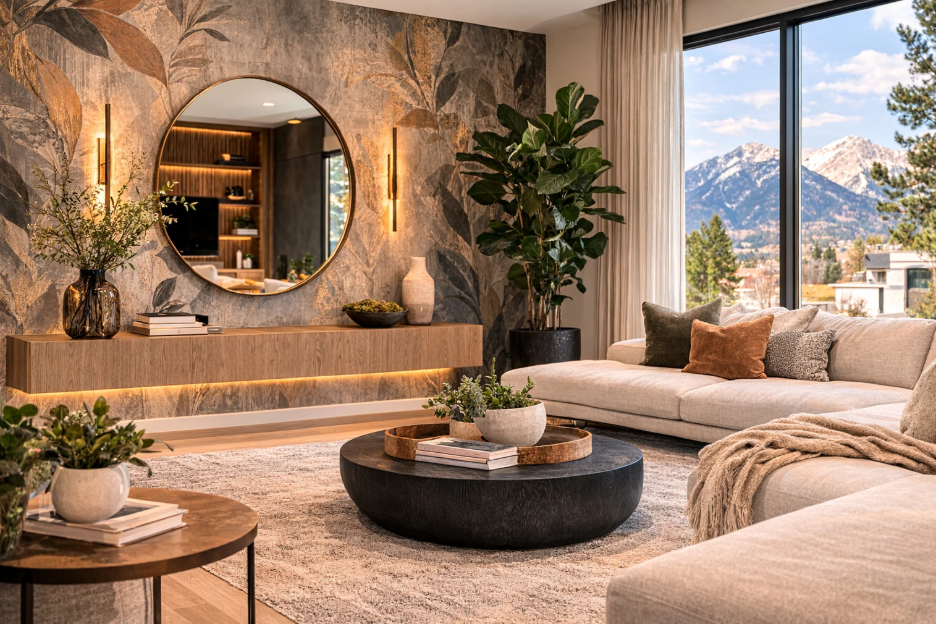
Wallpaper has experienced remarkable resurgence over the past decade. For many years, it was considered outdated due to the complicated installation methods used decades ago. However, modern materials have dramatically improved the performance and longevity of wallpaper systems.
Across the Denver metro area, wallpaper is now frequently used in:
- living rooms
- dining areas
- bedrooms
- home offices
- powder rooms
- entryways
- accent walls
Designers appreciate wallpaper because it offers something that paint cannot: pattern, texture, and dimensional richness.
Popular wallpaper styles today include:
Natural grasscloth
Grasscloth wallcoverings introduce organic texture and subtle color variation. These materials work particularly well in Colorado interiors where natural materials such as wood and stone dominate the design language.
Contemporary geometric patterns
Modern geometric wallpaper patterns create dynamic visual structure while maintaining a refined aesthetic.
Textile wallcoverings
Fabric-based wall coverings add warmth and acoustic softness to interiors.
Vinyl wallcoverings
Highly durable vinyl wallpapers are widely used in high-traffic areas and commercial spaces.
In homes throughout Denver, Boulder, and nearby communities, wallpaper is increasingly used to create a distinctive visual signature within otherwise minimal architectural environments.
Accent Walls as a Powerful Design Tool
One of the most effective ways to introduce wallpaper or decorative finishes into a space is through an accent of wall.
Rather than covering every wall in a room, designers often select a single architectural surface to highlight.
Common accent wall locations include:
- behind a bed in a bedroom
- behind a sofa in a living room
- dining room feature walls
- fireplace walls
- entryway walls
- office backdrops
Accent walls create visual focus without overwhelming the room.
When carefully chosen, an accent wall can dramatically transform the perception of a space. It can make ceilings appear higher; rooms feel larger, or architectural features appear more intentional.
Many homeowners in the Denver metro area prefer accent walls because they allow experimentation with bold materials while maintaining balance throughout the rest of the room.
Decorative Plaster: A Sophisticated Alternative to Paint
While wallpaper has received significant attention, decorative plaster finishes are also gaining popularity.
Decorative plaster offers several advantages:
- seamless surface appearance
- natural mineral texture
- high durability
- unique handcrafted character
Unlike wallpaper patterns, plaster finishes create subtle visual movement rather than repeating motifs.
Popular decorative plaster styles include:
Venetian plaster
Polished mineral plaster with subtle depth and soft reflections.
Lime-based plaster
Breathable natural coatings that develop a distinctive patina over time.
Textured plaster finishes
Surfaces that add tactile dimension and light diffusion.
These materials are particularly attractive in modern homes that emphasize natural materials and refined minimalism.
Across Colorado, designers increasingly combine plaster finishes with wallpaper, wood paneling, or stone surfaces to create layered interiors.
Architectural Wall Panels and Dimensional Surfaces
Another emerging trend in wall finishing is the use of architectural wall panels.
Three-dimensional panels introduce sculptural geometry into interior surfaces. Instead of a flat plane, the wall becomes an architectural element.
Popular materials include:
- MDF panels
- gypsum panels
- wood slat walls
- modern wainscoting
- acoustic wall panels
These solutions are often used in:
- media rooms
- dining rooms
- offices
- hotel interiors
- high-end residential spaces
Panels can be painted, finished in wood veneer, or combined with wallpaper to produce layered wall compositions.
Why Professional Wallpaper Installation Matters
Although wallpaper and decorative finishes have become more popular, they remain technically demanding materials.
Unlike paint, wallpaper installation requires careful attention to surface preparation, pattern alignment, seam positioning, and adhesive selection. Even small installation errors can produce visible problems such as bubbles, misaligned patterns, or lifting seams.
Many homeowners choose to work with professional wallpaper installers who understand the technical characteristics of modern wallcoverings and how they behave during installation.
Design specialists at EnjoyTheWall often work with homeowners throughout the Denver metro area who want to incorporate modern wallpaper and decorative wall finishes into their interiors.
Proper wall preparation is also essential before wallpaper installation begins.
Expert Insight from the Design Community
Professionals in the interior design industry frequently emphasize that wall finishes should be treated as part of the architectural concept rather than as an afterthought.
Kris A, a design consultant associated with EnjoyTheWall, often speaks about the importance of combining design vision with technical execution. Kris A is a member of both the WIA (Window Coverings Association of America) and the IDS (Interior Design Society), professional organizations that promote high standards in design and installation practices.
According to Kris A, many homeowners initially focus on color selection but underestimate the structural aspects of wall finishing.
When surfaces are carefully prepared and materials are installed with precision, wall coverings become long-lasting architectural features rather than temporary decoration.
This perspective reflects a broader shift within the design community: craftsmanship is once again recognized as an essential component of interior quality.
Wall Preparation: The Hidden Foundation of Great Results
One of the least visible yet most important stages of wallpaper installation is wall preparation.
In many homes, the walls are not perfectly smooth. They may contain:
- texture
- drywall seams
- small imperfections
- old paint layers
Before wallpaper can be installed correctly, these issues often need to be addressed.
Professional installers may perform:
- skim coating
- sanding
- sealing
- priming
This preparation ensures that the wallpaper adheres evenly, and that patterns remain visually consistent across the surface.
Skipping these steps can cause significant problems later.
Many experienced installers emphasize that successful wallpaper installation begins long before the first strip of wallpaper is applied.
Choosing the Right Wall Finish for Each Room
Different rooms require different wall finishing strategies.
Living rooms
Accent wallpaper walls or textured plasters often create an elegant focal point.
Bedrooms
Soft patterns or natural textures contribute to a calming atmosphere.
Dining rooms
Bold wallpapers can create a sophisticated entertaining environment.
Home offices
Textured wall finishes or architectural panels can provide visual depth during video calls.
Powder rooms
Small spaces are ideal for experimenting with dramatic wallpaper designs.
Selecting the appropriate material for each room helps maintain visual harmony throughout the home.
Wall Finish Trends in the Denver Metro Area
Interior design trends vary across different regions of the United States. In Colorado, several factors influence design choices:
- natural mountain landscapes
- abundant sunlight
- modern architectural styles
- growing interest in sustainable materials
As a result, many homes in the Denver metro area favor finishes that feel natural, textured, and architecturally integrated.
Popular trends include:
- grasscloth wallpaper
- warm neutral palettes
- wood wall slats
- lime plaster finishes
- minimal geometric wallpaper patterns
These materials complement the architectural character of many Colorado homes while maintaining a modern aesthetic.
Combining Multiple Wall Finishes in One Interior
One of the most interesting developments in modern design is the combination of multiple wall finishes within a single space.
Instead of choosing one material for an entire room, designers often combine:
- wallpaper
- plaster
- wood panels
- painted surfaces
This layered approach allows each wall to serve a different design purpose.
For example:
- A plaster wall may provide subtle texture
- A wallpaper wall may introduce pattern
- A panel wall may create architectural rhythm
When carefully composed, these combinations produce interiors that feel sophisticated and balanced.
The Future of Wall Design
Interior design continues to evolve, but one trend appears increasingly clear: walls are no longer passive surfaces.
They are becoming active architectural elements capable of shaping the entire atmosphere of a room.
Wallpaper, decorative plaster, architectural panels, and textured finishes all play a role in this transformation.
As homeowners in the Denver metro area and throughout Colorado continue to explore more expressive interiors, wall finishes will remain one of the most powerful tools available to designers and installers.
Thoughtfully designed wall surfaces not only enhance visual appeal but also create spaces that feel more personal, refined, and architecturally complete.
In modern interiors, the wall is no longer simply the background of the room. It has become one of the most important design elements in the entire home.