

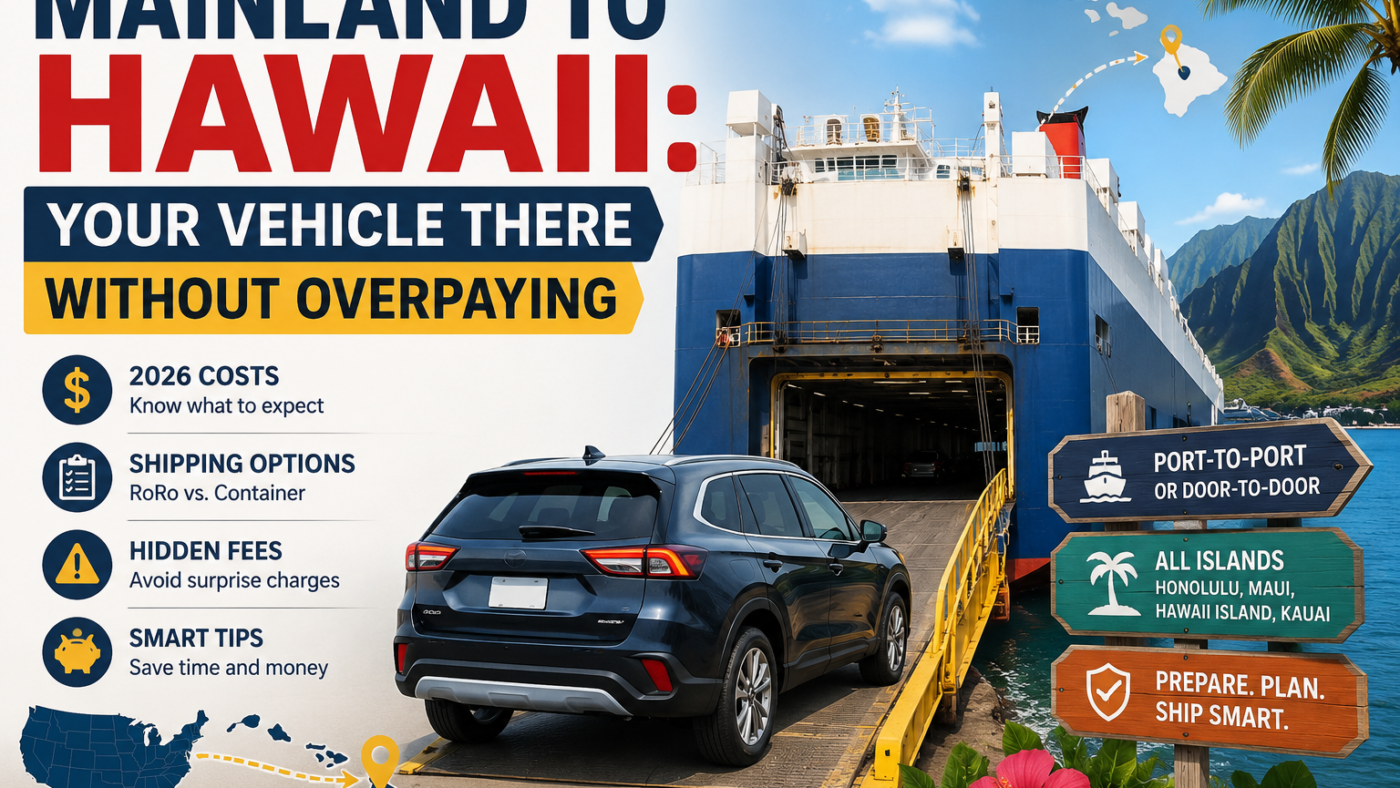
Moving a vehicle from the mainland United States to Hawaii is one of those expenses that can look simple at first and become confusing once you start comparing quotes. You are not just paying for an ocean crossing. You may also be paying for domestic transport to a departure port, port handling, vessel space, destination fees, inter-island transfer, and local pickup or delivery.
The good news is that there are clear ways to control the cost. People researching shipping a car to Hawaii can avoid many of the most common pricing traps by planning early, choosing the right shipping method, and understanding which charges are included before booking.
This guide explains how mainland-to-Hawaii vehicle shipping works in 2026, what you can realistically expect to pay, and how to avoid overpaying.
Start With the Full Cost, Not the Advertised Ocean Rate
The first mistake many people make is comparing only the headline ocean-shipping price.
A quote may look affordable because it covers the voyage from a West Coast port to Honolulu. But if you live in Texas, Illinois, Florida, or New York, you still need to get your vehicle to that port.
Your complete budget may include:
- Domestic transport to the departure port
- Origin port handling
- Ocean freight
- Documentation fees
- Destination port handling
- Inter-island transfer, if needed
- Local pickup or delivery
- Optional insurance
- Registration and inspection costs after arrival
Before choosing a provider, ask for an itemized quote and confirm which fees are included at both the origin and destination.
Typical Cost to Ship a Car to Hawaii in 2026
For a standard operable sedan or compact SUV, mainland-to-Hawaii shipping commonly falls within these planning ranges:
- West Coast to Honolulu: approximately $1,500–$2,400
- West Coast to Maui: approximately $1,700–$2,700
- West Coast to Hawaii Island: approximately $1,800–$3,000
- West Coast to Kauai: approximately $1,800–$3,000
- Midwest or East Coast origin: often $2,500–$4,500+ after domestic transport is included
These are planning ranges, not guaranteed prices. Larger vehicles, inoperable cars, pickup trucks, oversized SUVs, peak-season moves, and outer-island shipments can cost more.
The best way to avoid surprise costs is to compare the total door-to-port or door-to-door amount rather than comparing a single ocean-freight number.
Why the Departure Port Matters
Most Hawaii vehicle shipments leave from West Coast ports. If you live nearby, you may be able to drive the vehicle to the port and save on domestic transport.
If you live elsewhere, you generally have two choices:
- Drive the car to the departure port
- Hire a domestic auto carrier to move it there
Driving may sound cheaper, but calculate the full cost first. A cross-country trip can include fuel, hotels, meals, tolls, vehicle wear, and several days of your time.
Domestic open transport can be more convenient, especially if you are already flying to Hawaii or coordinating a larger move. For high-value vehicles, enclosed transport to the port may be worth the additional cost.
Choose the Right Shipping Method
Most standard vehicles go to Hawaii through roll-on/roll-off shipping, known as RoRo.
With RoRo, the car is driven onto a specialized vessel, secured inside, and driven off at the destination port.
RoRo is generally best for:
- Operable sedans
- SUVs
- Pickup trucks
- Daily-driver vehicles
- Budget-conscious shipments
It is usually the most affordable option because many vehicles travel together.
Container shipping may be appropriate for:
- Luxury cars
- Classic cars
- Collector vehicles
- Exotic cars
- High-value vehicles needing additional protection
Container shipping is often more expensive and may not be necessary for a standard family vehicle.
Book Earlier to Keep Prices Under Control
Hawaii shipping is not something to arrange during the final week before a move.
Vessel schedules, port capacity, and domestic carrier availability all require planning. For most moves, request quotes early and aim to book:
- Two to four weeks before your preferred port delivery date
- Four to six weeks early for summer moves, outer-island destinations, large vehicles, or more complex logistics
Peak periods can include summer relocation season, military PCS season, holidays, and school-transition months. During busy weeks, space can be tighter and rates can increase.
Early planning gives you more options. It does not mean your vehicle needs to leave immediately.
Understand Port-to-Port vs. Door-to-Door Service
Most Hawaii vehicle shipments are port-to-port.
That means you bring the vehicle to the mainland port or arrange domestic transport to it. After arrival, you collect the vehicle from the Hawaii terminal.
Door-to-door service may be available for the mainland portion or for local delivery after arrival, but it usually costs more.
Before booking, ask:
- Which mainland port will I use?
- Which Hawaii port will receive the vehicle?
- Is inter-island transport included?
- Do I need to pick up the vehicle at a terminal?
- Are destination handling fees included?
- Is local delivery available, and what does it cost?
These questions help you compare quotes accurately.
Prepare the Vehicle Correctly
A vehicle that is not ready for port delivery can create delays and extra charges.
Before shipping:
- Wash the vehicle thoroughly.
- Remove all personal belongings and valuables.
- Take photos of every side, wheel, window, and existing damage.
- Leave about one-quarter tank of fuel or less.
- Remove toll tags.
- Check the battery and tire condition.
- Tell the shipping company about leaks, mechanical issues, modifications, or low ground clearance.
Most RoRo shipments require an operable vehicle. The car should start, steer, roll, and brake normally. Inoperable vehicles may require special handling and cost more.
Do Not Use the Car as a Moving Box
This is one of the most common mistakes.
Most ocean carriers prohibit personal belongings inside the vehicle. Even if limited items are allowed, they may not be insured and can create security or port-processing problems.
Remove:
- Luggage
- Electronics
- Documents
- Valuables
- Sports equipment
- Loose accessories
- Child seats, if possible
Your vehicle should be treated as a vehicle shipment, not as an extra container for household goods.
Consider Whether Shipping Is Actually Worth It
Shipping is not automatically the right choice for every vehicle.
It often makes sense if:
- Your car is newer and reliable.
- You own it outright or have meaningful equity.
- Similar vehicles cost more in Hawaii.
- You need a truck, SUV, EV, or specialized vehicle.
- You know the car’s maintenance history and want to keep it.
Selling before the move may make more sense if:
- The vehicle has low value.
- It needs major repairs.
- Shipping costs represent a large share of its resale value.
- You plan to buy a different vehicle after arrival.
Compare the full shipping cost with the realistic cost of buying a similar replacement vehicle in Hawaii, including taxes, registration, dealer fees, and availability.
Watch for Hawaii-Specific Requirements
Hawaii has strict agricultural protections. Before shipping, clean the vehicle carefully, including:
- Undercarriage
- Wheel wells
- Interior
- Trunk
- Floor mats
Remove soil, leaves, plants, insects, and organic debris. A dirty vehicle can create issues during inspection.
After arrival, you will also need to complete Hawaii registration requirements, which may include safety inspection, proof of insurance, local registration, and county-specific procedures.
Common Ways People Overpay
Choosing Only the Lowest Quote
A low quote may exclude port fees, destination handling, or inter-island transport. Compare the full total, not the headline number.
Booking at the Last Minute
Limited vessel space and domestic carrier availability can increase costs.
Paying for Enclosed Shipping Without Need
For a normal daily-driver vehicle, RoRo is generally the practical choice. Reserve premium transport for vehicles that truly need it.
Ignoring the Domestic Leg
If you are not on the West Coast, getting the vehicle to the port can be a major part of the total budget.
Missing Pickup Deadlines
If you do not collect the vehicle promptly after arrival, storage charges can add up quickly.
Final Thoughts
The most affordable way to move a vehicle from the mainland to Hawaii is to plan the entire journey, not just the ocean crossing.
Get an itemized quote, understand whether your service is port-to-port or includes domestic and local delivery, book early, prepare the vehicle correctly, and avoid treating it as a moving container. When you compare all costs upfront, you can make a clear decision and avoid paying more than necessary.