
Jerantut Mineral faces several challenges in its day-to-day operations, including high electricity demand, long operating hours, and stringent requirements for reliable power supply to critical equipment. Grid fluctuations, unexpected power outages, and rising electricity costs during peak periods may affect the operation of equipment such as crushers, conveyor systems, and drainage pumps, while also increasing overall operating costs at the mining site.
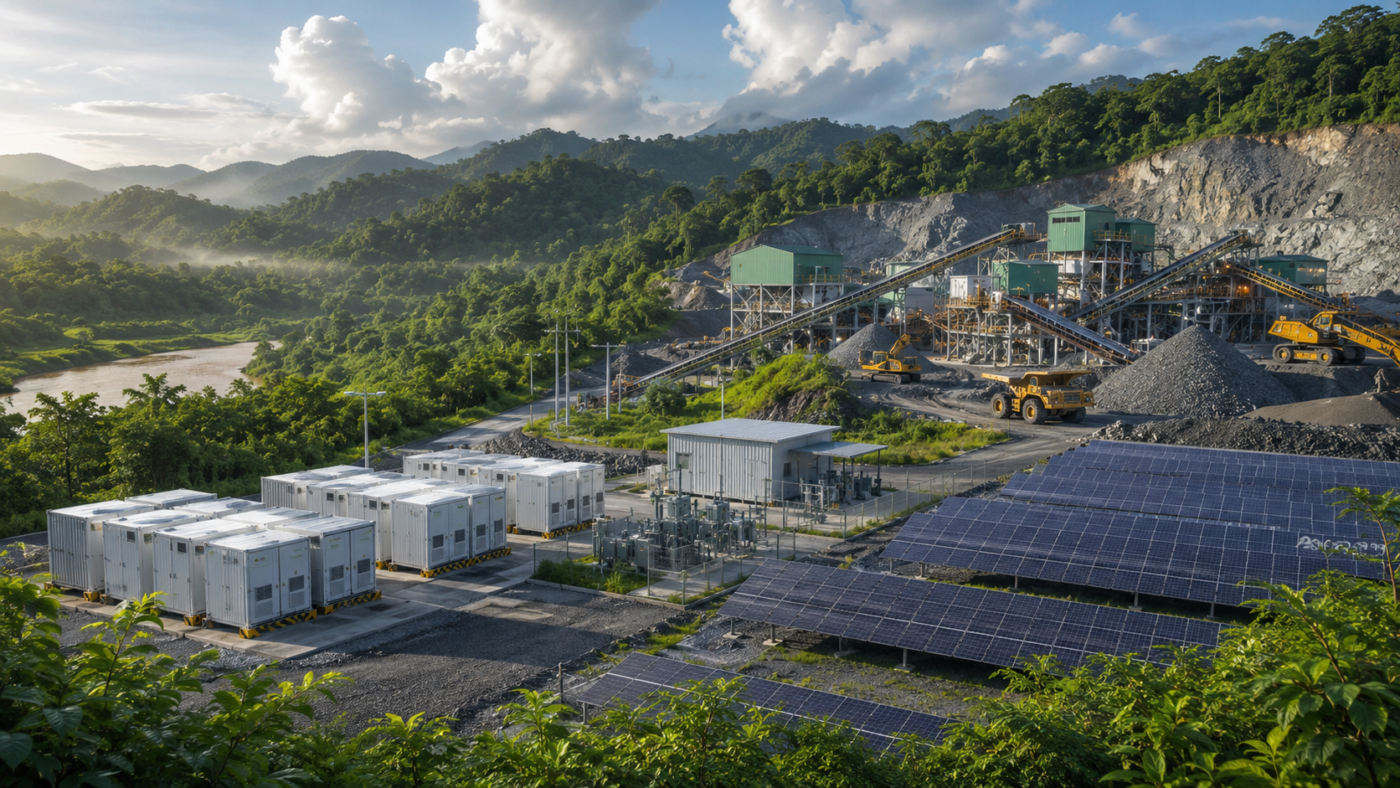
Based on the mine’s actual energy requirements, the project team conducted assessments with industry experts and energy technology specialists before selecting an integrated “solar PV + energy storage + microgrid” solution. The project is planned to deploy a 7MW solar PV system and a 15MWh energy storage system to meet the mine’s daily electricity needs and optimize the coordination between clean energy generation, energy storage, and electricity consumption.
The solar PV system will primarily supply clean electricity to the mining site during the daytime, while the energy storage system will provide flexible charging and discharging to support the mine during periods of lower solar generation, peak electricity demand, or grid fluctuations. This approach will help address the mismatch between the intermittent nature of solar power generation and the mine’s continuous electricity requirements. At the same time, an intelligent energy management system will dynamically coordinate solar PV generation, energy storage, and the mine’s electricity load, helping to improve renewable energy utilization and power supply resilience, while potentially reducing long-term energy costs.
The development of the project is closely aligned with Malaysia’s energy transition agenda. In recent years, Malaysia has introduced various policies and mechanisms, including the National Energy Transition Roadmap (NETR), Corporate Renewable Energy Supply Scheme (CRESS), and Malaysia Battery Energy Storage System (MyBEST), to accelerate the development of renewable energy and energy storage. Battery Energy Storage Systems (BESS) are increasingly recognized as an important infrastructure for enhancing power system flexibility and facilitating greater integration of renewable energy. The LSS6 programme launched in 2026 further plans to deploy 2,500MW of solar capacity and 1,250MW of energy storage, highlighting the growing importance of energy storage in Malaysia’s energy transition.
The project completed its non recourse financing from Hong Leong Bank and CIMB Bank in August 2026 and is scheduled to commence operations by the end of January 2027. Once completed, the project will leverage the 7MW solar PV system and 15MWh energy storage system as the core of a more stable, economical, intelligent, and low-carbon energy system for the mining site.
The project is also expected to serve as a practical example of the “solar PV + energy storage + microgrid” model in Malaysia’s mining sector, setting a new benchmark for green energy applications in the mining industry.
A Model for Sustainable Mining
By integrating solar PV, energy storage, and intelligent microgrid technology, the Jerantut Mineral project demonstrates how mining operations can improve energy reliability while reducing dependence on conventional power sources.
Supporting Malaysia’s Energy Future
As renewable energy adoption continues to grow, this project highlights the potential of integrated clean energy solutions to support Malaysia’s broader energy transition and promote more sustainable industrial development.