
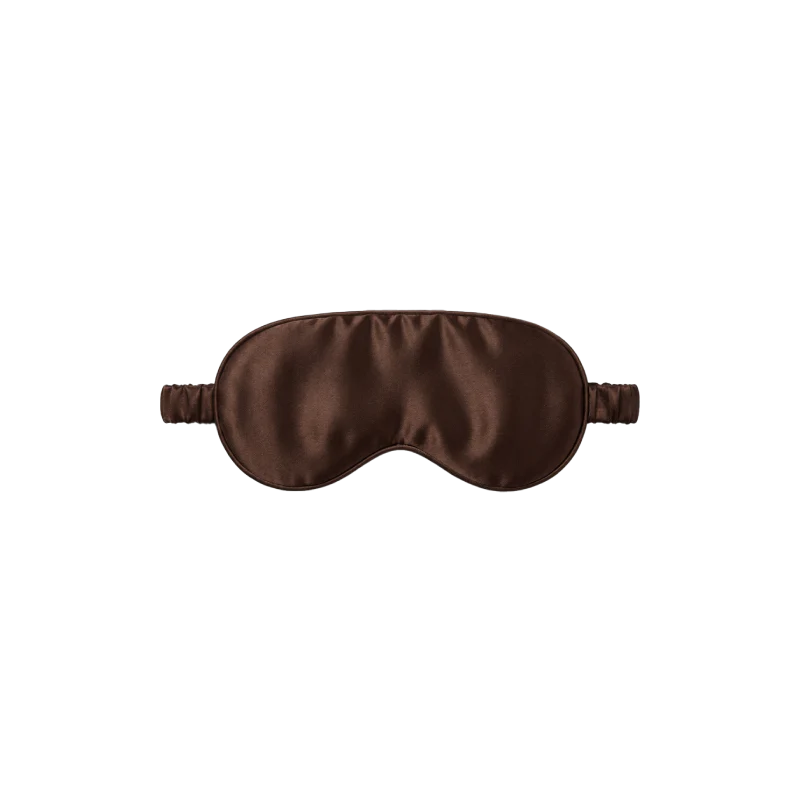
Silk sleep masks protect skin and eyes in two ways: they block light so you sleep more deeply, and their smooth surface creates less friction against the delicate skin around the eyes than cotton or rough synthetics. Silk also absorbs less moisture than cotton, so it is less likely to soak up your eye cream overnight.
That combination makes a good silk sleep mask one of the simplest additions to a night-time routine. Below we explain what silk actually does for skin, how it compares with other materials, what to look for when buying one and how to care for it so it lasts.
How a Silk Sleep Mask Helps Your Skin
The skin around the eyes is thinner than on most of the face, so it shows creasing, dryness and irritation sooner. Anything pressed against it for seven or eight hours a night has an effect, good or bad.
Less Friction and Tugging
Silk is a smooth, tightly woven fibre. When you shift position in your sleep, a silk mask glides over the skin instead of dragging it. Over time, less tugging may help reduce temporary sleep creases and the irritation some people get from rougher fabrics. Silk will not erase existing wrinkles, but it is a gentler surface to sleep against.
Better Moisture Retention
Cotton is highly absorbent, which is why it makes good towels. Against your face, it can draw moisture and night creams away from the skin. Silk absorbs considerably less, so more of your serum or eye cream stays where you applied it. People with dry or dehydrated skin often notice the difference most.
Kinder to Sensitive Skin
Silk is naturally smooth and is often recommended for people whose skin reacts to rough or synthetic fabrics. If you have eczema, rosacea or very reactive skin, a silk mask is usually a more comfortable choice than a polyester one. Anyone with a persistent skin or eye condition should still speak to a GP, pharmacist or dermatologist about what suits them.
How a Silk Sleep Mask Helps Your Eyes and Sleep
Light is one of the strongest signals your body uses to set its internal clock. Street lamps, early summer sunrises, standby lights and a partner’s phone can all interfere with sleep. Darkness supports the natural release of melatonin, the hormone that helps signal that it is time to sleep.
A well-fitted mask creates darkness wherever you are, whether that is a bright bedroom in June, a hotel room or a long-haul flight. Fewer interruptions mean more time in deeper sleep stages, which is when much of the body’s overnight repair takes place. Poor sleep, on the other hand, is commonly associated with puffy eyes and a tired-looking complexion the next morning.
Because silk is soft and light, it also puts less pressure on the eyelids than many padded or foam masks. Some designs are contoured so the fabric does not touch the lashes at all, which is useful if you use lash serums or have lash extensions.
Silk vs Other Sleep Mask Materials
| Material | Feel on skin | Moisture | Breathability | Best for |
|---|---|---|---|---|
| Mulberry silk | Very smooth, cool | Absorbs little | Good | Skin care benefits, sensitive skin |
| Cotton | Soft but more textured | Absorbs a lot | Good | Budget buyers, warm sleepers |
| Polyester satin | Smooth but synthetic | Absorbs little | Can trap heat | Low-cost silky feel |
| Memory foam / contoured | Depends on cover | Depends on cover | Lower | Maximum blackout, side sleepers |
| Weighted masks | Usually cotton or minky | Varies | Lower | People who like gentle pressure |
Satin is a weave rather than a fibre, so a “satin” mask is usually polyester. It feels similar at first but does not breathe as well as silk, and some people find it makes them warm and sweaty around the eyes.
How to Choose a Good Silk Sleep Mask
- Check the fibre: look for 100% mulberry silk on the side touching your skin, not a blend.
- Momme weight: momme measures silk density. Around 19 to 25 momme is common for masks; higher numbers usually feel thicker and last longer.
- Filling: a silk outer with a silk or cotton inner layer blocks light better than a single thin layer.
- Strap: a wide, adjustable strap is more comfortable than thin elastic and less likely to catch hair.
- Fit around the nose: light creeping in at the nose bridge is the most common complaint, so look for a mask with a contoured or padded edge.
- Washability: check the care label before you buy; some masks can go in a mesh bag on a delicate cycle, others are hand-wash only.
How to Use and Care for Your Mask
- Apply skin care first. Let your eye cream or serum absorb for a few minutes before putting the mask on.
- Adjust the fit. It should block light without pressing on your eyes or leaving marks.
- Wash regularly. Hand wash in cool water with a gentle, pH-neutral silk detergent roughly once a week, or more often if you use rich creams.
- Dry flat in the shade. Avoid wringing, tumble drying and direct sunlight, which can weaken and yellow the fibres.
- Store it in a pouch. Keep it somewhere clean and dry so it does not pick up dust or get snagged in a bag.
- Pair with a silk pillowcase. If you sleep on your side, a silk pillowcase extends the same low-friction surface to your cheeks and hair.
Common Mistakes
- Buying a polyester satin mask expecting silk’s properties.
- Wearing the mask too tight, which can cause puffiness rather than prevent it.
- Washing silk with ordinary biological detergent, which can damage the protein fibres.
- Never washing it, which allows oils and product build-up that can irritate skin.
Who Benefits Most From a Silk Sleep Mask?
- Light sleepers and anyone woken by early sunrises.
- Shift workers who need to sleep in daylight.
- Frequent travellers sleeping on planes, trains or in unfamiliar rooms.
- People with dry or sensitive skin around the eyes.
- Anyone using eye creams or lash products who wants them to stay put overnight.
If lash care is part of your routine, you may also find our guide to the best eyelash serums helpful.
What a Silk Mask Cannot Do
A silk mask is a comfort and protection tool, not a medical treatment. It will not cure insomnia, sleep apnoea, dry eye disease or chronic dark circles. If you regularly struggle to sleep, wake unrefreshed, or have eye pain, redness or changes in vision, speak to your GP or an optometrist rather than relying on sleep accessories.
Using a Silk Mask When Travelling
A silk mask is one of the lightest sleep aids you can pack. On overnight flights, it blocks cabin lights and seat-back screens without feeling hot or heavy, and the smooth fabric is kinder to skin that is already dried out by cabin air. In hotel rooms, it solves the problem of thin curtains and glowing smoke alarms. Pack it in its own pouch, apply a light moisturiser before wearing it on a plane, and combine it with earplugs if noise is also an issue.
FAQs
Are silk sleep masks good for sensitive skin?
Silk is smooth and gentle, so many people with sensitive skin find a silk mask more comfortable than cotton or polyester. If you have a diagnosed skin condition, check with a pharmacist or dermatologist about what suits you.
How often should I wash a silk sleep mask?
Roughly once a week is a sensible routine, or more often if you wear heavy night creams. Hand wash in cool water with a silk-safe detergent and dry flat out of direct sunlight.
Can a silk sleep mask prevent wrinkles?
A silk mask reduces friction and tugging around the eyes, which may help limit temporary sleep creases. It cannot reverse existing wrinkles, so think of it as a gentle support to good skin care rather than an anti-ageing treatment.
Do silk sleep masks block out light completely?
A well-made silk mask with a padded inner layer and a contoured nose area blocks most light. Very thin, single-layer masks may let some light in around the edges.
Is silk better than satin for a sleep mask?
Real silk is a natural protein fibre that breathes well and absorbs little moisture. Most satin masks are polyester, which feels smooth but can trap heat around the eyes.
Can I wear a silk mask over eye cream?
Yes. Let the product absorb for a few minutes first. Silk absorbs less than cotton, so more of the cream stays on your skin, but wash the mask regularly to prevent build-up.
Bottom Line
A silk sleep mask is an inexpensive, low-effort way to protect the delicate skin around your eyes while helping you sleep in proper darkness. Choose 100% mulberry silk with a comfortable strap and a good fit at the nose, wash it gently each week and pair it with a silk pillowcase for the fullest benefit. You can compare designs at the SilkWide e-shop to find one that suits your sleeping style.