
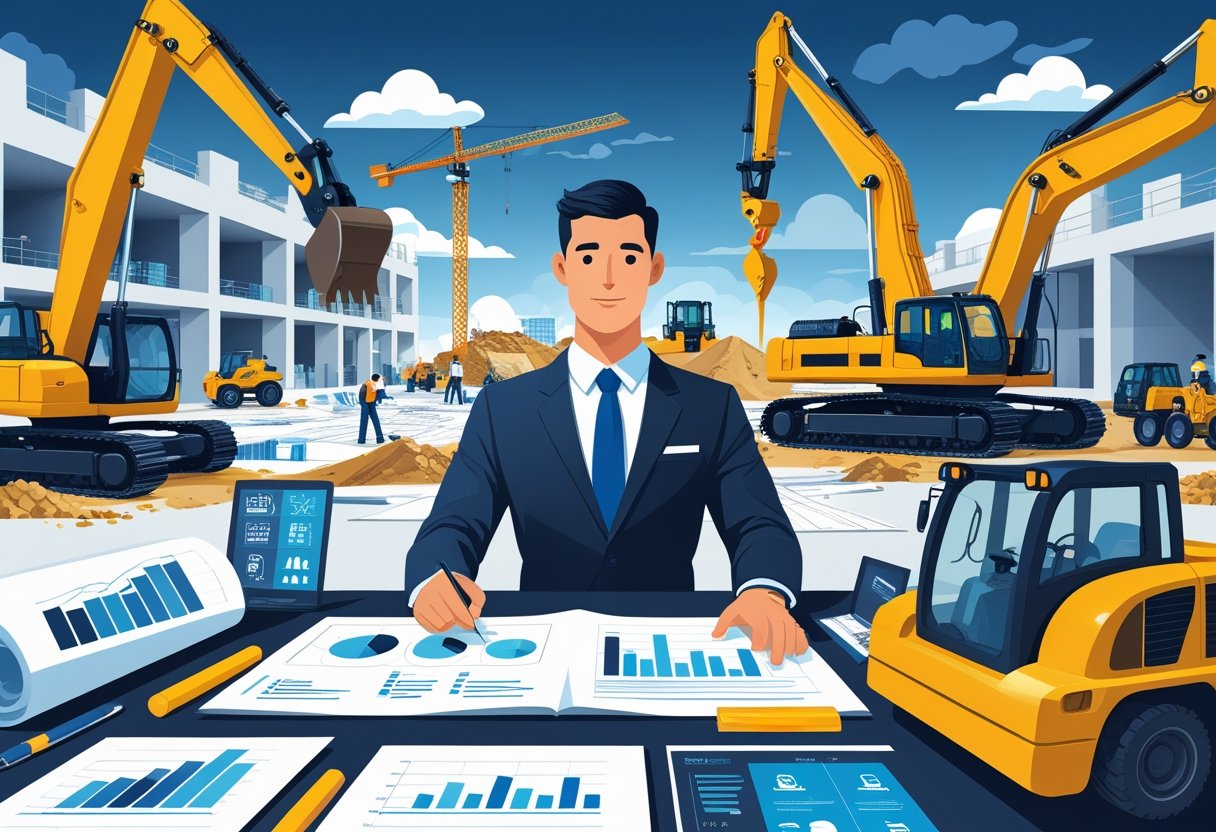
Equipment financing lets a construction business get excavators, dumpers, telehandlers, cranes and specialist tools now and pay for them over time, usually over two to five years, with the machine itself securing the deal. In the UK the main routes are hire purchase (you own it at the end), finance leases and operating leases or contract hire (you use it but do not own it), asset refinance (releasing cash from kit you already own) and short-term plant hire for one-off jobs. The right choice depends on how long you will use the machine, how steady your work is and how you want the cost treated for tax.
There is a whole range of equipment financing options, as specialist brokers such as excavatorfinanceoz.com.au explain, and the principles are broadly similar across markets even though tax rules and lenders differ. This guide focuses on the UK: how each option works, what lenders look for, how to apply and how to manage finance so that it supports cash flow instead of straining it.

Why Construction Firms Finance Equipment
Construction equipment is expensive and cash flow in the industry is famously lumpy. Payment terms on contracts, retentions and staged valuations mean money often arrives weeks or months after the work is done. Paying cash for a new machine can leave too little for wages, materials and surprises.
- Protects working capital: cash stays available for payroll, materials and subcontractors.
- Predictable costs: fixed monthly payments are easier to price into tenders.
- Access to bigger work: having the right kit lets you bid for contracts you could not otherwise take on.
- Newer, cleaner machines: regular upgrades help meet site emissions requirements and reduce breakdowns.
- Tax efficiency: depending on the product, you may claim capital allowances or deduct rentals.
Because the lender can recover the asset if payments stop, asset finance is often easier to obtain than an unsecured loan, and machines that hold their value well, such as mainstream excavators, tend to be easier to fund than highly specialised kit.
Types of Equipment Financing in the UK

Hire purchase
With hire purchase (HP), you pay a deposit and then fixed monthly instalments. Ownership passes to you once the final payment, sometimes with a small option-to-purchase fee, is made. For tax purposes, your business is usually treated as the owner from the start, so you can generally claim capital allowances on the machine. HP suits kit you plan to keep for most of its working life.
Finance lease
The lender buys the equipment and rents it to you for most of its useful life. You never legally own it, but at the end you can often continue on a low secondary rental or sell the machine on the lender’s behalf and receive most of the proceeds. Rentals are typically treated as a business expense, though accounting and tax treatment depend on the lease and your accounts, so take advice.
Operating lease or contract hire
You rent the machine for a period shorter than its life, and the lender takes the risk on its resale value. Monthly costs are usually lower, maintenance can be bundled in, and you hand the machine back at the end. This works well for equipment you want to replace every few years or where technology is moving quickly.
Asset refinance
If you already own machinery outright, a lender can advance cash against it and you repay over an agreed term. It is a way to release working capital for a large contract, though it adds debt, so use it deliberately.
Manufacturer and dealer finance
Many machinery manufacturers have in-house finance arms and run promotional deals. These can be competitive, but compare the total cost, not just the headline rate, and check any conditions tied to servicing or trade-ins.
Government-backed lending
The British Business Bank supports lending to smaller firms through accredited lenders, including asset finance, under schemes such as the Growth Guarantee Scheme. The government guarantee can help businesses that are viable but lack a long track record. Availability and terms are set by the individual lender.
Comparison at a glance
| Option | Own it? | Upfront cost | Typical fit |
|---|---|---|---|
| Hire purchase | Yes, at the end | Deposit plus VAT on purchase | Core kit kept for years |
| Finance lease | No | Usually a few rentals in advance | Long use without ownership |
| Operating lease / contract hire | No | Low | Regular upgrades, maintenance included |
| Asset refinance | Already owned | None; releases cash | Funding a large contract |
| Short-term plant hire | No | None | One-off or seasonal jobs |
Tax and VAT Points to Discuss With Your Accountant
- Annual Investment Allowance (AIA): lets businesses deduct the full cost of qualifying plant and machinery, up to £1 million a year, from profits in the year of purchase. Equipment bought on HP can qualify.
- Full expensing: limited companies can claim 100% first-year allowances on qualifying new, unused main-rate plant and machinery, with no cap. Assets for leasing out are generally excluded.
- Leases: rentals on many leases are deductible as they are paid, but rules differ by lease type and accounting standard.
- VAT: on HP, VAT is usually payable upfront on the full price and reclaimed through your VAT return; on leases, VAT is charged on each rental.
How to Qualify and Apply
Lenders want confidence that you can make the payments and that the machine will hold its value. Criteria vary, but most look at:
- Trading history: established businesses find it easier; newer firms may need a larger deposit or a personal guarantee from directors.
- Credit profile: business credit files and, often, directors’ personal credit.
- Accounts and bank statements: recent filed accounts, management accounts and several months of bank statements.
- The asset: make, model, age, supplier quote and expected resale value.
- Order book: contracts or a pipeline showing how the machine will earn its keep.
Step-by-step application
- Decide what you need and for how long, including whether hire would be cheaper for short jobs.
- Get a written quote from the dealer, including delivery, attachments and warranty.
- Check your credit files and tidy up any errors.
- Gather accounts, bank statements and details of existing finance agreements.
- Compare quotes from your bank, specialist asset finance lenders, manufacturer finance and a broker. Compare total amount payable, fees, balloon payments and end-of-term options.
- Read the agreement carefully, especially early settlement terms, insurance requirements and what happens if the machine is damaged or stolen.
If you use a broker, check that they are authorised by the Financial Conduct Authority where required, and ask how they are paid.
Managing Equipment Finance Well
Protect cash flow
Before signing, model the new payment against your monthly cash flow forecast, including slow months and late-paying clients. Keep a buffer for several months of fixed costs after any deposit. Staggering purchases across the year is usually safer than buying several machines at once. Our guide on how UK small businesses can control cash flow covers forecasting in more detail.
Match finance to your projects
- Use hire or short leases for one-off contracts and ownership-style finance for kit that works every week.
- Ask about seasonal payment profiles if your work drops in winter.
- Allow for lead times; new machines can take weeks or months to arrive.
- Budget for the full site set-up, not just the machine. On public highways, for example, professional Traffic Management Stoke services help keep plant movements safe and minimise disruption to workers and the public.
- Make sure you have trained operators; a new machine sitting idle still costs money. Our piece on construction recruitment services looks at finding skilled staff.
Get the most from each machine
Work out the true cost per operating hour: finance, insurance, fuel, maintenance and depreciation. That figure should feed into your tender pricing. Track utilisation with telematics, which most modern machines include, and review each asset quarterly. A machine that sits idle most weeks may be better hired in when needed.
- Follow the manufacturer’s service schedule and keep full records; they protect warranty and resale value.
- Keep up with statutory inspections, such as thorough examinations of lifting equipment under LOLER.
- Insure against theft and damage; plant theft is a real risk, and many finance agreements require cover.
- Plan the exit: know when you will sell, hand back or upgrade each machine.
Buy, Finance or Hire? A Quick Decision Guide
A simple way to decide is to estimate how many weeks a year the machine will genuinely be working, then compare the annual cost of each route.
- Working most weeks of the year: ownership through cash or hire purchase usually gives the lowest cost per hour over the machine’s life.
- Working regularly but you want new kit every few years: an operating lease or contract hire keeps the fleet modern and moves resale risk to the lender.
- Needed for a single contract: short-term hire, or a lease aligned to the contract length, avoids being left with an idle asset.
- Needed occasionally or seasonally: hire in as required; paying for a machine that sits in the yard rarely makes sense.
Run the numbers on total cost, including deposit, interest, fees, insurance, servicing and the expected resale value or balloon payment, rather than comparing monthly instalments alone.
Common Equipment Finance Mistakes
- Choosing a term longer than the machine’s realistic working life.
- Focusing on the monthly payment and ignoring balloon payments or end-of-lease charges.
- Signing without checking return conditions, hour limits or damage charges on leases.
- Taking on several agreements at once and stretching cash flow in a quiet month.
- Forgetting VAT timing on hire purchase, which can create a short-term cash gap.
- Not reviewing existing agreements before refinancing, which can lead to early settlement penalties.
Frequently Asked Questions
Is hire purchase or leasing better for construction equipment?
Hire purchase usually suits machines you will keep for most of their life. Leasing suits kit you want to upgrade regularly or do not want on your balance sheet as owned equipment.
Can a new construction company get equipment finance?
Often yes, but lenders may ask for a larger deposit, a personal guarantee or evidence of contracts. Government-backed schemes through accredited lenders may also help.
Can I claim capital allowances on financed equipment?
Equipment on hire purchase generally qualifies for capital allowances such as the Annual Investment Allowance. Leased equipment is usually handled differently. Check with your accountant.
Can I finance used machinery?
Yes. Many lenders fund used plant, though age limits, shorter terms or larger deposits may apply, and full expensing does not cover used assets.
What happens if I cannot keep up payments?
The lender may repossess the equipment and you could still owe a balance. Contact the lender early; many will discuss revised arrangements.
How long are typical construction equipment finance terms?
Terms commonly run from around two to five years, depending on the asset’s age, expected working life and resale value. Choose a term that ends well before the machine becomes uneconomic to run.
This article is general information, not financial or tax advice. Speak to a qualified adviser before taking on finance.
Bottom Line
Equipment financing lets UK construction firms take on bigger work without draining working capital. Match the finance type to how long and how often each machine will work, compare total cost rather than monthly payments, check the tax treatment with your accountant and keep a cash buffer so that repayments never compete with wages and materials.